Last updated November 18, 2026




Free written scope consultation - allowances, timeline, and change-order rules on paper before a single trade is scheduled
Seasonal Construction Care for Burbank: Year-Round Homeowner’s Guide
October through December is the highest-risk stretch for construction-related home damage in Burbank. Surfaces are brittle after five months of dry heat, Santa Ana winds push debris against walls and seals at 40 to 60 mph, and the rain arrives right behind with no buffer. There’s no slow acclimation period here. One week you’re in 90-degree sun, three weeks later water is finding every gap the wind just widened. What follows is a month-by-month maintenance calendar built around that cycle, plus the inspections that catch small problems before they become permit-required repairs.
Quick Answer
Burbank homes need two focused inspection windows per year: a pre-wind inspection in late September or early October (seal, clear, and fasten before Santa Anas hit), and a post-rain perimeter inspection in March or April (check drainage, soil settlement, and stucco cracks before summer heat bakes them in). Everything else fits into small tasks around those two anchors. Skip them and you’re not saving money, you’re financing a repair with interest.
Styles & brands we work with
- Kitchen remodeling
- Bathroom remodeling
- Home additions & ADU
- Roofing
- Windows & doors
- Driveway & pavers
- Fence
Table of Contents
- Why Burbank’s Climate Cycle Isn’t a Normal Four-Season Calendar
- Pre-Santa Ana Season Prep: What to Inspect, Seal, and Clear
- Post-Rain Drainage and Foundation Perimeter Protocol
- Summer Heat Expansion: Hardscape, Stucco, and Roofing
- The Burbank Month-by-Month Task Calendar
- Triaging Deferred Maintenance Before It Needs a Permit
- Materials That Hold Up in Burbank (and What Doesn’t)
- When to Bring in a Pro vs. Handle It Yourself
Why Burbank’s Climate Cycle Isn’t a Normal Four-Season Calendar
Burbank sits in a basin at the eastern edge of the San Fernando Valley, hemmed in by the Verdugo Mountains to the north and the Hollywood Hills to the south. That geography does something specific to the weather: it traps heat in summer, channels wind through the passes in fall, and creates a rain shadow that makes precipitation uneven from one block to the next. A homeowner in the Rancho neighborhood near the Verdugo foothills sees different wind loading than someone down in Magnolia Park flatlands. The Verdugo Wash corridor collects drainage in ways the Burbank Boulevard corridor never sees.
What that means for construction is that Burbank has two seasonal stress windows, not four gentle seasonal transitions. The dry window runs roughly May through September. During that stretch, wood framing, stucco, caulk, sealants, and asphalt shingles all bake and shrink. Expansion joints in driveways and patios open up. Stucco develops hairline cracks along the south and west-facing walls. Roof shingles curl at the edges. None of this seems urgent in July. All of it becomes a leak pathway by November.
The wind-and-rain window runs October through March. Santa Ana winds in Burbank come down through the Verdugo passes with gusts documented at 40-60 mph in a typical event. They load palm fronds, eucalyptus debris, and fine grit against every vertical surface on the west and north sides of a house, then push water into the tiny gaps that grit widens. Then the rain starts. Burbank averages roughly 15 inches of rain annually, but it falls in a compressed set of storms, sometimes 3-4 inches in 36 hours.
That compression is the whole game. When the ground is dry for months, it hardens and becomes nearly hydrophobic at the surface. A short rain runs off. A heavy rain arrives faster than the soil can absorb, and the water sheets downhill. Homeowners whose drainage was marginal in April discover the failure in January. Those are the calls we see every year, and they always cost more than the inspection would have.
Pre-Santa Ana Season Prep: What to Inspect, Seal, and Clear
The window to prep for Santa Ana season in Burbank is the last two weeks of September and the first week of October. Once the first wind advisory hits, you’re past the point where caulk cures properly and far past the point where it’s safe to get on a roof. Here’s the sequence that matters, in priority order.
1. Clear the debris load. Walk the entire perimeter of the house and look for anything that can become airborne or pile up against the structure. Palm fronds, dead eucalyptus branches, dried bougainvillea vines on the south-facing walls, loose patio furniture, empty planters, and the stacked pile of pavers that’s been sitting behind the garage since spring. Wind doesn’t need a projectile to be dangerous; fine grit blasted against a seal for six hours does real damage.
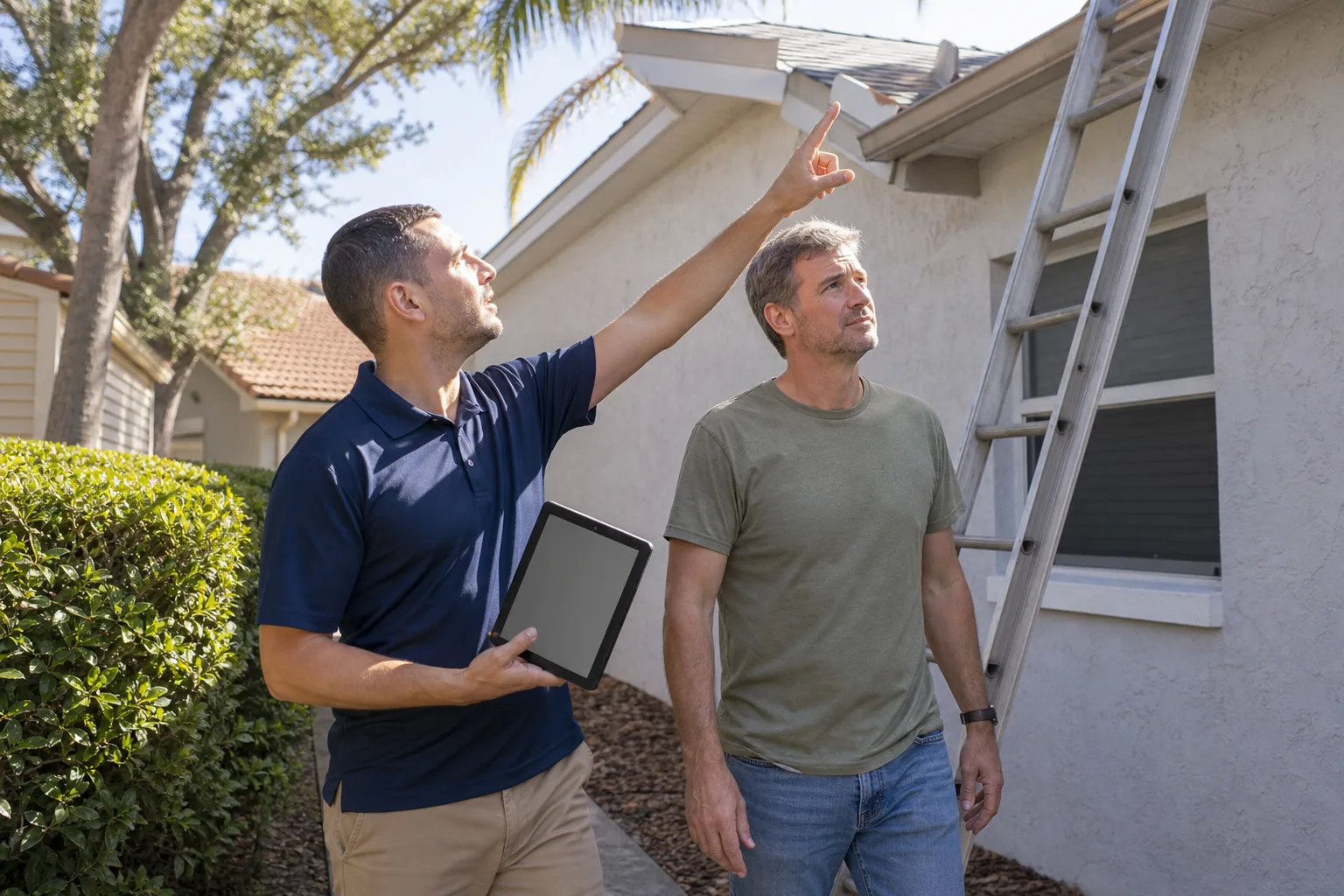
2. Inspect the roof envelope. This is not a step most homeowners should do themselves. If you have a low-slope or flat-roof section, look from the ground with binoculars and check for lifted flashing at the penetrations, cracked pipe boots, and any field tile that’s shifted. Missing or cracked roof tiles are the number-one source of Burbank roof leaks once Santa Ana winds start. If you see anything that needs to be reset or sealed, get a roofer out before the wind advisory.
3. Seal the vertical surfaces. Caulk is cheap; water intrusion is not. Walk every window and door on the west and north elevations (the wind-loaded sides in Burbank) and check the exterior caulk joint at the stucco. If you can push a fingernail into the caulk and it stays indented, it’s cured out and needs replacement. Use a paintable exterior-grade urethane or siliconized acrylic, not a basic painter’s caulk. This is also the moment to check that window and door weatherstripping is intact, since wind-driven rain will find gaps you can’t see from the inside.
4. Fasten and clear the drainage path. Clean gutters and downspouts before the first rain. In Burbank, that means clearing the valley-area downspouts first, since those are where leaves from the big ficus and eucalyptus trees settle. Make sure downspouts discharge at least 4-6 feet from the foundation and that the discharge point isn’t a low spot where water will pond. If you have hardscape installed with pavers or concrete, check that the slope directs water away from the house and not against it.
5. Check the exterior electrical and HVAC penetrations. Any exterior junction box, hose bib, or AC line-set penetration that has a gap at the wall plate is a potential leak. Seal those gaps with exterior-rated sealant. If you notice an issue at the electrical panel or with the mast where the service cable enters the house, call a licensed electrician, not your handyman. That’s an electrical safety issue and not something to improvise.
Post-Rain Drainage and Foundation Perimeter Protocol
Burbank soils behave in a specific way during and after rain. Much of the city sits on sandy loam mixed with clay, and clay-rich zones near the hills (Rancho, the Verdugo foothills above Glenoaks, parts of Hillside District) swell when saturated, then shrink and settle as they dry through the summer. That cycle is the root cause of most of the foundation cracks, driveway heave, and stucco cracks we see. The post-rain inspection window in March and April is when you catch the damage from the current cycle, before the summer heat bakes it into a bigger problem.
Walk the perimeter with the same method every year, and don’t rush it. Here’s the protocol:
- Stand back and look at the ground slope. After a heavy rain, the soil around your foundation should be visibly higher against the house than 3-4 feet out. If it’s flat or sloped toward the house, you have a grade problem to fix, and it’s the cheapest fix you’ll ever do.
- Look for water ponding and soft spots. Any low point within 5 feet of the foundation is a problem. If the ground gives under your boot while you’re walking it, water is sitting in the subgrade and the soil is saturated. Mark that spot.
- Inspect the stucco perimeter at the sill plate. Look at the base of the exterior wall where stucco meets the foundation. If you see efflorescence (whitish chalky streaks) or peeling paint rising from the bottom, moisture is wicking into the wall assembly.
- Check driveway and walkway joints. After the rain, joints in concrete driveways should be dry within 24 hours. If they hold water or the slabs have shifted, the base below them has moved. Pavers should be re-sandable; a properly installed paver driveway in Burbank can go through a few rainy seasons before needing a top-up of polymeric sand, but the sand needs to actually be there.
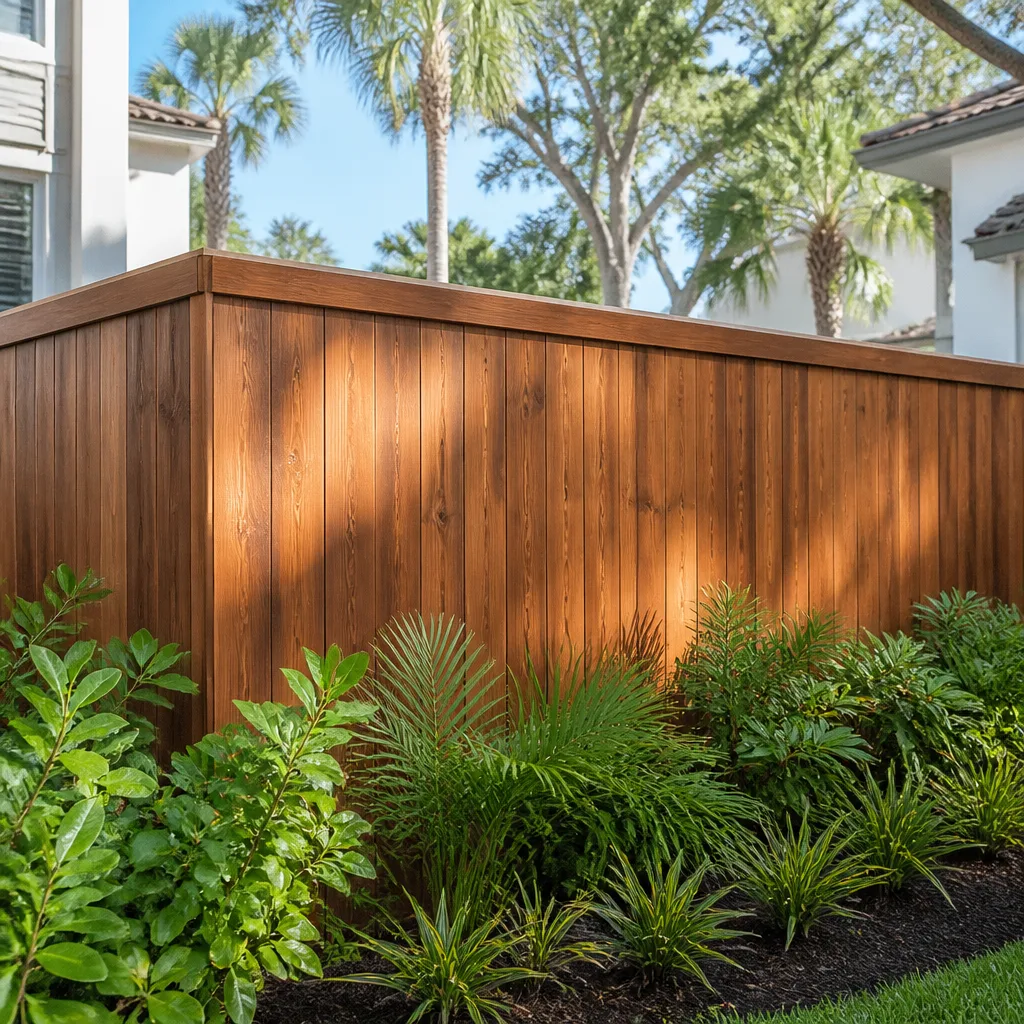
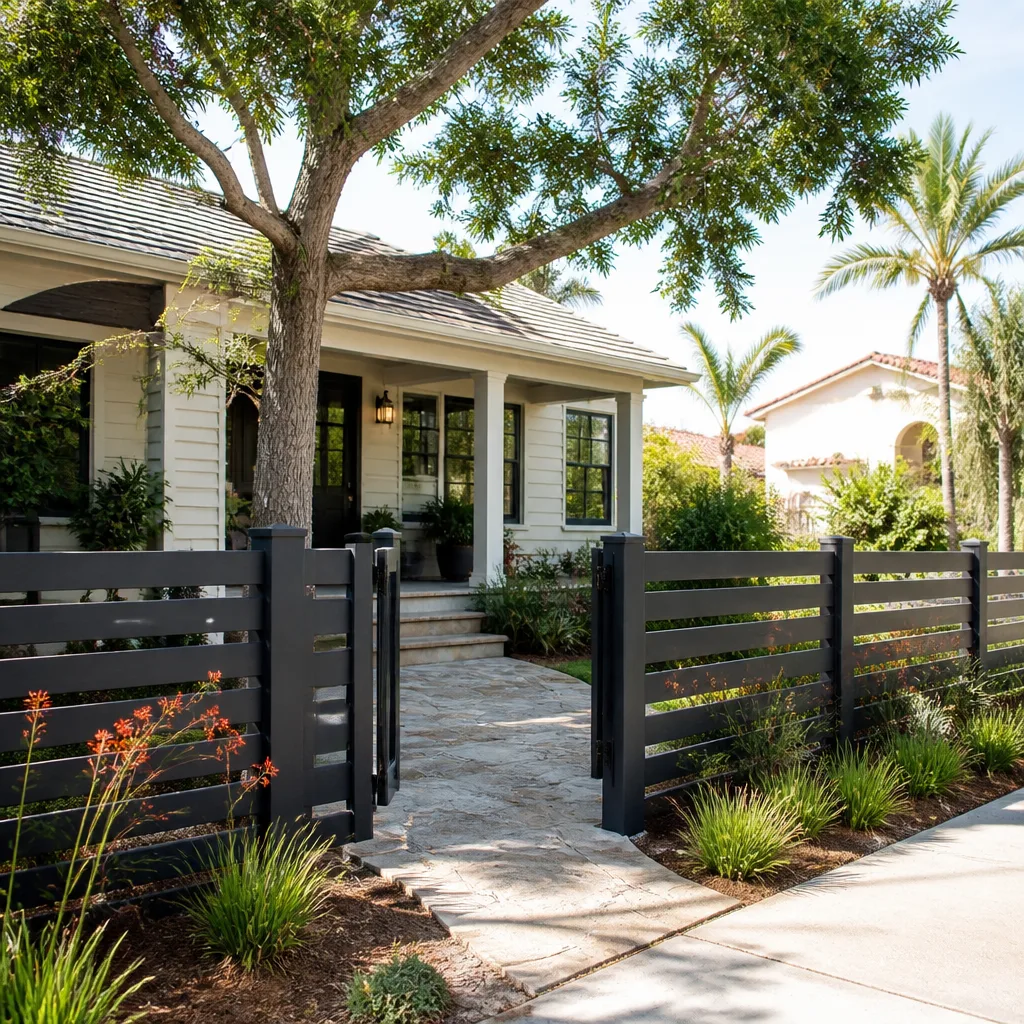
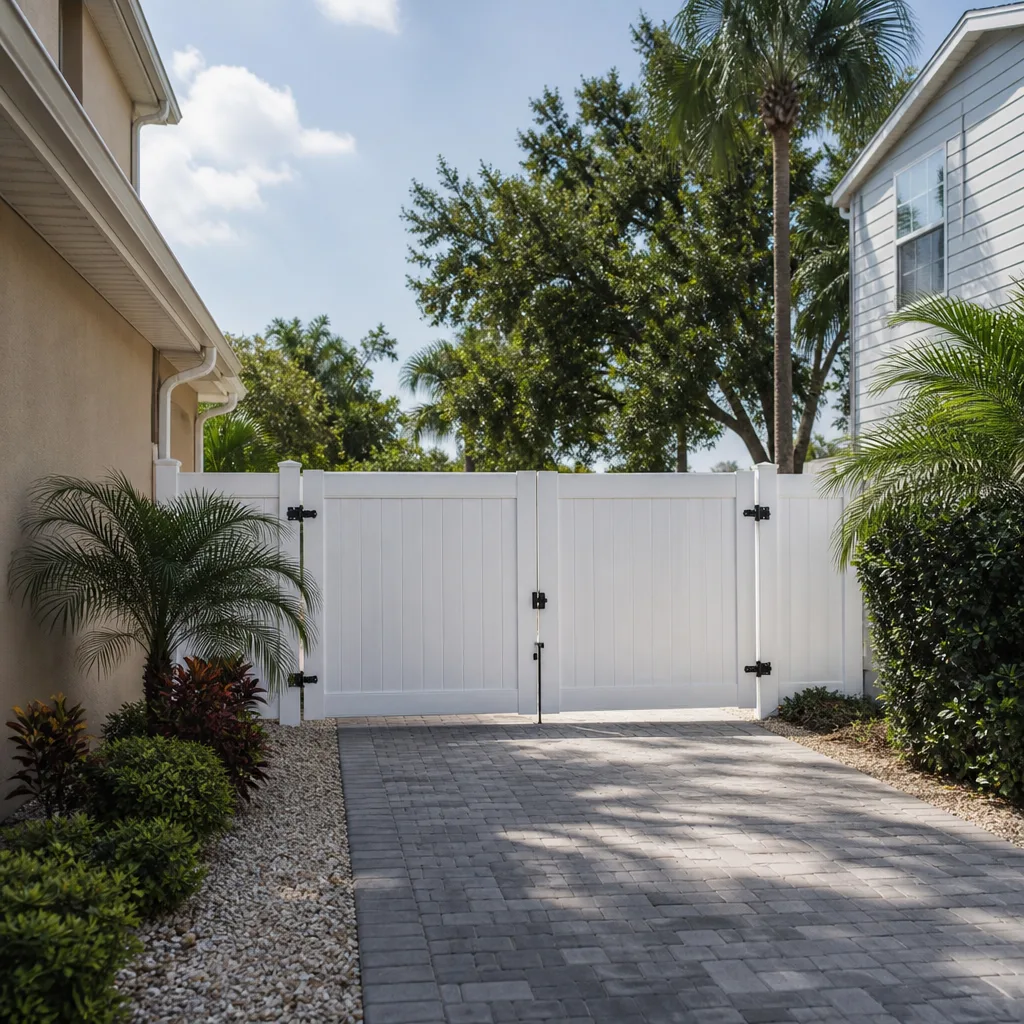
- Walk the fence line. Post holes are the biggest weak point on any wood fence after rain season. Push on posts near the corners and gates; if they rock more than 1/4 inch, the post footing has loosened. This is where fence installation in Burbank done to spec shows its value, since a properly set post in a concrete footing shouldn’t move through seasonal rain cycles.
- Check the drainage system discharge points. Follow every downspout and French drain to where it actually discharges. If the discharge is within 4 feet of the foundation or into a planter bed that holds water, redirect it.
- Look inside the garage and at the low side of the slab. Any standing water, dampness, or efflorescence on the interior garage walls is telling you about the exterior grade. It’s not a garage problem; it’s a drainage problem.
Summer Heat Expansion: Hardscape, Stucco, and Roofing Materials
Burbank summers routinely hit 95-105°F for days on end. Most of what fails on a house here in fall was actually damaged in July. Knowing what to check after a hot summer is how you avoid the surprise repairs that show up with the first rain.
Hardscape: Concrete driveways and patios expand in heat, and expansion joints are what allow that movement. When joints are filled with a flexible material, that’s fine. When they’re unfilled or the fill has worked out, slabs grind against each other and heat cracks develop. Check every control joint in the concrete after a hot stretch; if you can see daylight through the joint or a crack has opened more than 1/8 inch, the joint needs attention. Clay paver systems and properly installed concrete pavers from reliable manufacturers like Sakrete-based bedding mixes handle the movement better, but all hardscape needs joint maintenance each year.
Stucco and plaster: Three-coat stucco is standard on most Burbank homes, and it moves with heat. Fine spider cracks (hairline cracks under 1/16 inch that follow no clear pattern) are cosmetic and normal. Cracks that are wider, longer than 18 inches, or run diagonally from a corner of a window or door opening are telling you about differential movement and warrant a closer look. This is a specific Burbank pattern – very often the crack is a symptom of a settlement issue at the foundation, not a stucco issue.
Roofing: Asphalt shingles dry out and curl in UV exposure. Tile roofs move along the field and individual tiles can lift at the ridge and eave. Wood shakes and shingles shrink and split. After a hot summer, walk your roof line from the ground with binoculars and look for obvious lifting, missing shingles, and displaced tiles. Anything that’s lifted in September is going to be a leak path once wind and rain kick in during October. GAF and Owens Corning both publish maintenance windows for their shingle products; if you have a roof under 20 years old, the maintenance is small. If you’re past 20 years, the whole envelope needs an honest look.
Exterior doors and windows: Wood doors and frames expand and stick in summer, then shrink and gap in fall. If a door is sticking in July, that door is going to have a gap at the latch side by November. Adjust the strike plate in fall, don’t just force it. Andersen and Marvin windows are typically built to handle this movement, but any exterior door should be checked for weatherstripping gaps at the end of summer.
The Burbank Month-by-Month Task Calendar
This is the calendar we’d give a customer if they asked what to actually do. It’s built specifically around Burbank’s two stress windows, not copied from a national maintenance checklist that assumes a freezing winter and a wet spring. Most of these are two-hour jobs; a few are annual pro inspections.
January: Peak rain month. After every storm, walk the perimeter and check gutters and downspouts. Note any areas where water ponds. Don’t panic-fix; just document. Roof leaks get emergency attention; everything else waits for the March window.
February: Second rain peak. Same protocol. Check for water stains on ceiling drywall near roof penetrations, especially around the furnace flue, plumbing vents, and skylights. If you have a fireplace, check the chimney cap after wind events.
March: Post-rain inspection window. Full perimeter walk (the protocol above), stucco crack mapping, drainage discharge check. Get bids now on any drainage or grading work before contractor schedules fill with summer projects.
April: Finish post-rain work. If drainage needs re-grading, do it now while the soil is still workable. Make sure your driveway pavers have joint sand topped off. Check that your fence posts are solid.
May: Pre-summer HVAC service. Clean condenser coils, replace filters, verify exterior equipment pads are level. Rodent-proof the exterior penetrations before the season changes.
June: Early heat check. Look for stucco cracks that just opened in the first heat wave. Check roof tile and shingle lines that are lifting. If you’re planning a summer project (kitchen, bath, or an ADU), finalize design and permitting now so construction can start in fall.
July: Peak heat. Do exterior work early morning only. Focus on hardscape joint inspection, driveway crack sealing (if needed), and making sure attic ventilation is actually working. If you have an old roof, this is the month it will show its worst.
August: Mid-summer inspection. Hot-weather check on all exterior materials. If you’re planning a Home Additions & ADU project in Burbank, home additions and ADU in Burbank permits typically take 3-6 months in the city process; August is a good month to submit if you want construction in spring.
September: Pre-wind prep begins. Order exterior caulk now, before the supply chain gets tight. Clear all debris on the west and north elevations. Schedule your roof inspection for the last week of the month.
October: Full pre-Santa Ana checklist. Seal everything that needs sealing. Fasten anything loose. Clear gutters. Roof repair or tile reset must be complete by mid-month.
November: Wind season. Check caulk joints after any wind event. Re-clear debris piles. Confirm downspouts still discharge correctly. Touch up any sealant that failed.
December: Early rain prep. Final gutter clean. Make sure you have a plan for a roof leak – know where your water shutoff is, know who to call, and have the number stored. Plan next year’s project scope now.
Triaging Deferred Maintenance Before It Needs a Permit
Every Burbank homeowner has a deferred maintenance list. The question isn’t whether you have one; it’s whether you’re going to triage it or let it escalate. The difference between a maintenance fix and a permit-required repair is often just timing and scope. A hairline stucco crack gets patched for a few hundred dollars. That same crack, ignored for three years while water wicks into the wall cavity, becomes a framing repair, which becomes a permit, which becomes a scope of work five times bigger.
Here’s the triage framework we use:
Tier 1: Fix now, do it yourself if you’re handy. Caulking exterior joints, cleaning gutters, replacing weatherstripping, redirecting downspouts, tightening gate hardware, adjusting door strike plates. These are cheap (under $100 in materials) and prevent downstream damage.
Tier 2: Fix within 60 days, needs a trade professional. Roof flashing repair, individual tile reset, fence post replacement, driveway joint sealing, window seal replacement. Cost is typically $300-$2,000 per item depending on scope. These aren’t urgent but they’re not optional either – delaying them into the next wind or rain season turns them into Tier 3.
Tier 3: Fix before the next stress window, needs a licensed contractor and possibly a permit. Anything involving structure, roof envelope replacement, drainage system redesign, foundation repair, or water intrusion that has reached the interior. These need to be scoped and scheduled – usually 4-8 weeks out for a reputable contractor in the Burbank market. If the scope involves moving walls, opening the envelope, or changing the footprint, it needs a permit through the City of Burbank Building Division. Skipping the permit is not a shortcut; it’s a resale problem and an insurance problem if a future claim happens.
The rule of thumb: if the fix touches anything behind the stucco, above the ceiling plane, or below grade, get a quote before water gets in. The inspection is free. The repair window is short. The permit rules don’t get easier in the years ahead.
Materials That Hold Up in Burbank (and What Doesn’t)
Material choice matters more in Burbank than in a temperate climate because the swing between UV-heavy summers and wind-driven winters is wide. Some materials handle that cycle gracefully, some need annual attention, and a few common options don’t belong on a Burbank house at all.
What holds up: Clay tile and concrete tile roofs shrug off UV and wind loading for decades. James Hardie fiber cement siding handles the swing without the paint failure cycles of wood. Finished-in-place concrete hardscape and properly bedded concrete pavers from brands like Sakrete last through the seasonal movement if joint maintenance is done each year. Stucco with a quality elastomeric topcoat handles both expansion and rain, whereas a standard acrylic stucco paint cracks in a couple of cycles.
What needs attention: Asphalt composition shingles in Burbank have a realistic service life shorter than the manufacturer’s stated warranty suggests because of UV exposure. Budget for replacement around year 18-22 even for premium brands. Wood fences need a re-stain every 18-24 months in Burbank sun, which is more frequent than in cooler climates. Wood exterior doors need refinishing annually on the south and west exposures.
What doesn’t belong: Unfinished wood siding on south-facing walls in Burbank will fail within five years. Cheap builder-grade exterior caulk at critical joints will fail in one season. Any low-slope roofing membrane installed without a proper drainage pitch is going to pond and fail, regardless of brand. If you’re planning a new build or an ADU, work with materials rated for the climate; quality modular builders understand this better than most, but the setup work on the site still determines whether the finished envelope holds up.
Common Mistakes to Avoid
- Treating the calendar like a national template. Most seasonal maintenance guides assume a freeze-thaw winter. Burbank doesn’t have one. The critical windows here are September-October (pre-wind) and March-April (post-rain), not spring and fall. Skipping the actual Burbank windows is the single most common mistake.
- Waiting until a leak starts to think about the roof. Roof leaks in Burbank are almost always the result of deferred maintenance from the summer before. By the time you see a water stain on the ceiling, the wood has been wet through at least one rain cycle.
- Using basic painter’s caulk on exterior joints. On the west and north elevations in Burbank, where wind-driven rain hits with real force, a basic painter’s caulk fails within a single rainy season. Use exterior-grade urethane or siliconized acrylic, and re-check it every fall.
- Letting gutters discharge against the foundation. A downspout that empties 18 inches from the wall is a drainage problem that costs thousands to fix later. Extend the discharge to 4-6 feet out and confirm the discharge point slopes away from the house.
- Ignoring hairline stucco cracks. In Burbank’s soil cycle, spider cracks are usually cosmetic, but cracks that follow a diagonal pattern from a window or door corner are telling you about movement. Get those looked at before they widen enough to allow water behind the stucco lath.
- Doing serious roofing, spring, or electrical work yourself. Roofing over 6 feet off the ground, high-tension garage door springs, electrical panel work, and anything involving gas lines are not homeowner jobs. The injury risk is real and the resulting permit or insurance headache is worse.
- Deferring a fix because “it’s not the season.” In Burbank, if a repair reveals itself in January, it should be scoped, quoted, and scheduled by March. Pushing it to “after summer” is how a repair turns into a remodel.
See the difference
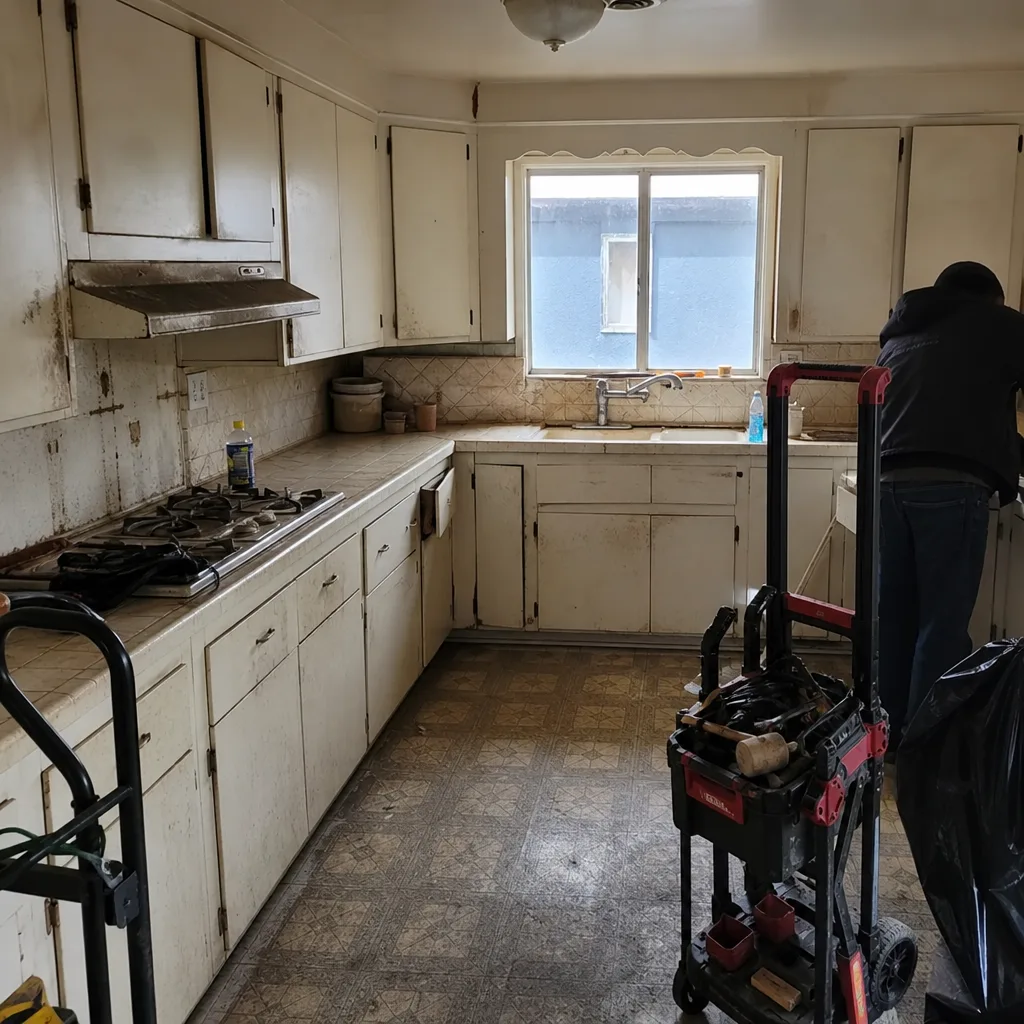 Before
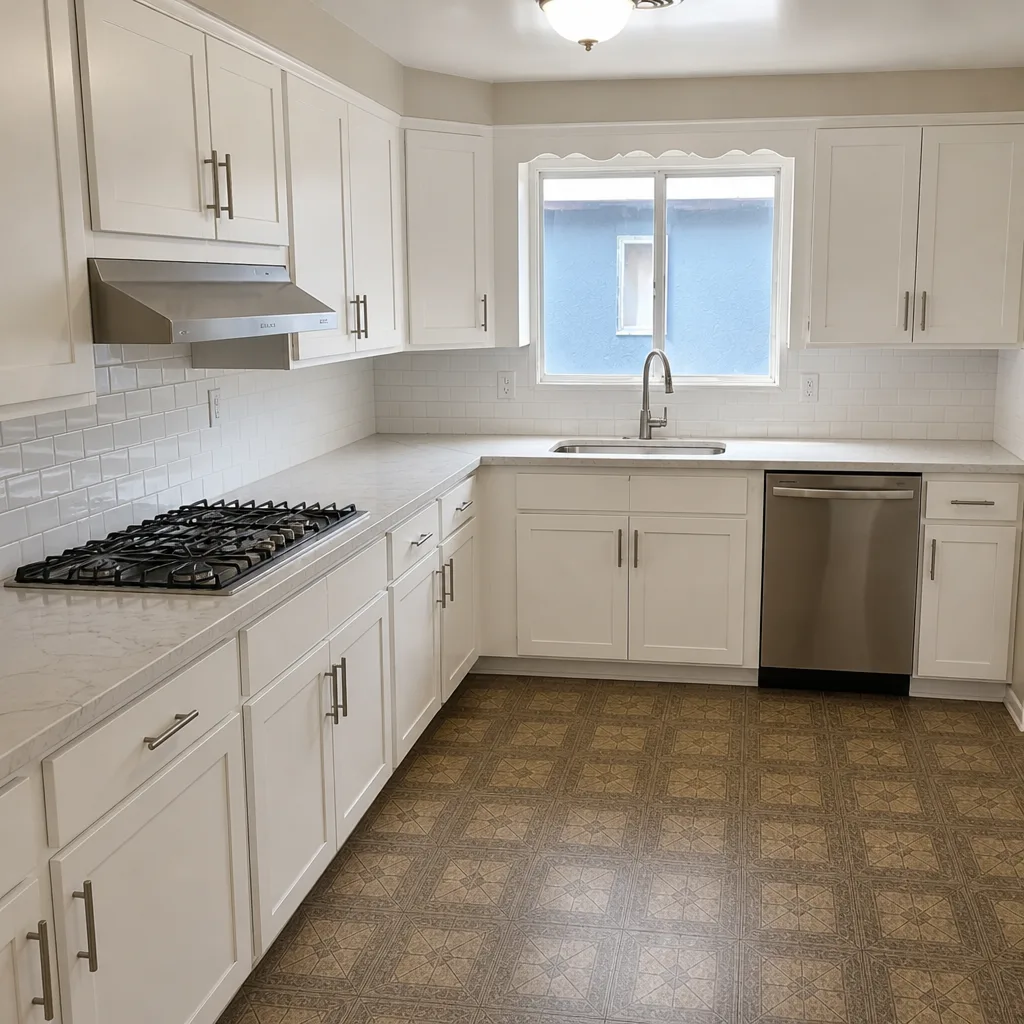 After
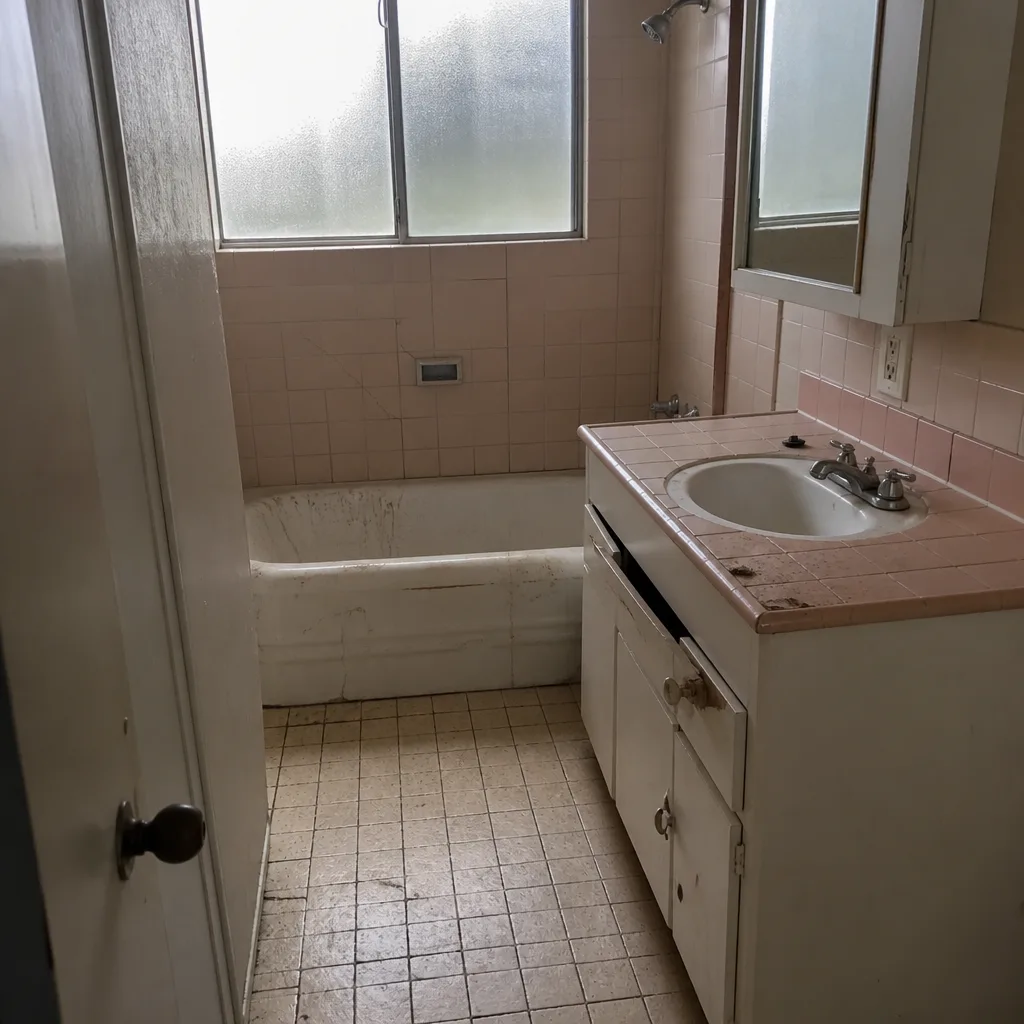 Before
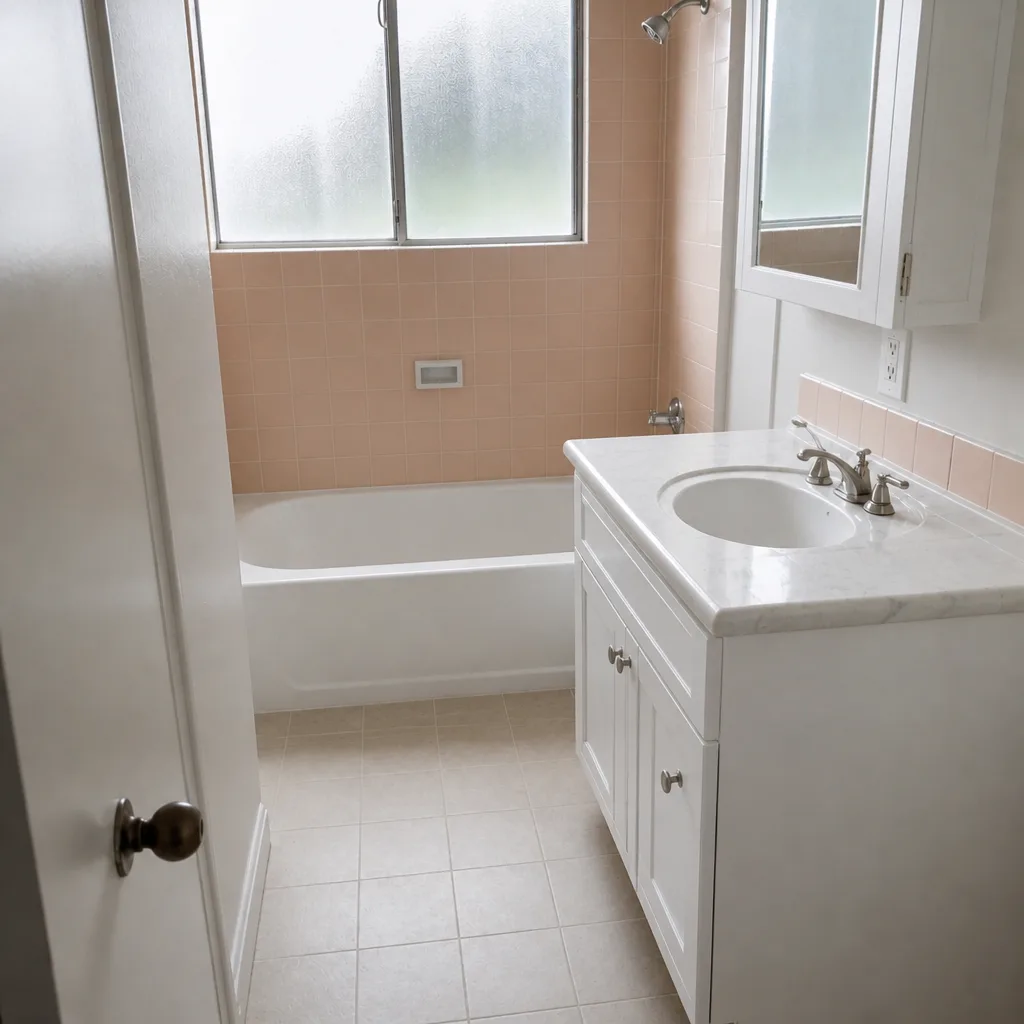 After
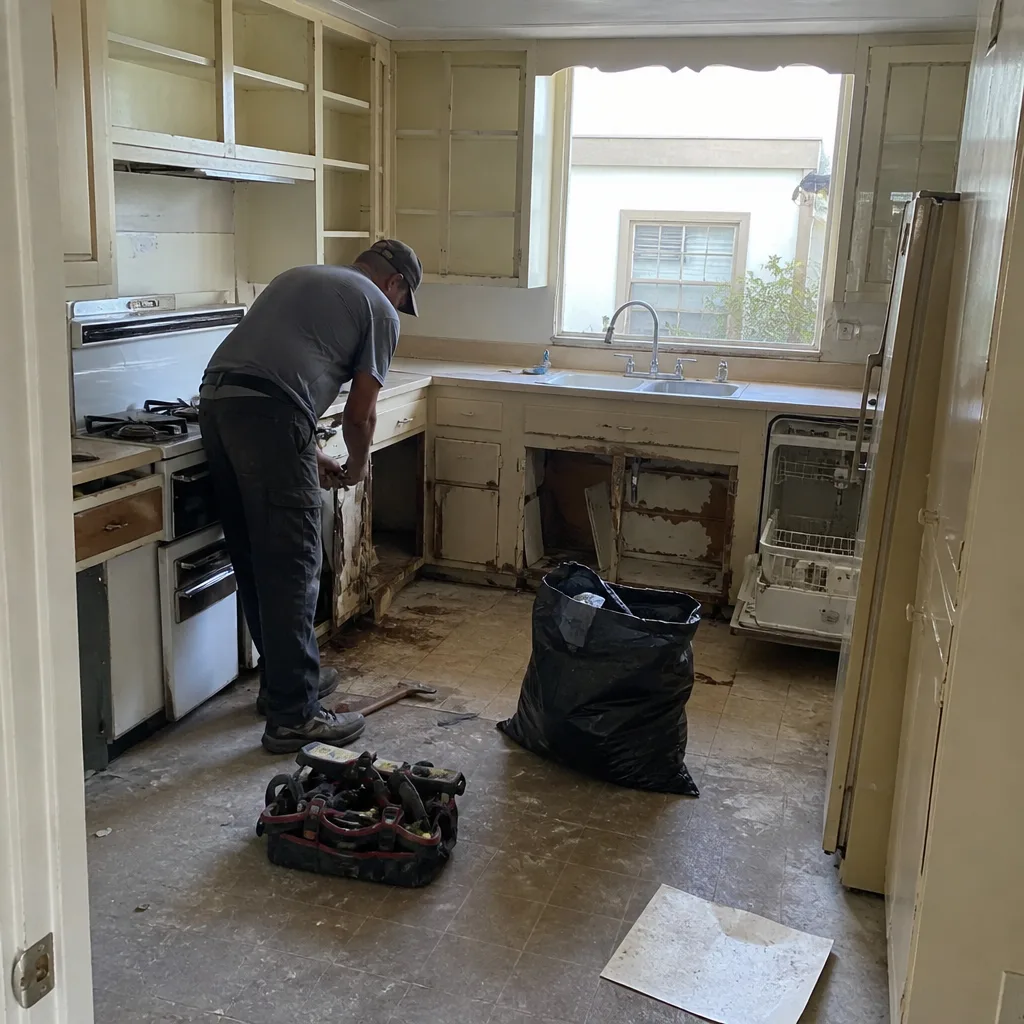 Before
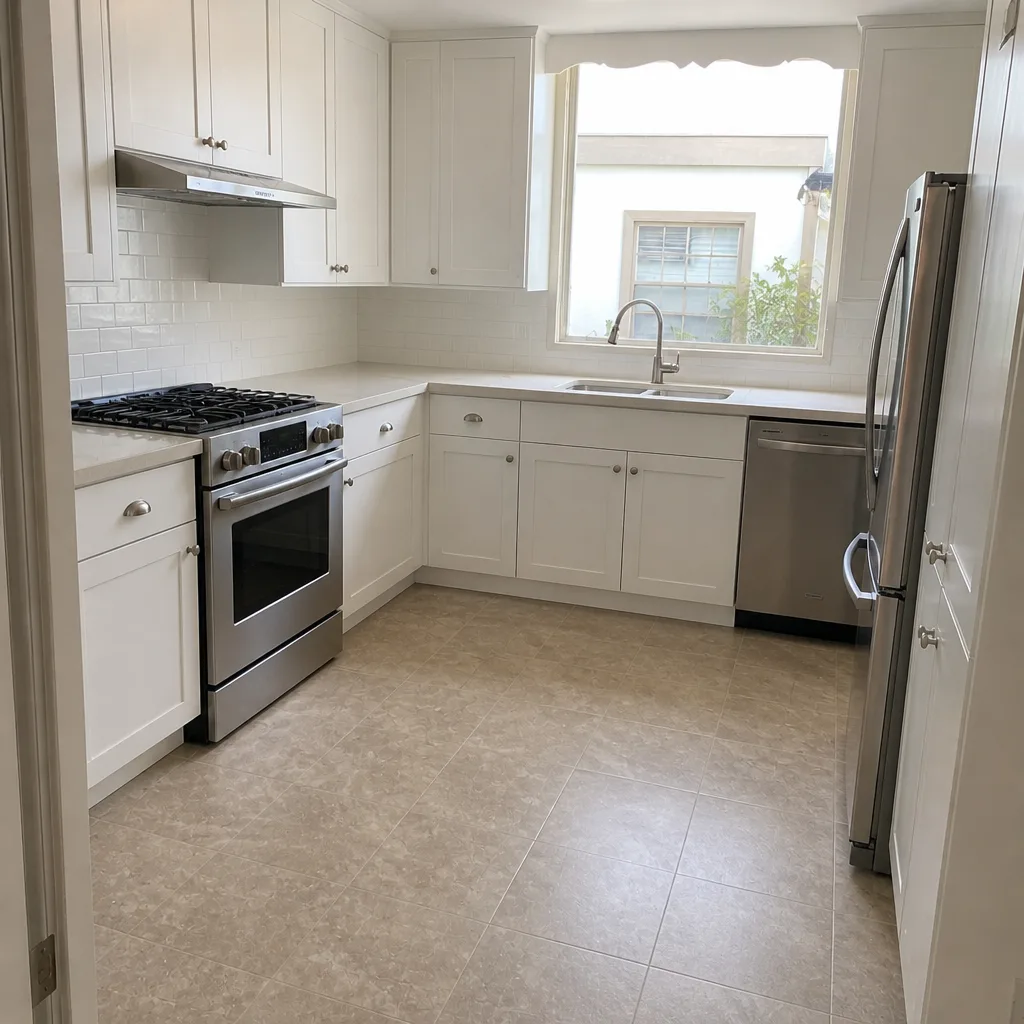 After
When to Call a Professional
Most seasonal care is homeowner work. But a few situations demand a trained professional, and it’s worth drawing the line clearly. Call a licensed pro if any of the following are true: you’re getting on a roof above single-story eave height, you find a soft or spongy spot in the roof sheathing, you see water staining on interior drywall or at the base of the wall, the stucco has a crack wider than 1/8 inch or running diagonally from a corner, the driveway or patio slab has lifted more than 1/4 inch, any drainage system is going to need re-grading or French drains, and any work touches the electrical panel, gas line, or framing. Roofing, structure, drainage, and additions are not the categories where a homeowner saves money doing it alone; they’re the categories where a homeowner creates the expense.
Groundwork Construction Co. of Burbank offers free estimates in Burbank – call (844) 797-7958 to schedule. Our technicians have up to 12 years of experience, calls are answered by a live person 24/7, and every project is backed by our 730-Day Done Right Promise. If a repair is out of your scope, we’ll tell you exactly what it needs and what it costs, upfront, before anything is signed.
Frequently Asked Questions
September is the highest-leverage month in Burbank because it’s the last moment before the Santa Ana wind window opens. Everything you seal, clear, and fasten in September holds through the wind season and into the rain. Skip September and you’re making repairs in October that could have been prevented.
Once a year, ideally in September, before Santa Ana winds arrive. If a roof is over 15 years old, twice a year – once in April after rain season and once in September before wind season. A roof inspection typically costs nothing on a bid, and the maintenance is far cheaper than a leak repair; call (844) 797-7958 to schedule a free estimate.
Most hairline cracks under 1/16 inch are cosmetic and normal in Burbank’s climate. The ones worth attention are wider than 1/8 inch, longer than 18 inches, or that run diagonally from a window or door corner – those indicate movement that should be looked at by a professional. Caulk and paint small cracks during your fall prep. Call (844) 797-7958 if a crack is in the “worth attention” category.
Standing water within 5 feet of the foundation 24 hours after rain is the clearest signal. Secondary signs are efflorescence on the stucco base, damp garage walls, and dirt streaks running down the driveway or walkway after rain. Fixing grade and discharge is usually a small job when done before the next rain season – call (844) 797-7958 for a free estimate.
No, routine maintenance and repair don’t need a permit. Anything that changes the envelope, structural system, plumbing layout, electrical circuits, or footprint does. Replacing a shingle or a few roof tiles is repair; replacing the whole roof envelope is a permit. Extending a patio is usually repair; adding a new patio slab that touches the foundation is a permit question. When in doubt, ask the City of Burbank Building Division before you start.
A reasonable rule for a Burbank single-family home is 1-2% of the property’s value per year for maintenance and repairs, with a separate sinking fund for planned exterior work. The split between routine maintenance (a few hundred a year) and the tier 2 and tier 3 repairs is where the real planning matters – budgeting for the fix before the wind season is far cheaper than the emergency-repair premium after the first rain. Call (844) 797-7958 for a free estimate to build the actual number for your house.
The Bottom Line
Burbank’s climate cycle only rewards homeowners who respect it. The two high-risk windows – October through December for wind damage, January through March for rain-driven drainage and foundation issues – are what should shape your maintenance calendar, not a generic national checklist. Pre-season sealing in September, post-rain inspections in March, and a hard triage of deferred maintenance before summer heat sets in will save you thousands compared with reactive repairs. Everything else is small tasks done on time. If any of it moves past your comfort level, the inspection is free and the quote is upfront. From foundation to finish line, from Groundwork Construction Co. of Burbank home services to driveway and pavers in Burbank, we handle the work with a 730-Day Done Right Promise and no-surprise pricing.
Call (844) 797-7958 to schedule your free estimate, and get the maintenance plan for your specific house in writing before the next season starts.
Written by the team at Groundwork Construction Co. of Burbank.