



Free written scope consultation - allowances, timeline, and change-order rules on paper before a single trade is scheduled
Styles & brands we work with
- Kitchen remodeling
- Bathroom remodeling
- Home additions & ADU
- Roofing
- Windows & doors
- Driveway & pavers
- Fence
See the difference
 Before
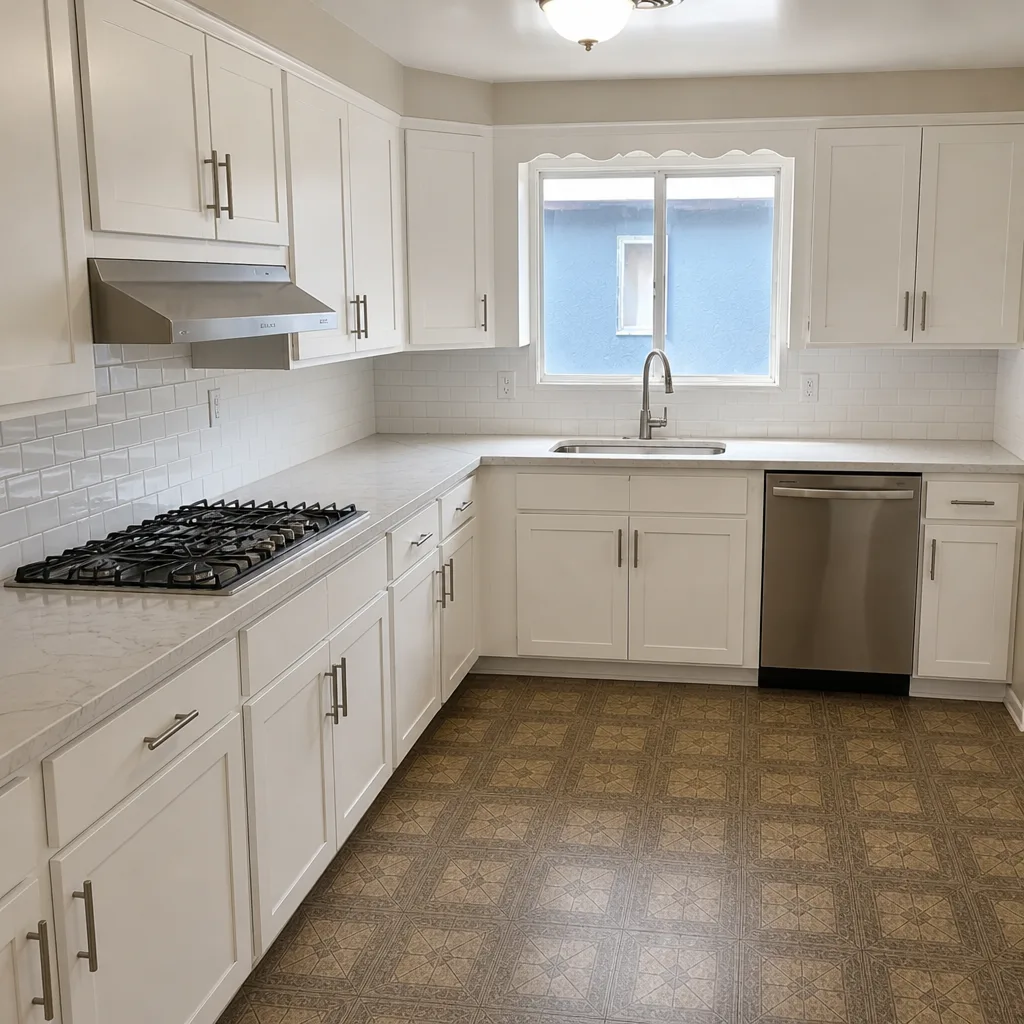 After
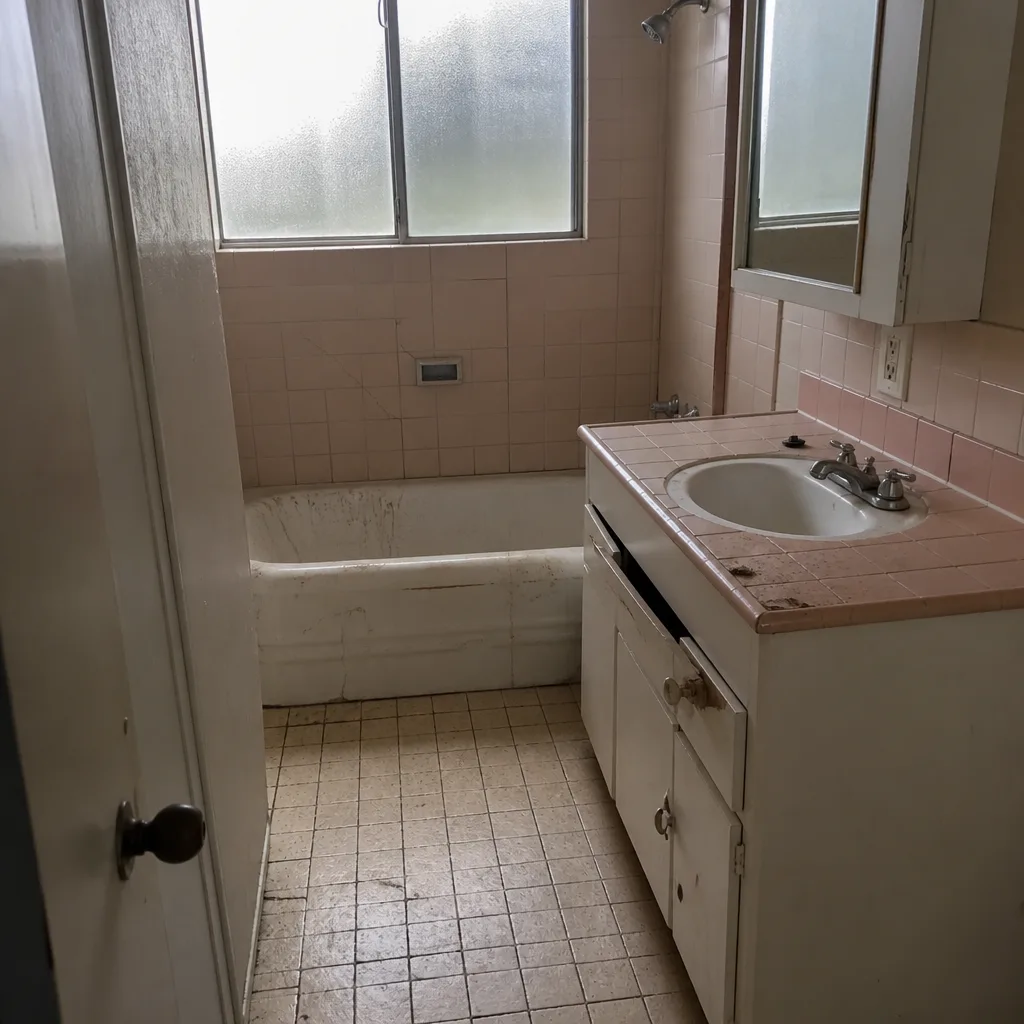 Before
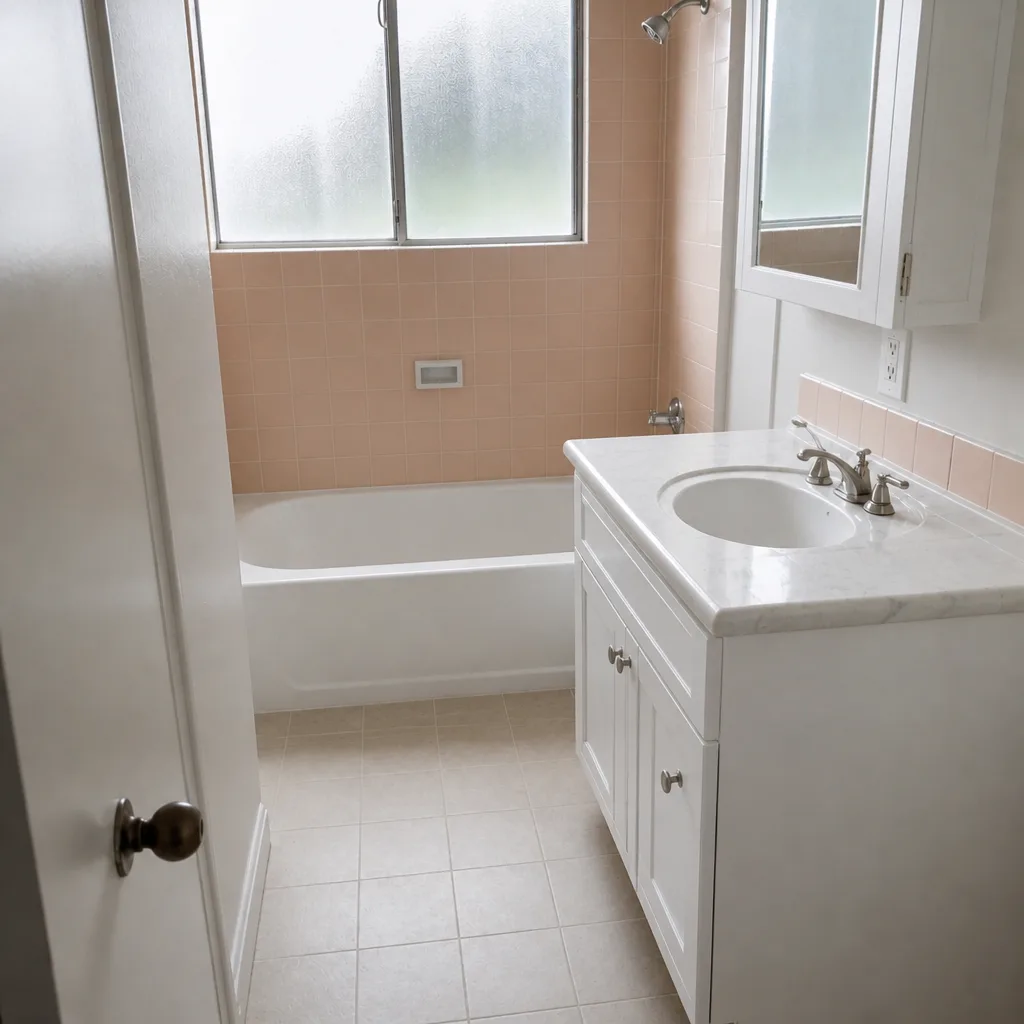 After
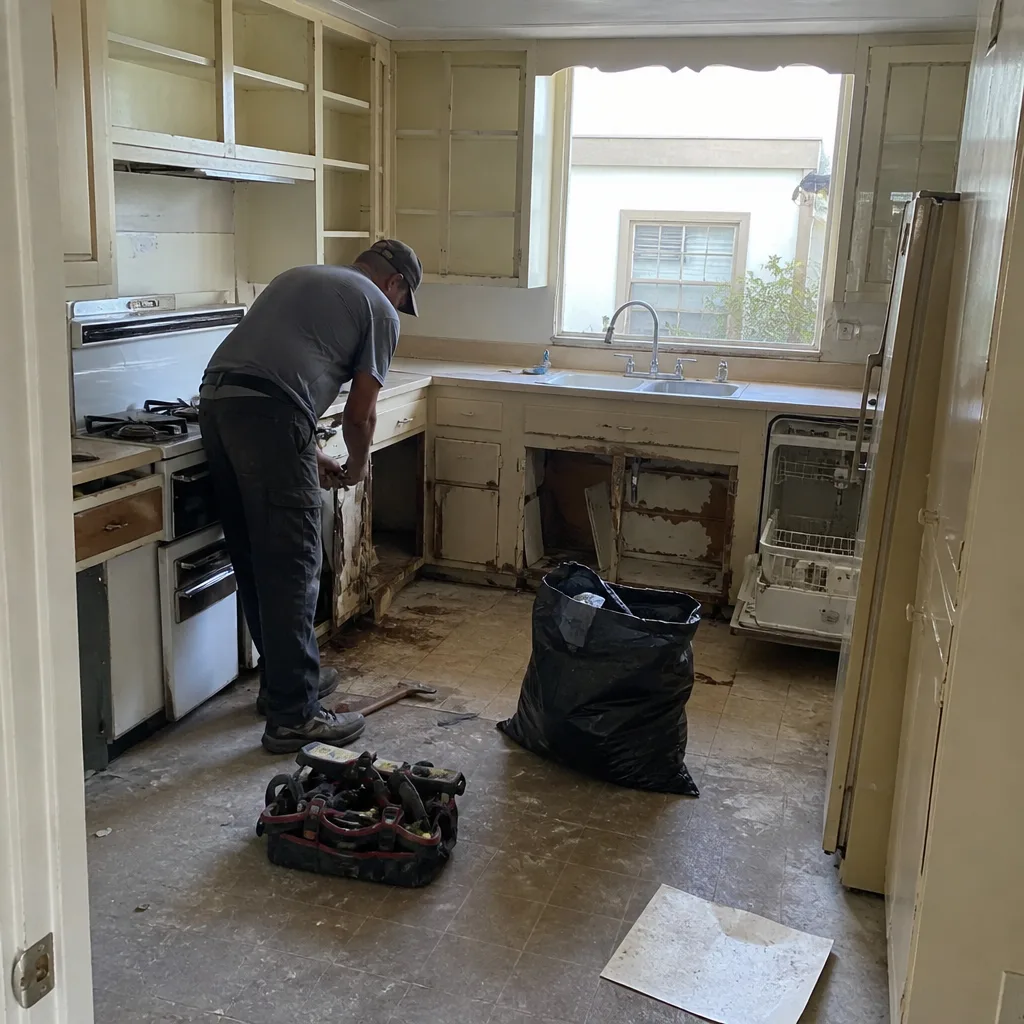 Before
 After
What Causes Roof Leaks in Burbank, CA? The Short Answer
On most Burbank homes, the number one cause of a roof leak is a cracked rubber pipe boot collar, followed closely by separated stucco-to-roof flashing. Burbank’s roofs rarely fail from too much rain. They fail from too much sun, too much heat, and the occasional Santa Ana wind event that mechanically rips apart every flashing joint a long summer already weakened. If water is showing up on a ceiling in Burbank, those two failures explain the majority of what we find.
Groundwork Construction Co. of Burbank handles Roofing repair and replacement across the valley, and the cause list we work from here is built for a hot, dry San Fernando Valley basin, not for a wet climate. Call (844) 797-7958 and a live person answers, day or night, if you want a cause confirmed on your own roof.
Why Sun, Not Rain, Is the Main Driver Here
Burbank sits in a hot basin where roofs bake under unshaded summer sun for months at a stretch and stucco walls soak up heat all day. When winter rain finally arrives, the vulnerable points are the ones the heat already aged out. That’s the opposite of the national cause list, which assumes shingle rot and ice damming are your problem. In Burbank, moisture-driven shingle deterioration is rare. UV breakdown and thermal movement are routine.
The Burbank cause frequency ranking
Here are the leak sources in the order we actually encounter them on Burbank homes, roughly most to least common:
- UV-degraded pipe boot collars. The black rubber collar around a plumbing vent cracks within 10 to 15 years on south-facing slopes. On the valley-floor ranch homes built in the 1950s and 60s, this is the single most common leak source, full stop. A collar that looks fine from the ground can be split wide open up close.
- Stucco-to-roof flashing separation. Covered in detail below.
- Mortar erosion on clay tile ridges and hips. After a strong Santa Ana event, ridge and hip mortar that’s already cracked will let go, and the first real rain finds its way under the tile.
- Valley flashing corrosion from acidic tree debris. Also covered below, because most homeowners never hear about it.
- Fascia and barge rafter rot on north-facing eaves. The north side stays damp through winter and never gets the sun that dries the rest of the roof. Wood softens, the edge detail opens up, and water tracks in.
The Stucco-and-Flashing Joint: A Burbank Problem, Not a National One
Here’s where Burbank’s housing stock matters. The city’s older neighborhoods, from the 1920s through the 40s Spanish Revival and Craftsman bungalows of Magnolia Park and the Rancho Equestrian district to the stucco ranch homes on the hills and post-war flats, are wrapped in continuous stucco. That stucco meets the roof at a step or counter flashing, and the two materials behave very differently in heat. Stucco has high thermal mass and moves slowly. Thin metal flashing heats and cools fast, expanding and contracting every single day. Over years, that differential works the joint open.
A leak checklist written for wood-sided homes in the Pacific Northwest would skip this entirely, because those homes don’t have a stucco wall butting into a metal edge. In Burbank, it’s near the top of the list. If you’re maintaining an older home here, the Burbank service area page is a good place to see the neighborhoods and housing types we work in most.
Why unpermitted garage conversions keep leaking
Burbank’s flatland bungalows frequently hide converted garages and additions that were never pulled with a permit. The trouble spot is the junction where the original roofline meets the new one: it’s often a hand-flashed, non-standard joint that nobody inspected, and it fails at the first sustained rain. Tracing that leak back to its source means understanding the original permit history, which is something Groundwork reviews as part of scoping a repair, because you can’t fix a joint properly if you don’t know how it was built.
What the debris in your valleys is actually doing
Burbank’s mature canopy is full of pepper trees and Mexican fan palms, and both drop acidic organic matter. That debris doesn’t just clog a valley. It sits against galvanized flashing and chemically eats it, so the metal fails far earlier than it would under clean leaves. Homeowners rarely connect a pepper tree overhead to a rusted valley below, and it’s one of the more common causes of premature valley failure we correct.
What Roof Leak Repair Usually Costs in Burbank
Once the cause is identified, most Burbank roof repairs land in a predictable range. These are the numbers we quote, with upfront pricing so the figure you see is the figure you pay:
| Work | Typical Burbank range |
|---|---|
| Roof repair (single leak, flashing, boot, valley) | $400 – $1,800 |
| Tile roof repair (ridge or hip mortar) | $600 – $2,500 |
| Full roof replacement (asphalt shingle) | $8,000 – $20,000 |
| Metal roof installation | $15,000 – $40,000 |
Small, localized repairs sit at the low end. A repair that turns out to be several failed boots plus a soft valley climbs toward the middle. When the cause turns out to be widespread UV aging across a 20-year-old shingle field, replacement can be the honest answer, and we’ll say so rather than patch a roof that will leak again next season. For projects over $10,000, we offer $1,000 off, and 0% financing for 18 months is available so a larger job doesn’t have to wait.
Which causes cost the most to fix?
Stucco-to-flashing separation and valley corrosion are the two priciest common causes, because both require carefully reworking a joint rather than swapping one part. A pipe boot collar is the cheapest and fastest fix, often done in a single visit. If a leak keeps returning to the same spot after a patch, that’s usually a sign the real joint was never corrected, and it’s worth getting eyes on it. Call (844) 797-7958 for a free estimate.
Why the First Two Rainy Seasons Matter Most
Installation is where the most consequential leaks are born: a pipe boot that isn’t seated flat, a valley lap that’s short by an inch, a flashing fastener that never got tightened. Every one of those shows up within the first two rainy seasons. That timing is exactly why the work we do is backed by the 730-Day Done Right Promise, one of the longest workmanship guarantees in residential construction. If it’s not done right, we make it right. When we rebuild a flashing joint or reset a boot, we’re on the hook for it well past the point where a sloppy install would surface.
Materials count here too. We work with brands like Boral and PGT because on a Burbank roof, UV and heat resistance is the whole game. Our technicians have up to 12 years of experience, and they’re background-checked and uniformed on every job.
FAQs About Roof Leaks in Burbank
UV-degraded pipe boot collars are the most common cause, because the rubber cracks within 10 to 15 years on south-facing slopes and every home with a plumbing vent has one. After that, stucco-to-roof flashing separation ranks highest. A quick inspection usually confirms which one you’re dealing with. Call (844) 797-7958 for an exact quote, estimates are free.
A storm-driven leak usually means a joint was already compromised and only the sustained rain or wind found it. Santa Ana wind events separate flashing and mortar that heat has already weakened, so the damage exists before the storm. It’s the weather that reveals it, not the weather that causes it.
It depends on the cause: a failed pipe boot, a separated flashing joint, or eroded ridge mortar is a targeted repair, while widespread UV aging across an old shingle field often points to replacement. A repair in the $400 to $1,800 range is common; a full replacement runs $8,000 to $20,000. Call (844) 797-7958 for a free estimate and a straight read on which you need.
Most single-leak repairs, including a pipe boot or a flashing reset, are completed in a single visit, while larger repairs involving a valley or several failing points may need a return trip once the source is confirmed. We give you a clear timeline with upfront pricing before any work starts.
Get Your Burbank Leak Diagnosed by the Right Cause
If you’d rather have it looked at, Groundwork Construction Co. of Burbank offers a no-pressure assessment in Burbank, built around the failures this city’s sun and stucco actually produce. Call (844) 797-7958 today for a free estimate. A live person answers, 24/7.
Written by the team at Groundwork Construction Co. of Burbank, serving Burbank, CA.