
Driveway & Pavers: Repair or Replace? How Burbank Homeowners Decide
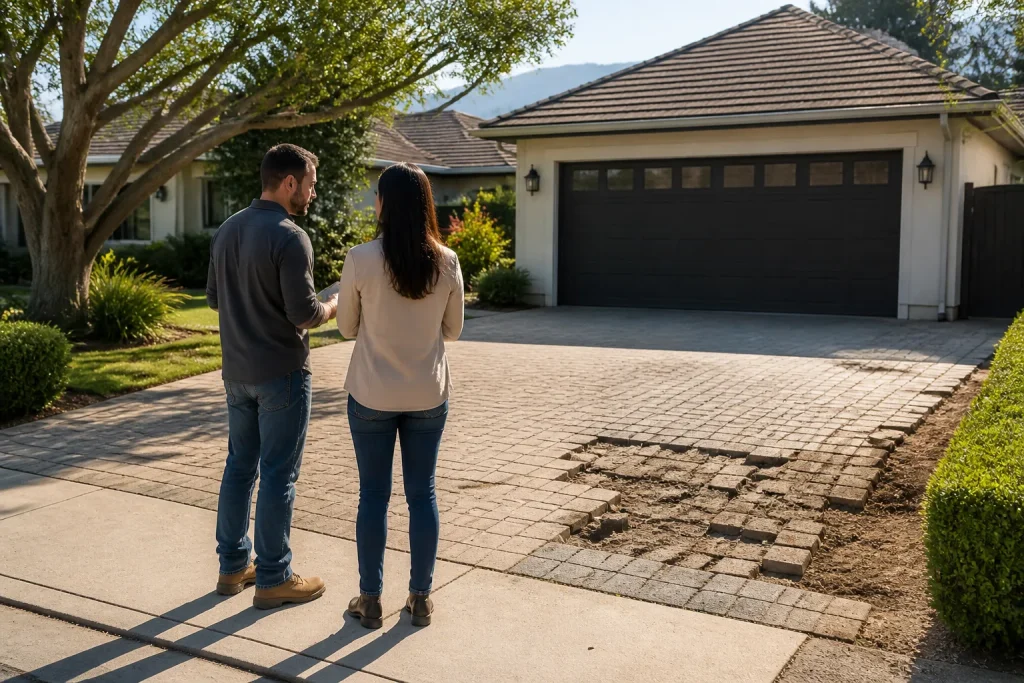
A contractor who recommends full replacement without digging down to inspect your base isn’t giving you a recommendation – they’re giving you their revenue preference. That’s the hard part of this decision: most estimates arrive before anyone actually inspects what’s under the pavers. In our experience, the answer usually lives three to six inches below the surface. Here’s the diagnostic framework Burbank homeowners can use to answer the repair-or-replace question with evidence instead of a gut feeling. If you’d rather have a pro walk the driveway with you, call (844) 797-7958.
Why This Is an Engineering Question, Not a Budget Question
Walk any Burbank neighborhood – Magnolia Park, Rancho Equestrian, the streets just off Glenoaks – and you’ll see paver driveways at three stages of life: solid, patched, and limping. The urge is to compare the repair quote to the replacement quote and pick the smaller number. That math is backwards. What you’re actually choosing between is the lifespan of a repair on a compromised base and the lifespan of a new install on a corrected base. Get the base wrong and every dollar spent on top is sunk.
Burbank’s soils and seasonal swing add weight to this. We get dry summers that shrink clay-heavy soils and pull water away, then winter rains that saturate and expand them again. A driveway that sat on a thin, uncompacted base will show movement within a few seasons – not because the pavers failed, but because the ground under them did. If you only reset the surface, you’ll be resetting it again after the next wet winter. The base is the deciding factor. Everything else is cosmetic.
Key takeaways to hold onto:
- Repair is a sound investment only when the base is still structurally competent.
- Replace is the rational answer when failure is widespread or rooted in the base.
- Drainage correction belongs in every replacement decision, not as an add-on.
- Any quote that skips a base inspection is an incomplete quote.
The Base Condition Thresholds That Decide Repair vs. Replace
Here’s the line we use when assessing a paver driveway. Repair is viable when the base holds up under these tests:
- No rocking underfoot. Walk the full field in silence. A single settled paver that wiggles is normal. A whole zone that shifts and clicks under pressure means the bedding layer or base has lost integrity.
- No ponding after rain. Standing water in the same low spot every storm is a drainage or subgrade problem, not a surface problem.
- Edges still locked. Intact edge restraints and a straight border mean the perimeter is holding. Spreading borders are a warning sign.
- Settling is isolated, not clustered. One dip near a downspout is a fixable point issue. Two or three dips spread across the driveway usually means the base is failing everywhere.
When those four pass, a repair – pulling the affected pavers, correcting the bedding, re-locking the field – buys you real years. When two or more fail, especially rocking combined with widespread settling, any surface repair is temporary by definition. You’re fixing the symptom while the cause stays put.
The Specific Failure Patterns and What Each One Tells You
Every failure has a root cause, and the pattern tells you where to look:
- Isolated settling – one low paver near a downspout, driveway edge, or a former utility trench. Root cause is usually localized water or a poorly compacted spot. Repair-friendly.
- Widespread rocking – pavers shift underfoot across the field. Root cause is a base that lost density, often from a thin base layer or saturation. Repair is a re-lift at best; replacement is usually the honest call.
- Edge deterioration – the border pavers spread and the field loosens outward. Root cause is a failed edge restraint or a base that wasn’t extended past the curve. Often repairable if caught early.
- Joint erosion – the sand or polymeric joint fills wash out and weeds take hold. Root cause is water moving across the surface without a path off it. Re-sanding helps short-term, but without drainage correction it comes back.
Those patterns aren’t equally forgiving. We’ve walked driveways in Burbank’s Rancho Equestrian where the only issue was a single settled paver by a downspout, and the answer was a morning’s work. We’ve also seen fields that looked decent from the street but rocked under every step – and that’s a replacement conversation.
How to Run the True Cost Comparison on Burbank Numbers
Most homeowners compare the two quotes side by side and stop there. The correct comparison includes expected lifespan so you’re comparing cost-per-year, not cost-per-job. Here’s the framework with realistic Burbank ranges (get an exact written quote for your specific driveway, since size, access, and base condition drive the number):
| Path | Typical upfront cost | Expected added lifespan | Cost per year |
|---|---|---|---|
| Spot repair (isolated settling, joint repair) | Low four figures | 3 – 5 years | Low hundreds |
| Field re-lift (partial base rework) | Mid four figures | 5 – 8 years | Several hundred |
| Full replacement (with base and drainage) | Five figures for a typical residential driveway | 25+ years | Low hundreds amortized |
Run those numbers and a pattern appears: a cheap repair on a failing base looks great until you stack two or three of them together, at which point you’ve spent replacement money and still don’t have a replacement. That’s the overspend trap. A full replacement with a proper base and drainage correction, amortized over decades, often lands in the same cost-per-year band as repeated patches – but with a driveway that actually still works. We’ll write the line-item comparison out for you in a free estimate, so you’re deciding on numbers, not vibes.
Why Drainage Correction Has to Be Part of Any Replacement
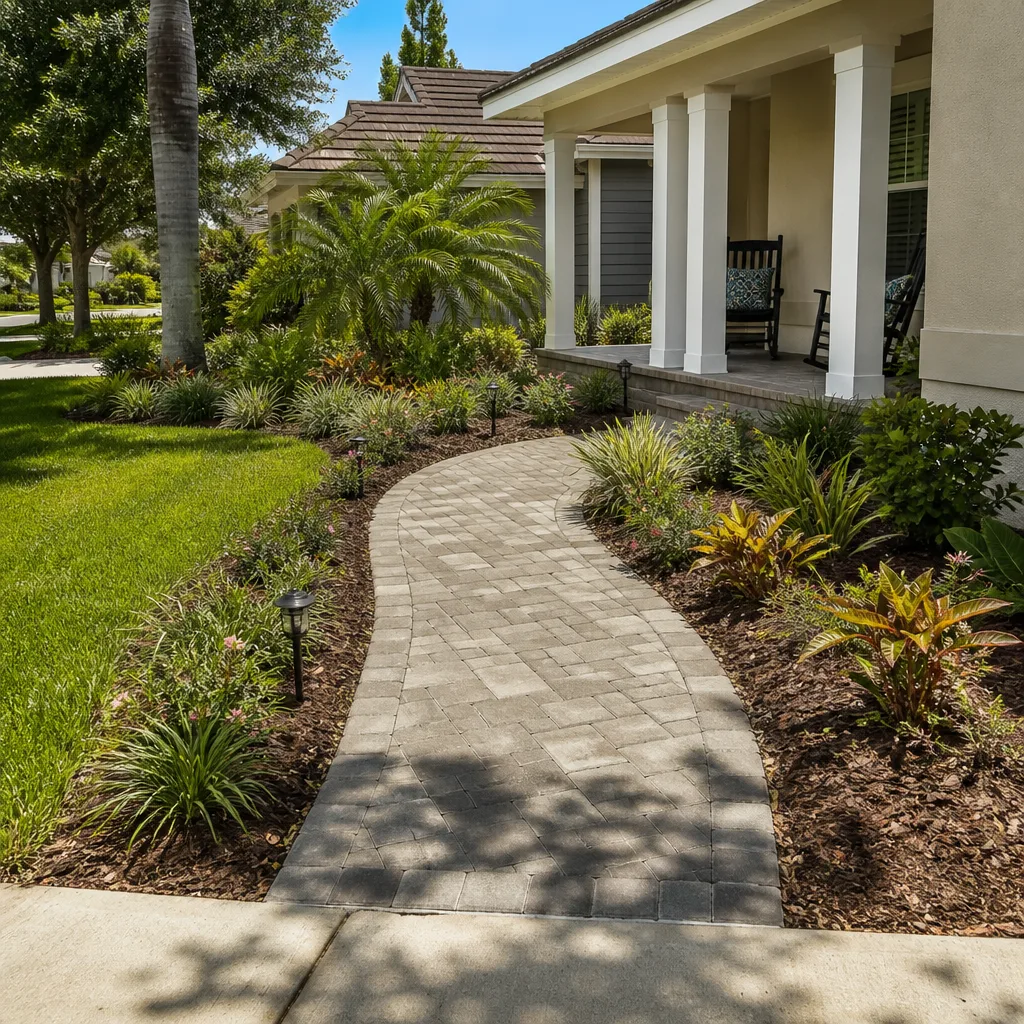
Replacing pavers without addressing the drainage that caused the failure is just scheduling the next failure. If your old driveway ponded near the garage door, or water ran across it instead of off it, a new set of pavers on the same grading will pond in the same spot. The pavers aren’t the problem – the water path is. In Burbank, where the rainy season can dump a lot in a short window, that path matters.
A replacement that’s built to last, backed in writing, includes regrading to move water off the driveway, a base depth suited to the soil and expected load, proper compaction in lifts, and edge restraints that hold under lateral pressure. Those decisions happen before the first paver goes down. If a quote skips past drainage and goes straight to “we’ll lay new pavers,” ask why. Replacing the surface without correcting the cause means you’ll be calling someone again sooner than you’d like.
The Questions That Force a Contractor to Justify the Recommendation
You’re the one writing the check, so you’re allowed to ask for evidence. Use these in the conversation:
- “Did you inspect the base, and what did you find?” – a real assessment involves probing and lifting a paver or two, not just looking.
- “Which failure pattern are you seeing, and what’s the root cause?” – a straight answer means they understand the job.
- “Is this fix temporary or permanent, and why?” – you want the honest horizon, not the sales version.
- “What’s your drainage correction plan?” – especially if water has ever ponded or pooled near a door or the garage.
- “What happens if the base is worse than you expect once you open it up?” – transparent pricing means the number you agree to is the number you pay; ask how that’s handled.
When those questions get specific answers, you’ve found a contractor worth trusting. When they get a shrug and a firmer estimate, that’s your answer too. When to call a pro: anytime you’re weighing replacement, or a repair you’ve already done keeps returning in the same spot. We’ve seen it more than once – a surface fix that lasted one Burbank rainy season and was back to rocking by spring. That’s the signal to bring someone in for a proper look.
Related Services in Burbank
Once the driveway question is settled, homeowners often have the same conversation about the rest of the exterior. If you’re weighing hardscape work alongside fencing or a garage conversion, our Driveway & Pavers in Burbank page covers the full install scope, our Fence Installation in Burbank page covers matching curb-line work, and our Home Additions & ADU in Burbank page is where to start if a driveway decision is tangled up with a bigger project. You can see how we run the whole exterior scope from Groundwork Construction Co. of Burbank home.
What happens when you call
- 1
A real person answersNo phone trees – you reach a local pro.
- 2
You get an upfront price rangeHonest numbers before anyone is dispatched.
- 3
A background-checked tech heads outLicensed & insured, dispatched right away.
- 4
You approve before work beginsNothing starts until you say go.
The Bottom Line
The repair-or-replace call on a paver driveway in Burbank comes down to the base and the drainage, not the size of either quote. If the base is still sound and the settling is isolated, a targeted repair is money well spent. If the field rocks, the edges are spreading, or water’s been ponding, replacement with drainage correction is the honest answer – and repeated patches will cost you more in the long run. We offer transparent pricing and stand behind the work with our 730-Day Done Right Promise: if it’s not done right, we make it right. If you’re in Burbank and need help, Groundwork Construction Co. of Burbank offers free estimates – call (844) 797-7958. Calls are answered by a live person, 24/7, and every project is backed by background-checked, uniformed technicians. And note the standing offer: $1,000 off projects over $10,000, plus 0% financing for 18 months to make a proper replacement easier to absorb.
Frequently Asked Questions
Spot repairs for isolated settling and joint issues typically run in the low four figures, while a partial field re-lift runs higher. The number depends on square footage, access, and how much base needs correction. Call (844) 797-7958 for an exact quote – estimates are free.
Not when the quote is upfront and itemized. We inspect the base first, then write the price to the actual condition we find, so the number you agree to is the number you pay. Call (844) 797-7958 to schedule your free estimate.
Repair is worth it when the base holds, the settling is isolated, and the edges are still locked. Replace when the field rocks, settling is widespread, or water has been ponding. If two or more of those red flags are present, repeated repairs cost more than a properly built replacement. Call (844) 797-7958 for a base inspection and a written comparison.
A replacement built with a properly graded, compacted base and correct drainage should serve 25 years or more. The lifespan lives in the base and drainage work, which is why we never treat either as optional. Call (844) 797-7958 to talk through your driveway and get a free estimate.
Written by the team at Groundwork Construction Co. of Burbank.
Need Construction Help?
Call Groundwork Construction Co. of Burbank - the local pro we connect you with is licensed and insured, here with fast after-hours help in Burbank.
(844) 797-7958