
Top Signs You Need Construction Service – Don’t Ignore These
The most expensive construction projects in Burbank aren’t the big planned remodels – they’re the small ignored problems that compounded for three years before a homeowner finally called someone. Water finding a foundation through a bad driveway grade, a hairline crack that widens a millimeter each season, a fence post that’s been quietly rotting since a wet winter. The signs are almost always there. They just whisper instead of shout. Here’s what to look for, what it means, and when it’s genuinely worth picking up the phone.
If you’d rather have trained eyes look at it than spend a weekend guessing, call (844) 797-7958 and we’ll take a look. Estimates are free.
Cosmetic Cracking vs. Structural Cracking: How to Tell the Difference

Not all cracks are created equal, and the difference matters more than most homeowners realize. Cosmetic cracks live in the finish surface – the stucco skin, the paint layer, the topcoat of a driveway. Structural cracks go deeper, into the slab, the foundation, or the load-bearing walls, and they’re the ones that signal a real construction problem.
Here’s how to read them without an engineering degree:
- Width: A hairline crack under 1/16 inch that stays put is usually cosmetic. Anything wider than a credit card edge, or a crack that’s visibly widened since you last checked, deserves a professional look.
- Direction: Vertical cracks in concrete are often just shrinkage. Horizontal cracks – especially in a foundation wall or a retaining structure – are a bigger flag because they usually mean lateral pressure or settlement.
- Pattern: Stair-step cracks that follow the mortar joints of a brick or block wall are classic settlement signatures. So is a crack that runs diagonally from a window corner.
- Displacement: If one side of the crack sits higher or lower than the other, the two sides have moved independently. That’s movement, not shrinkage.
In Burbank, we run into this constantly on older flatwork around Magnolia Park and the Rancho Equestrian District, where decades of clay-heavy soil expanding and contracting with the seasons has worked on slabs built long before modern drainage standards. A crack that’s been there ten years and hasn’t moved is one thing. A crack that showed up last spring and is now twice as long is data, and it’s telling you something.
When Driveway Drainage Pushes Water Toward Your Foundation
This is the single most overlooked construction warning sign we see in Burbank, and it’s almost always misdiagnosed as a landscaping problem. If water pools near your garage door, runs along the base of the house, or leaves a mud stain on the foundation wall after a rain, you don’t have a drainage nuisance – you have a construction problem that’s actively working against your home’s base.
The math is uncomfortable. Standing water against a foundation does two things simultaneously: it softens and expands the soil underneath (causing heave and settlement), and it finds its way into any gap in the foundation waterproofing or the joint where the slab meets the wall. A driveway that was poured flat, or sloped the wrong way, or has settled at the apron over the years, is a funnel pointed at your biggest investment.
The tell-tale signs are specific:
- Water that lingers more than a few hours after rain in the same low spot
- Rust stains or efflorescence (the white powdery residue) on the foundation wall
- A visible gap or crack at the joint where the driveway meets the garage slab
- Mud splatter on the bottom course of siding
- Soft, spongy soil along one edge of the driveway after a storm
Correcting the grade isn’t a Saturday afternoon job with a shovel. It usually means re-sloping and re-pouring the affected section, sometimes with a channel drain. Our Driveway & Pavers in Burbank page walks through how a properly graded, properly pitched surface should look – and what it costs to get there.
Exterior Grade and Soil Settlement Signs That Signal a Base Failure
Long before you see a crack in the slab, the ground around the house tells you what’s happening underneath it. This is the part of home ownership nobody prepares you for – the soil is a structural material, and it moves.
Walk the perimeter of your Burbank home after a dry stretch and look for these:
- Low spots against the foundation – soil that’s settled lower than the surrounding grade, creating a bowl that collects water. Burbank’s clay soil shrinks in summer and swells in winter, and the settling often shows up as a visible dip along one side of the slab.
- A soil line that’s exposed too high on the foundation wall – if you can see more foundation wall than you could five years ago, the soil has settled away from the house. That gap channels water directly into the joint.
- Post holes pulling away from their posts – a fence post that’s wobbling or a gate that’s started dragging is sometimes just a hinge, and sometimes it’s soil that has shifted under the post footing. It’s worth checking the base before you blame the hardware.
- Uneven transitions at hardscape edges – a walkway that stepped up flush to the driveway when it was built and now has a trip hazard lip where the two meet is a settlement signature.
The fix for a base failure isn’t always dramatic. Sometimes it’s re-grading and a fresh compacted base layer. Sometimes it’s a more involved underpinning. The point is that every one of these signs is easier and cheaper to address at year one than year three.
Normal Post-Construction Settling vs. an Installation Error
A new driveway, new fence, or new paver patio will settle a little in the first year. That’s expected – the soil compacts under the weight, and materials expand and contract through a full cycle of seasons. What’s not expected is movement that doesn’t stop, or movement in a pattern that points at how the thing was built.
Here’s how to separate the two:
- Uniform vs. localized: Normal settling is gentle and spread across the whole surface. A single low spot, a single lifted panel, or a single out-of-plumb post is an installation signature.
- Timeline: Normal settling mostly happens in the first twelve months and then slows. Movement that’s still accelerating at year two is not settling, it’s a defect.
- Pattern: Paver installations that were laid without a proper compacted base layer will ripple and heave in waves. A fence line that was footed too shallow will lean in one direction after the first wet winter.
- Water behavior: Normal settling doesn’t change where water goes. If your new patio started draining away from the house and now drains toward it, the base has moved – and that’s on the installer.
We pulled a fence out over in the Rancho Equestrian District a while back where the original crew had set the posts at half the depth we’d use. Three winters later, the whole run was leaning like it had been drinking. The original contract was long gone and the original installer wouldn’t return the call. That’s exactly the kind of thing a workmanship guarantee is supposed to cover, and it’s why we put our work behind the 730-Day Done Right Promise – if it’s not done right, we make it right.
If you’re wrestling with a fence that’s already leaning, our Fence Installation in Burbank page covers what a properly footed, properly braced install should look like.
The Timeline Math: A $400 Problem at Year One vs. Year Three
This is the part that actually costs Burbank homeowners real money, and it applies to every construction issue on this list. Deferred maintenance compounds – not linearly, but like interest. Here’s what it looks like on the most common problems we see:
- Drainage correction at the driveway apron: A re-slope and re-pour of the affected section runs a modest amount at year one. Let it push water into the foundation for three years and you’re now looking at foundation waterproofing, possible interior moisture remediation, and a re-pour anyway – several times the original number.
- Hairline foundation crack: Addressed early with proper sealing, it’s a small line item. Ignored through three expansion cycles, the crack widens, water gets in, and you’re into structural evaluation and repair.
- Wobbling fence post: Reset the footing at year one, done. Three years later the post is rotten, the fence line is leaning, and you’re replacing the run, not repairing a post.
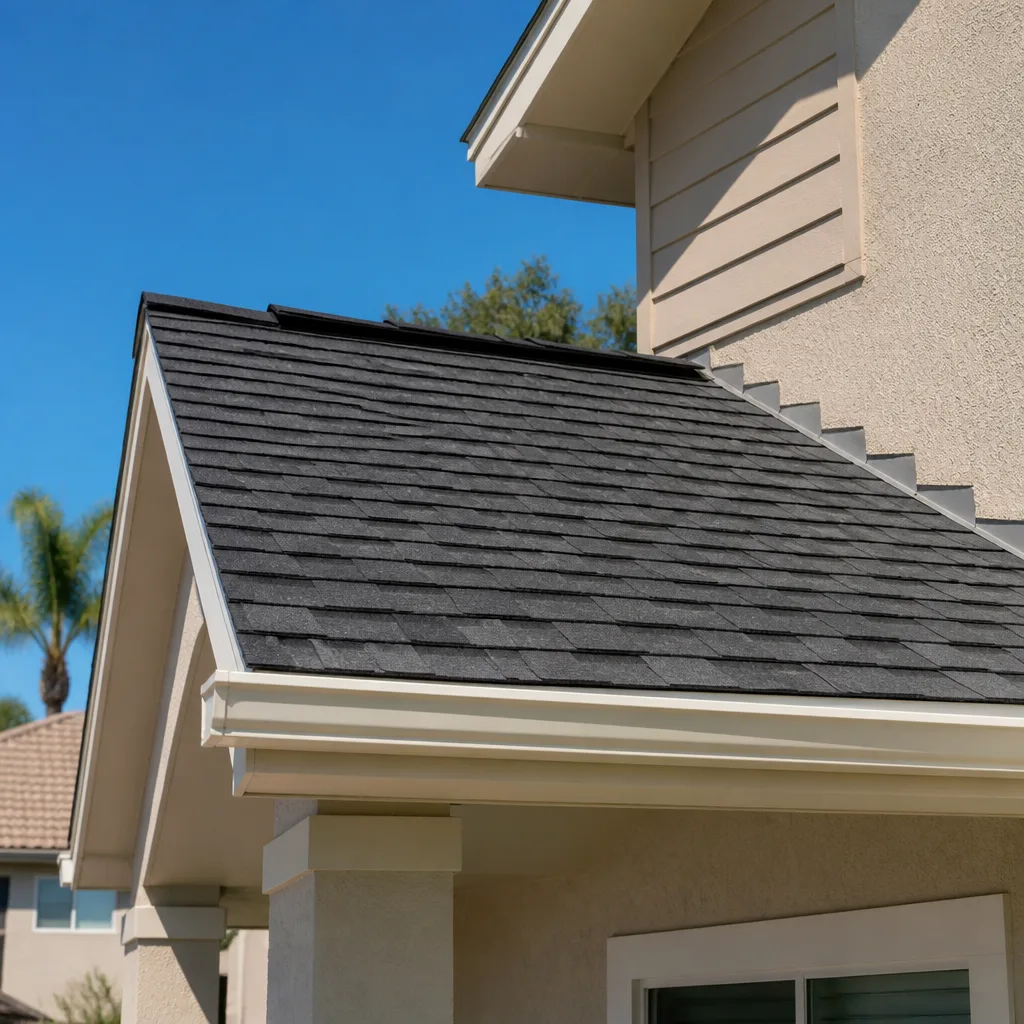
- Missing roof flashing detail: If you catch it on the first inspection, it’s a flashing repair. Let it leak for a couple seasons into the attic and the decking and insulation get involved too. We see this one a lot on Burbank homes going through their first rainy season after a roof install – the leak shows up, and the homeowner assumes it’s a material failure when it’s really a detail that was never completed.
The pattern is always the same. Small money now, large money later. We’ve never met a homeowner who regretted calling an expert at year one. The ones who call at year three are the ones who regret not calling sooner.
When to Call a Pro (And What to Have Ready)
Two situations genuinely warrant a professional look rather than a watchful eye. The first is any sign of active water intrusion – moisture in a crawl space, water staining on a foundation wall, or drainage that clearly pushes toward the house. The second is any structural movement: cracks that are widening, doors that have started sticking in a newer home, floors that feel noticeably uneven.
When you call, have a few things ready so the person on the other end can help you faster:
- A photo of the issue with something for scale (a coin or ruler alongside a crack works well)
- The approximate age of the affected surface or structure
- Whether the issue has visibly changed since you first noticed it
- Any history of water problems or prior repairs in the same spot
Our line is answered by a live person, 24/7, so you won’t get stuck in a voicemail black hole on a Sunday night when you finally notice the crack. A trained eye can usually tell within a few minutes of walking the property whether you’re looking at a manageable repair or something larger.
Related services in Burbank: if the issue is pointing at a bigger project – an addition, an ADU over the existing garage, or a full exterior repair scope – our Home Additions & ADU in Burbank page covers how we scope and price larger work. And for a full picture of everything we do, start at the Groundwork Construction Co. of Burbank home page.
The Bottom Line
Warning signs aren’t causes for panic. They’re data points, and your job as a homeowner is to read them early enough to keep a $400 problem from becoming an $8,000 one. The three questions worth asking about any issue you’re seeing: Is it moving? Is it letting water in? Is it getting worse? If the answer to any is yes, it’s time for an expert opinion.
We’ve worked on homes all over Burbank, from Toluca Lake to the Magnolia Park bungalows, and the pattern is always the same. The homeowners who call early spend less, sleep better, and end up with a house that’s genuinely built to last. That’s the whole reason we back our work with the 730-Day Done Right Promise – not because things go wrong, but because trust is the entire point of hiring a contractor.
If you’re in Burbank and need help, Groundwork Construction Co. of Burbank offers free estimates – call (844) 797-7958. Upfront pricing, no surprises, and a real person answers the phone.
Frequently Asked Questions
Measure the width first. Anything under 1/16 inch that hasn’t changed in years is almost always cosmetic shrinkage. A crack wider than a credit card edge, a crack that’s visibly widened since you last checked, a crack with one side sitting higher than the other, or a stair-step pattern in concrete or masonry is worth a professional look. In Burbank’s clay soil, expansion and contraction are the usual culprit, but how far the movement has gone determines whether it’s a reseal job or a re-pour. Call (844) 797-7958 for a free estimate if you’re not sure.
If you have water pooling against your foundation after rain, or a visible low spot at the garage apron, that’s a construction problem, not a landscaping one, and it needs a proper fix. Re-sloping and re-pouring a driveway section requires cutting out the existing concrete, re-compacting the base, and re-pouring to a correct grade – which is beyond the scope of a weekend DIY project and easy to make worse if it’s done wrong. Call (844) 797-7958 for an exact quote – estimates are free.
The initial inspection and estimate should cost you nothing. We provide free project estimates and design consultations, and that includes walking the property to assess a specific concern. Any real work that follows is quoted upfront with a fixed price – the number you see is the number you pay. Call (844) 797-7958 to schedule.
Most concrete driveway repairs that don’t involve full replacement are completed in a single visit, with a cure time afterward before you can drive on it. Larger re-pours, paver installs, or repairs that involve re-grading a section of the property may run longer depending on scope. We’ll give you a realistic timeline with the written quote, and every job comes backed by the 730-Day Done Right Promise. Call (844) 797-7958 for a free estimate.
Written by the team at Groundwork Construction Co. of Burbank.
Need Construction Help?
Call Groundwork Construction Co. of Burbank - the local pro we connect you with is licensed and insured, here with fast after-hours help in Burbank.
(844) 797-7958