


Free written scope consultation - allowances, timeline, and change-order rules on paper before a single trade is scheduled
Styles & brands we work with
- Kitchen remodeling
- Bathroom remodeling
- Home additions & ADU
- Roofing
- Windows & doors
- Driveway & pavers
- Fence
See the difference
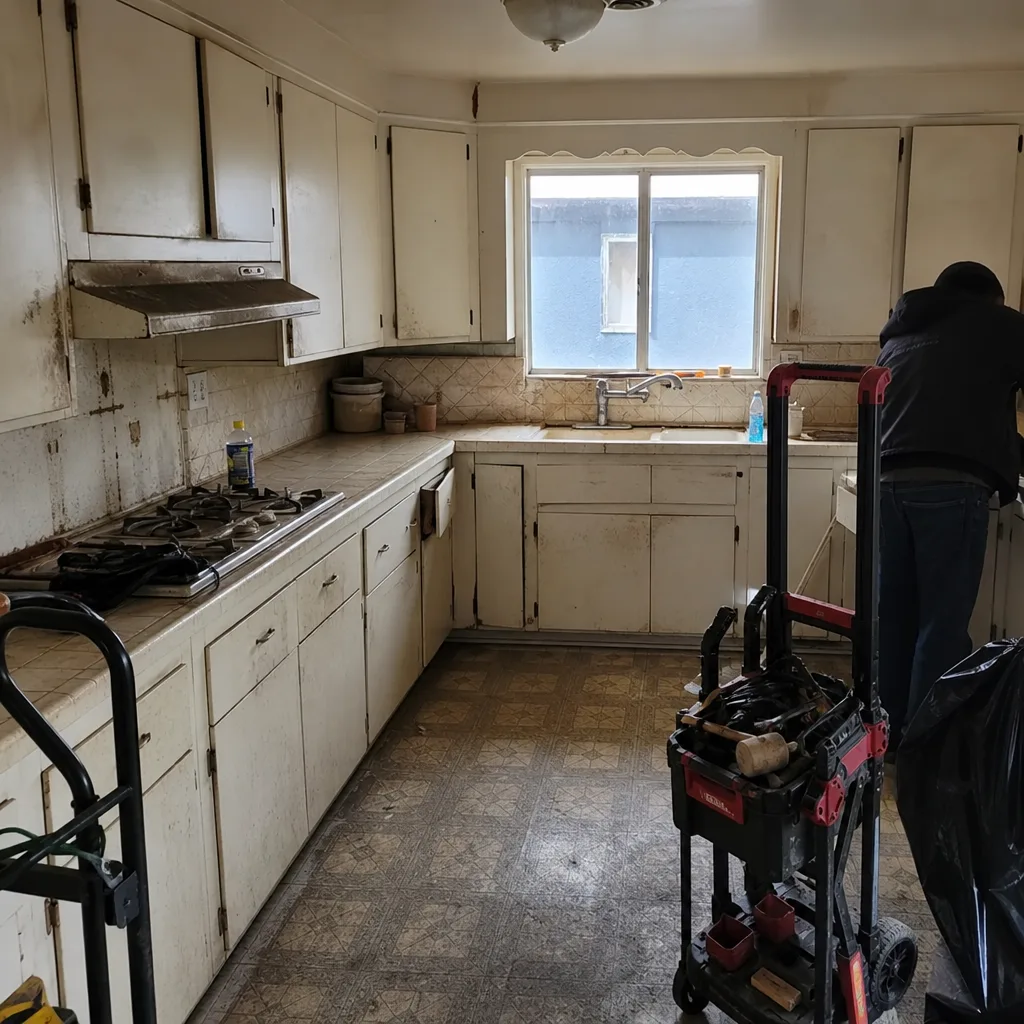 Before
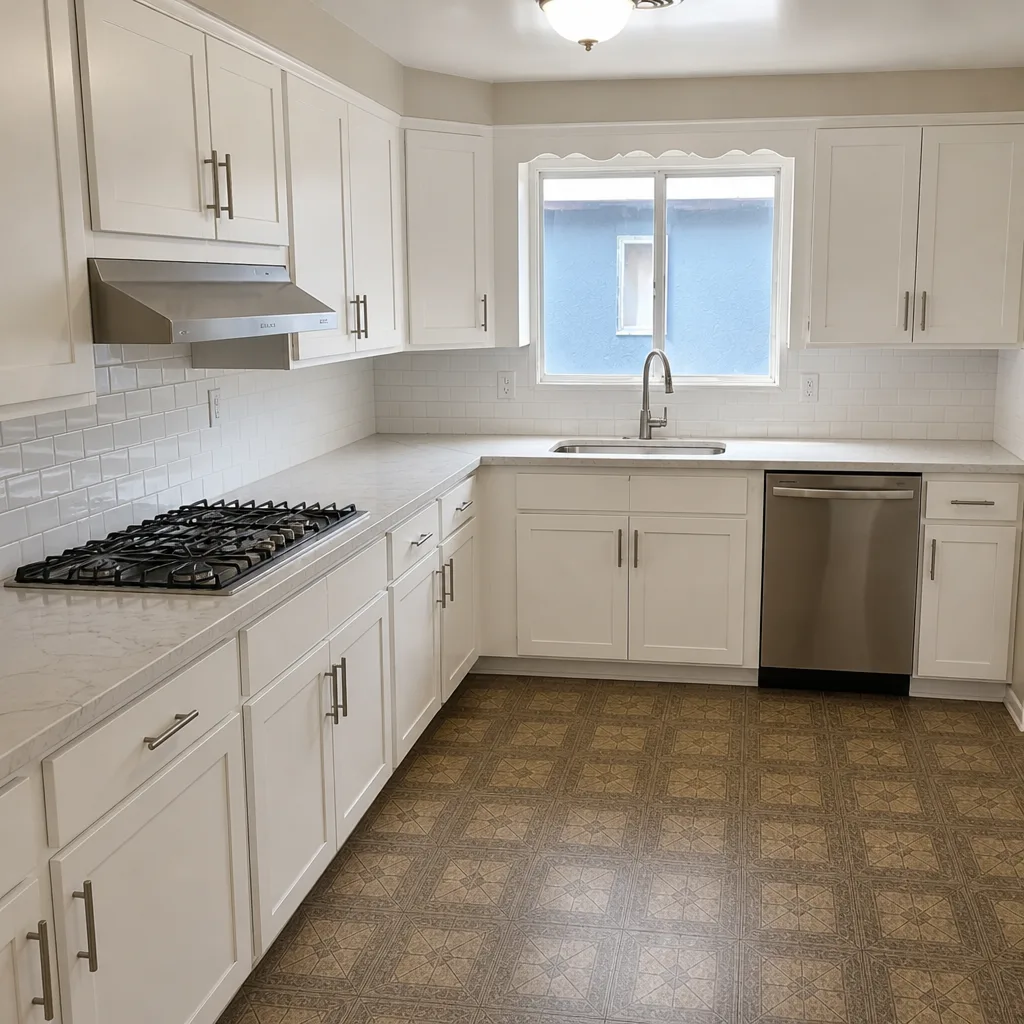 After
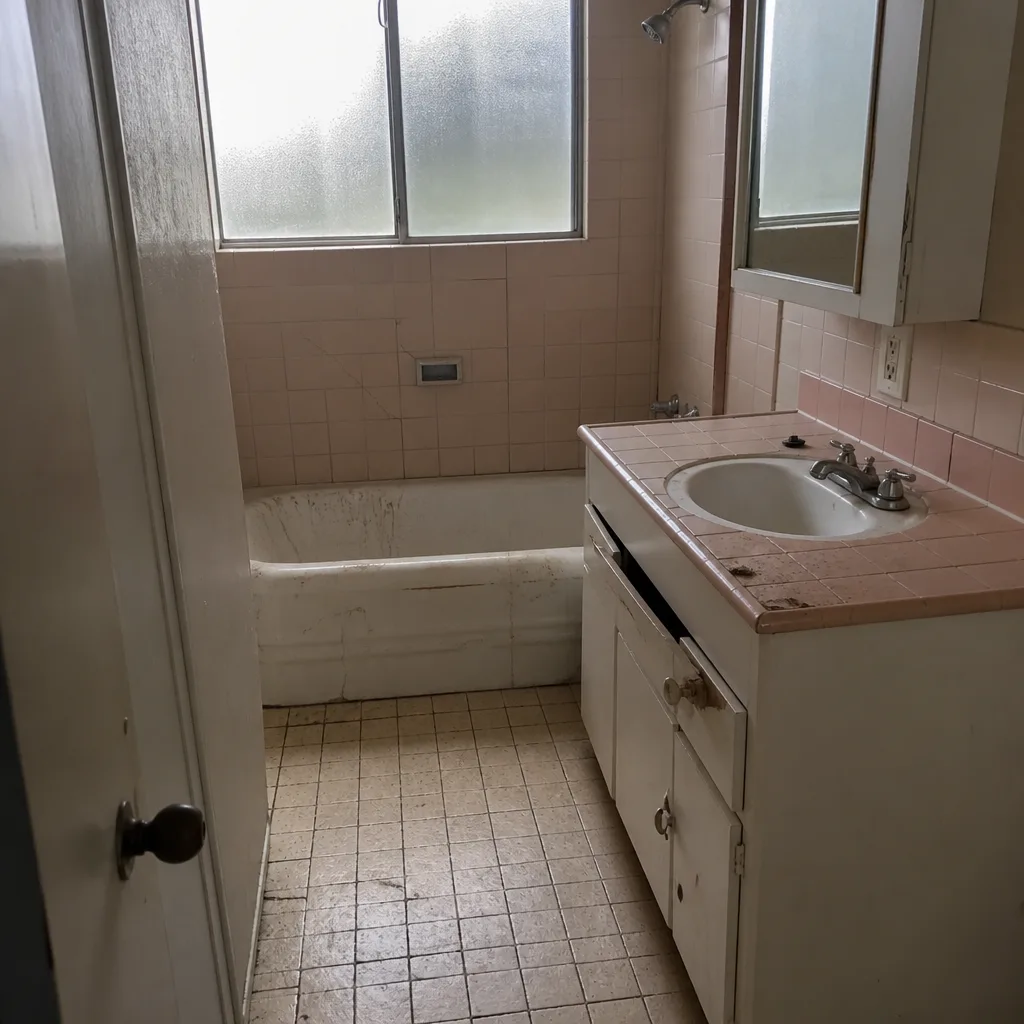 Before
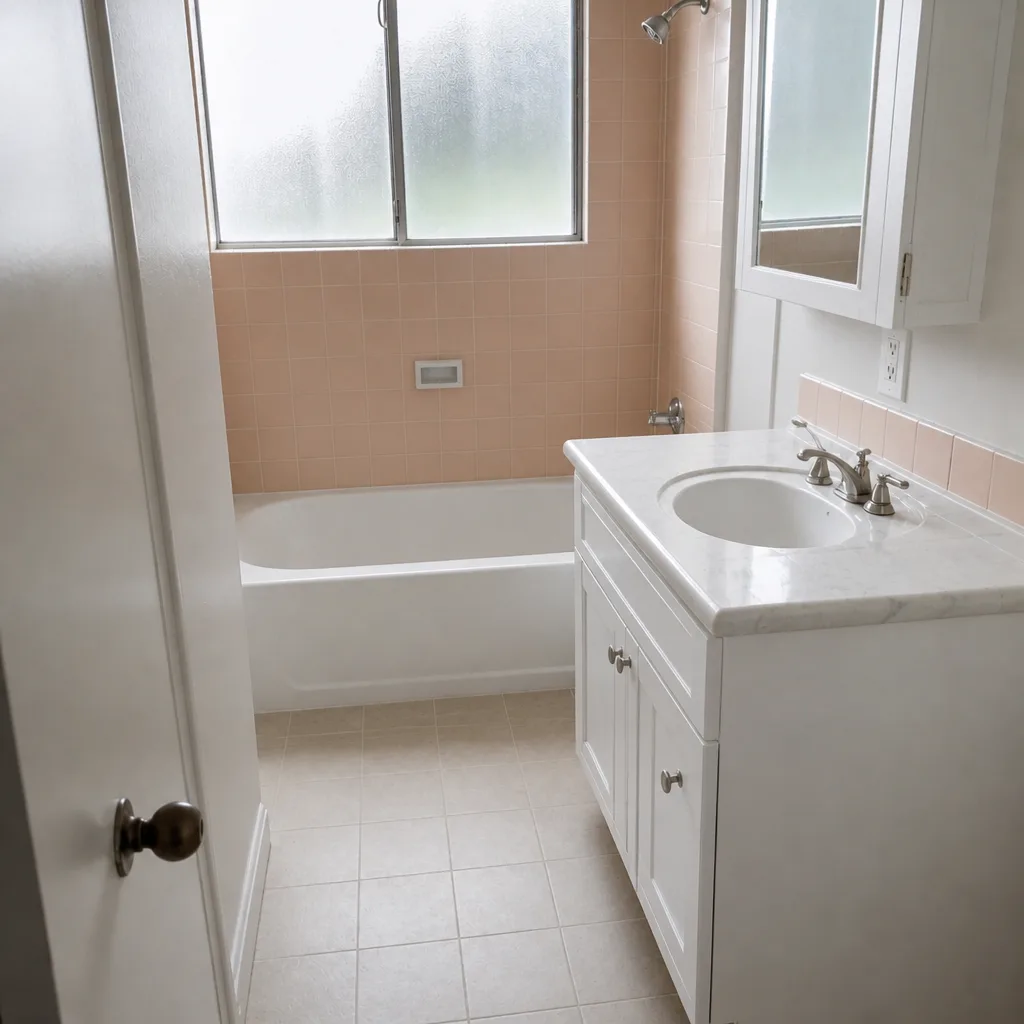 After
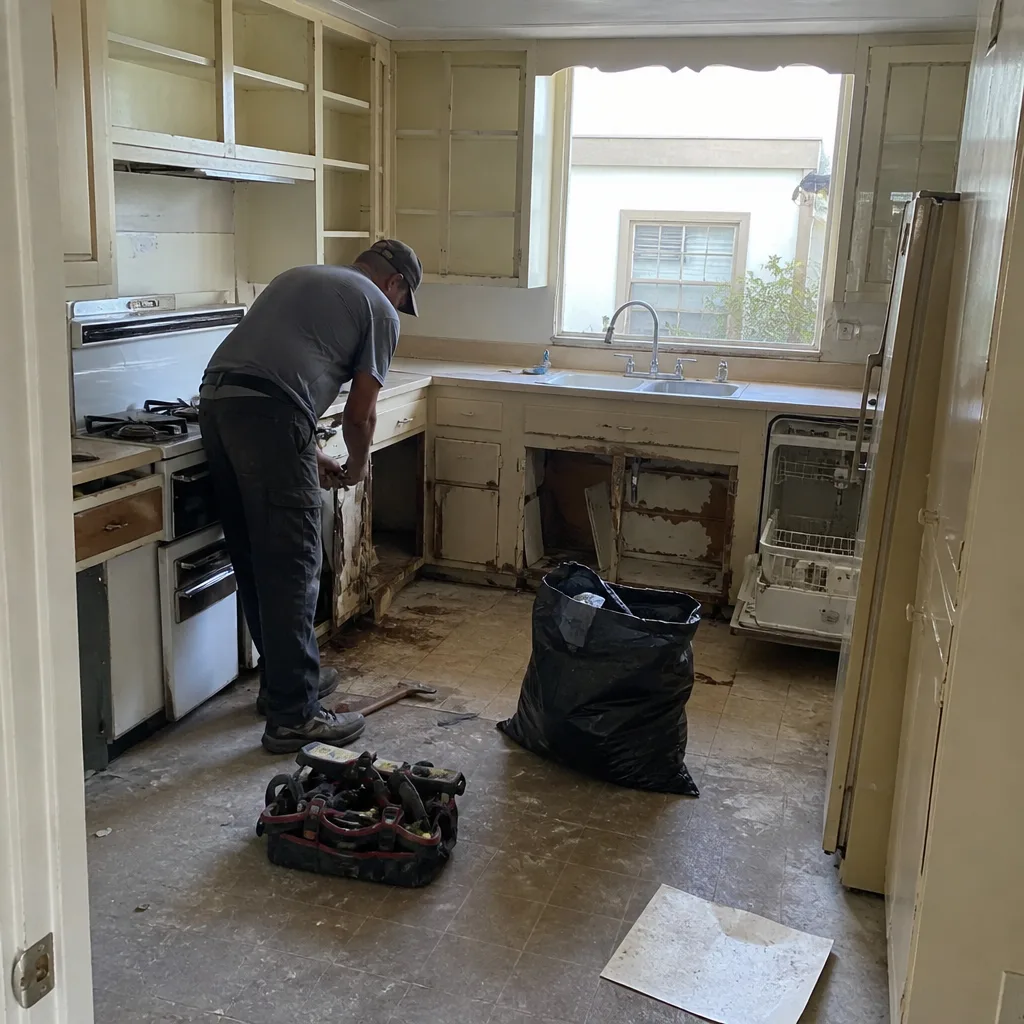 Before
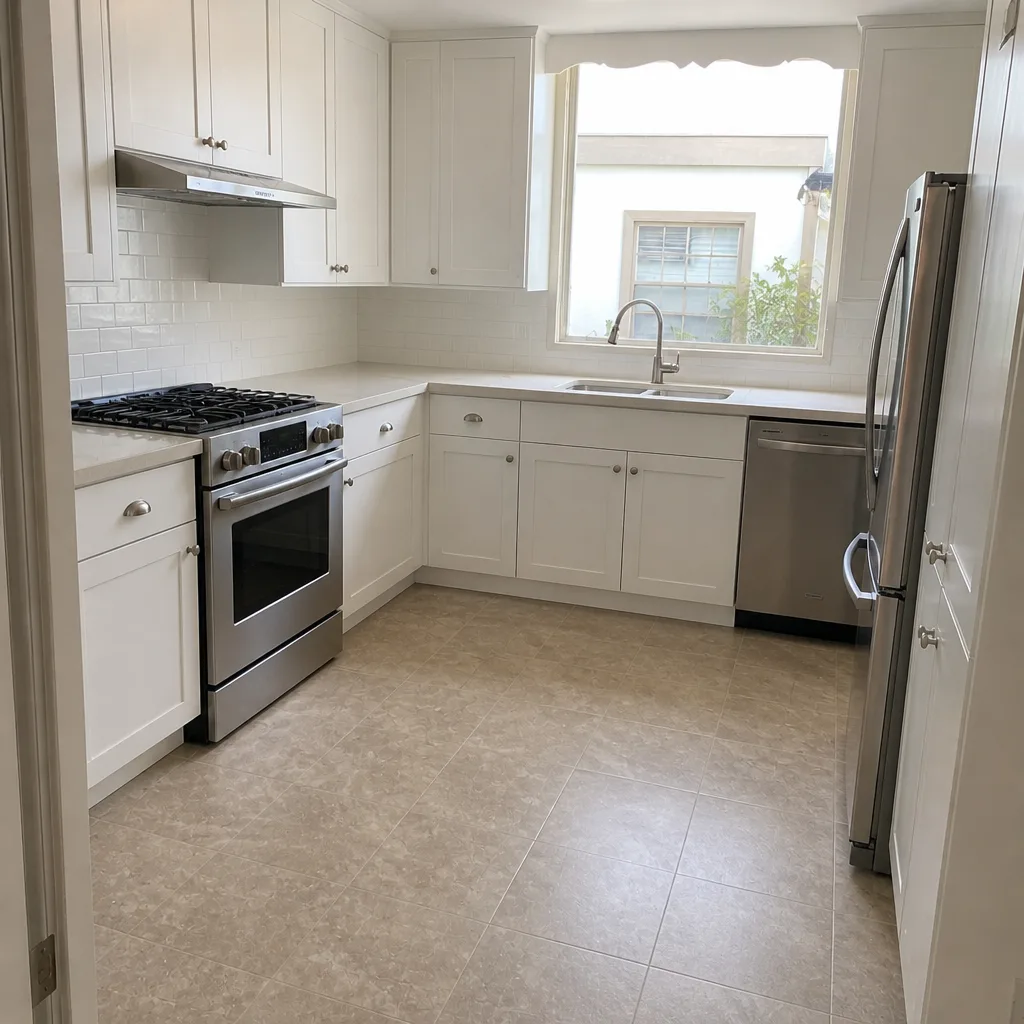 After
How to Find a Roof Leak in Burbank, CA: Start at the Roof, Not the Ceiling Stain
The fastest way to find a roof leak in Burbank is to trace it from the roof surface downhill, not from the water stain up. On the 1920s-40s Spanish Revival and Craftsman homes that dominate Magnolia Park and the Rancho Equestrian district, original lath-and-plaster ceilings act as a water highway, so a brown circle in your dining room often traces back 6 to 12 feet horizontally to a flashing failure two rooms away. If you’ve already watched a stain grow across two rain events, call (844) 797-7958 and let a trained eye trace it before the next storm finds the path of least resistance.
Key Takeaways
- On pre-1950 Burbank homes, the visible stain is rarely below the leak – plaster channels water sideways along wood lath.
- Diagnostic order in Burbank: roof surface first, attic documentation second, ceiling stain last.
- Hose soaking in 10-minute zones beats waiting for rain, because Burbank’s wet season is short and unreliable.
- Unpermitted garage conversions and room additions are disproportionately the real source.
- A proper investigation comes with moisture meter readings and a written report before any repair is priced.
Why “Look Above the Stain” Fails on Burbank’s Older Homes
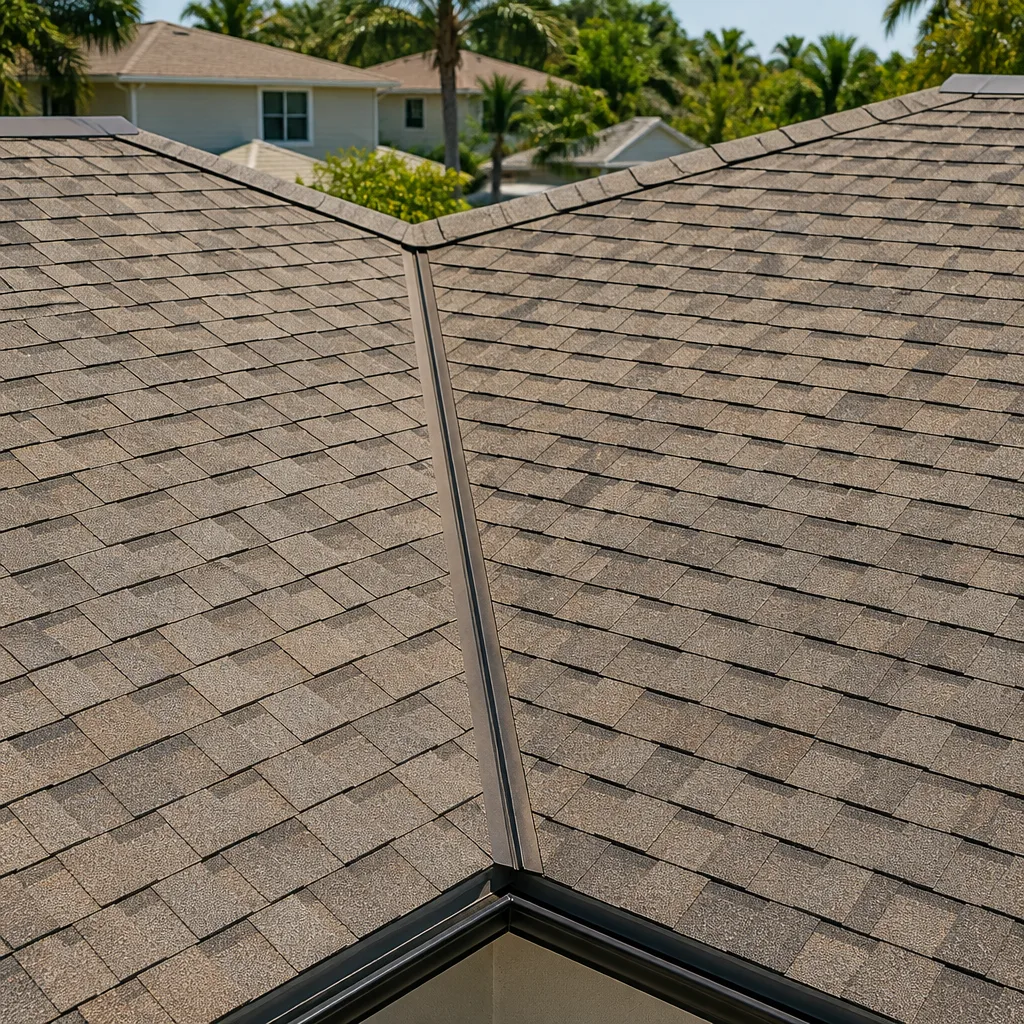
Plaster over wood lath doesn’t behave like drywall. Drywall hangs in flat sheets and soaks up water in the spot it lands, so the stain sits almost directly under the entry point. Plaster is rigid, troweled onto thin horizontal wood strips with gaps between them. Water that gets behind it travels along those strips, sometimes for the length of a room, before it finds a low point and drips. That’s the whole reason the standard advice to look straight up from the stain falls apart in Burbank, and it’s why the diagnosis should start where the water actually enters: the roof surface, ridge, hips, valleys, and every penetration through it. A Roofing inspection that skips the roof-to-ceiling distance is guesswork dressed up as a repair.
The local housing stock makes this more common than most homeowners expect. The Magnolia Park bungalows and the Rancho Equestrian homes still carry original lath-and-plaster in many cases, alongside knob-and-tube wiring in the same cavities. A leak that migrates laterally can also brush past that old wiring, which is one reason we treat these investigations as a safety walk, not just a water-hunting exercise.
The Burbank Leak Entry Hierarchy, by Frequency
Across the Burbank homes we look at, the leak source tends to fall into a predictable order of frequency. Santa Ana wind events and dry summers drive the pattern, so we check in this sequence:
- Clay tile mortar failures at ridges and hips. The wind events that push fire risk toward the Verdugo foothills also hammer ridge and hip mortar. Once it cracks, wind-driven rain slips under the tile course.
- Flashing separation at stucco-to-roof wall junctions. Stucco and roof planes move at different rates with the valley heat swings. Where the flashing pulls away, water finds it fast.
- Pipe boot cracking. UV exposure on asphalt material dries out the rubber boots around plumbing vents until they crack. This is one of the most common single-point leaks in the Valley basin.
- Valley erosion. Burbank’s pepper trees and palms drop organic debris that gathers in roof valleys. Left to sit, it holds moisture and erodes the valley material.
- Fascia rot on north-facing eaves. These only get wet during winter storms, so the decay hides quietly through the dry season and shows up as soft wood and paint bubbling once the first real rain hits.
Because natural rain is rare here, “just wait for the next storm” can waste an entire wet season. That’s why the hose test is standard Burbank practice: start low at the eave and work upward in 10-minute zones per section, with someone inside monitoring the stain location. The controlled soak finds the entry point on a dry afternoon instead of mid-storm.
What to Check, and When to Call
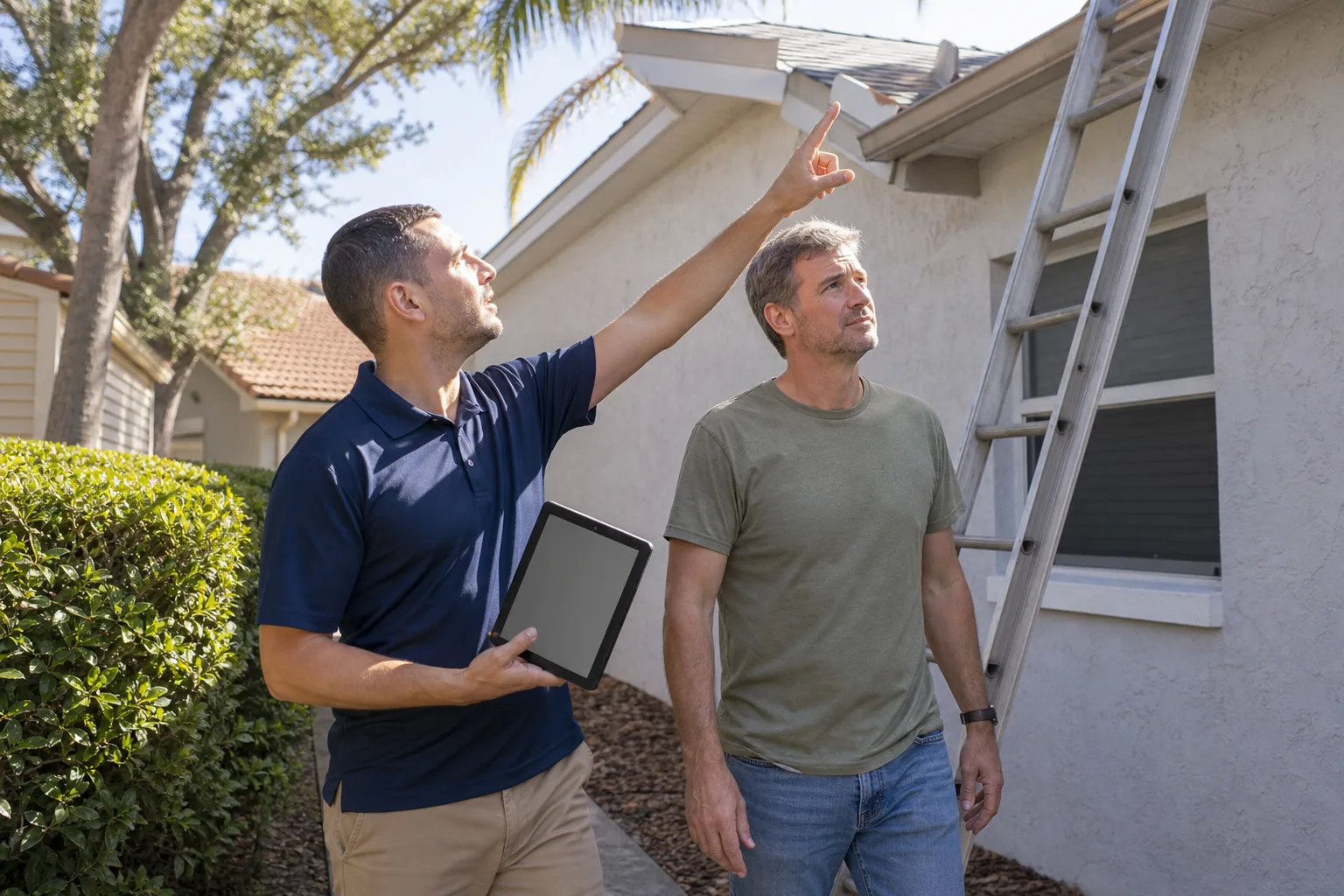
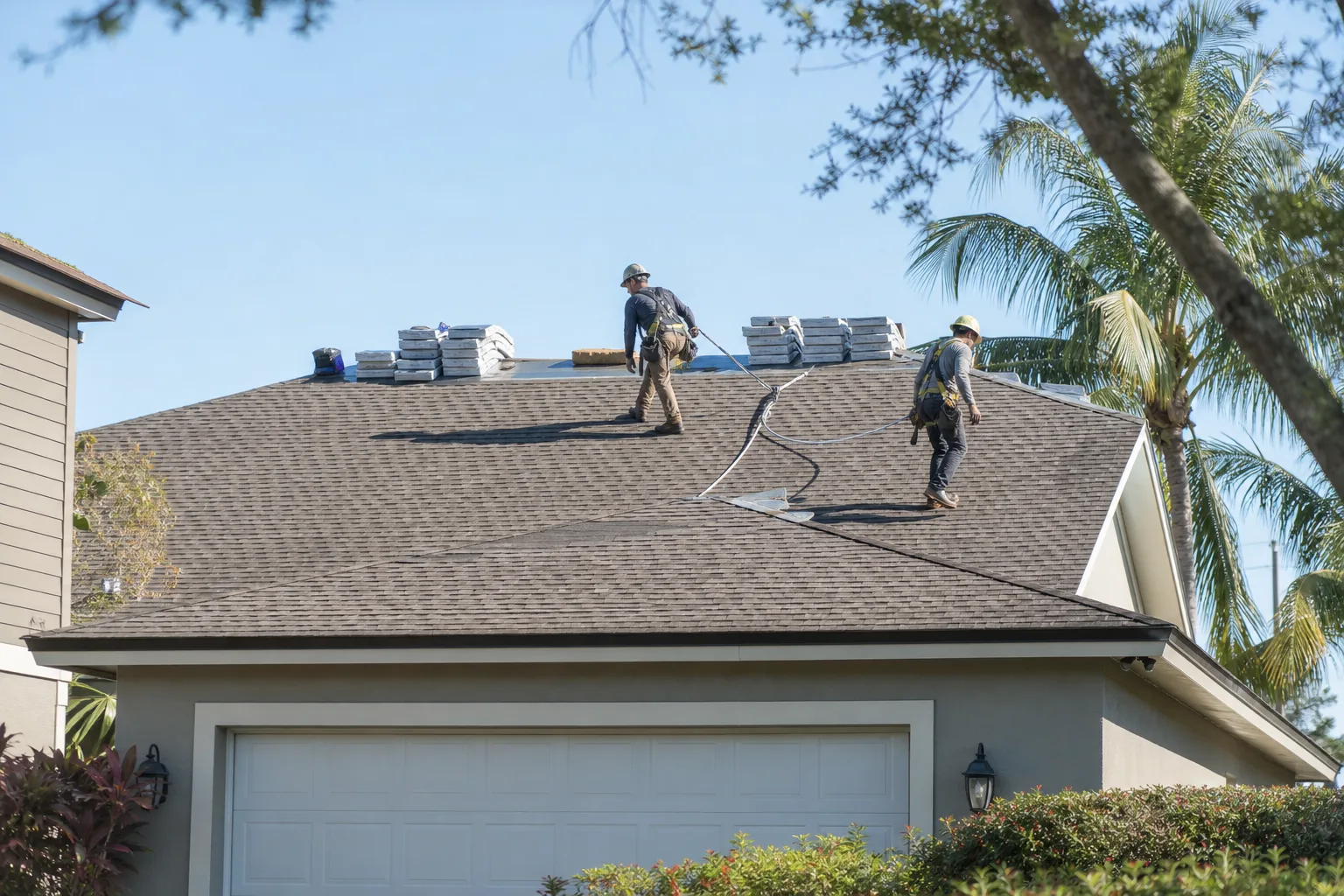
You can do useful reconnaissance yourself before anyone climbs up: note exactly where the stain sits, mark its edges with pencil so you can tell if it grows, and photograph the roof where you can see it safely from the ground. What we don’t recommend is walking a clay tile roof or getting up on a north-facing eave to poke at fascia. That’s a fall and a tile-break waiting to happen, and it’s the kind of work a trained professional should handle. The same goes for anything near the ridge mortar, which can give way without warning.
One complication specific to Burbank: homes with unpermitted garage conversions or room additions frequently have non-standard roof-to-addition junctions that were never flashed to code. When the main roof looks perfectly intact, those junctions are disproportionately the real source. The hillside streets above the valley floor carry some of the tightest fire-clearance and grading scrutiny in the region, so any addition work you touch on the way to a repair has to respect that too.
What a Proper Leak Investigation Includes
A trace-and-repair approach that Groundwork Construction Co. of Burbank follows looks different from a patch-and-bill visit. We take moisture meter readings at both the ceiling stain and the suspected entry zone, inspect the attic with documentation photos, and hand you a written report identifying the entry point before any repair is priced. That report matters: fixing the wrong spot wastes money, and re-opening a finished ceiling costs more than the diagnosis ever would. We pair GAF and Owens Corning materials with the work so the repair is built to last and backed in writing by our 730-Day Done Right Promise.
For reference, here’s what leak-related roofing work runs in Burbank:
| Service | Typical Burbank Range |
|---|---|
| Roof repair (localized leak) | $400-$1,800 |
| Tile roof repair | $600-$2,500 |
| Roof replacement (when the leak signals a failed roof) | $8,000-$20,000 |
| Metal roof installation | $15,000-$40,000 |
Upfront pricing means the number you see is the number you pay, and if a repair turns into a replacement conversation we’ll show you why. We offer a free estimate and design consult, plus 0% financing for 18 months and $1,000 off projects over $10,000. Our technicians have up to 12 years of experience, arrive in uniform, and are background-checked. If you’re also weighing related exterior work, you can read about our Burbank service area and find more on the home page. You can reach a live person 24/7, and our kitchen remodeling and bathroom remodeling teams are available when water damage reaches interior finishes. For exterior headaches that spring from the same dry climate, our guides on window replacement and stucco repair are worth a look, and if a leak above a converted space has you reconsidering the layout, garage conversion and ADU construction are natural next steps. Looking at a full scope, our home additions and fence installation pages round out the work, and driveway and paver drainage ties into how runoff behaves around the foundation.
FAQs
Trace it from the roof surface down to the stain, never the reverse, because lath-and-plaster ceilings channel water sideways for 6 to 12 feet. Start at ridges, hips, stucco-to-roof flashings, and pipe boots, then use a controlled hose soak in 10-minute zones with someone inside watching. If that sounds involved, that’s the point: call (844) 797-7958 and we’ll trace it for you.
You can, with limits. Soak low at the eave and move up in short timed zones while someone inside watches for the stain, and stop before you climb any tile or north-facing eave yourself. Hose testing above clay tile and near ridge mortar is where DIY turns into a fall or a broken tile, so that part belongs to a trained professional. Call (844) 797-7958 for a free estimate.
Localized roof repair in Burbank typically runs $400-$1,800, while tile roof repair lands around $600-$2,500 depending on the tile and the extent of the damage. If the leak reveals a failed roof, replacement ranges run $8,000-$20,000. Call (844) 797-7958 for an exact quote – estimates are free.
Repair is almost always cheaper in the short run when the roof is otherwise sound, but repeated leaks at multiple points usually mean replacement wins on cost over a few seasons. Our written investigation report tells you which side of that line you’re on before you spend. Call (844) 797-7958 and we’ll walk you through it.
If you’d rather have it looked at, Groundwork Construction Co. of Burbank offers a no-pressure assessment in Burbank. We trace the entry point, document it, and give you a written picture before any repair is priced. Call (844) 797-7958 for a free estimate – a live person answers, day or night.
Written by the team at Groundwork Construction Co. of Burbank, serving Burbank, CA.