Free written scope consultation - allowances, timeline, and change-order rules on paper before a single trade is scheduled
Styles & brands we work with
- Kitchen remodeling
- Bathroom remodeling
- Home additions & ADU
- Roofing
- Windows & doors
- Driveway & pavers
- Fence
See the difference
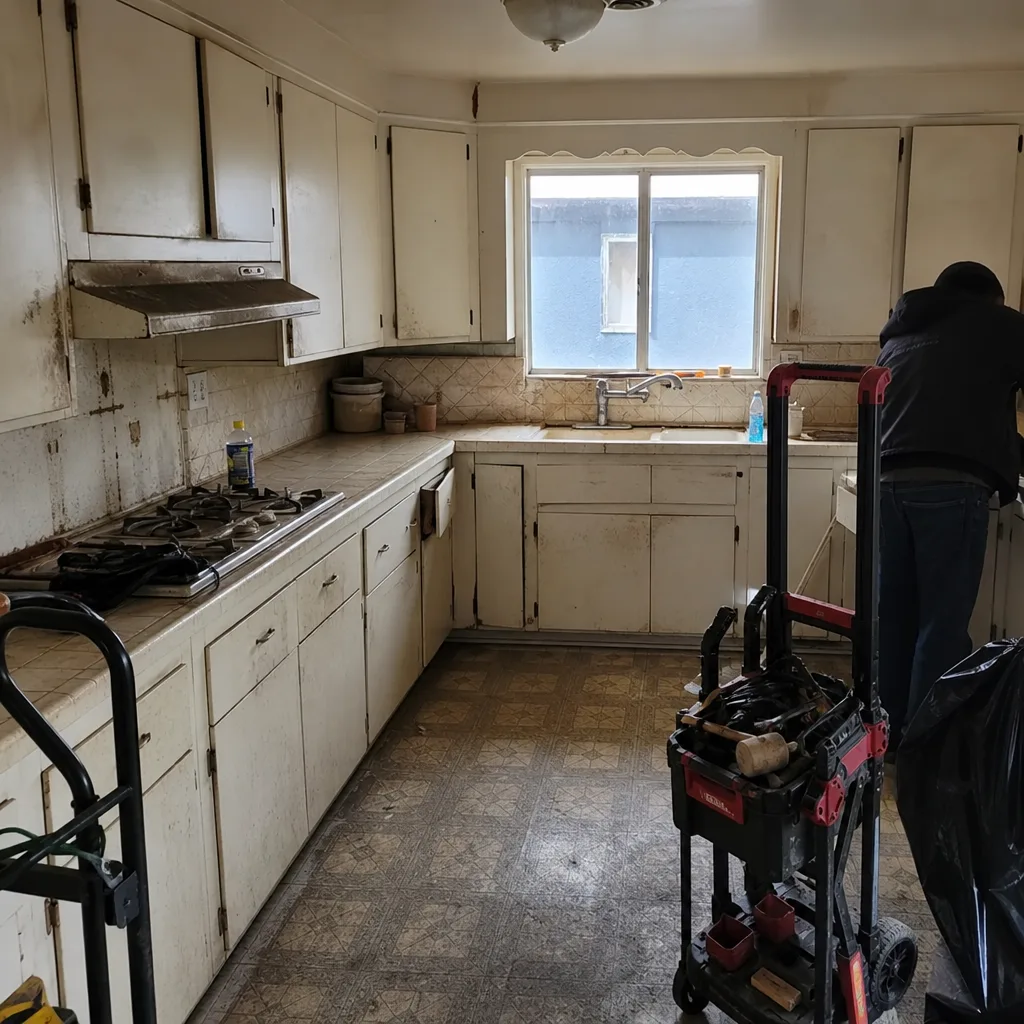 Before
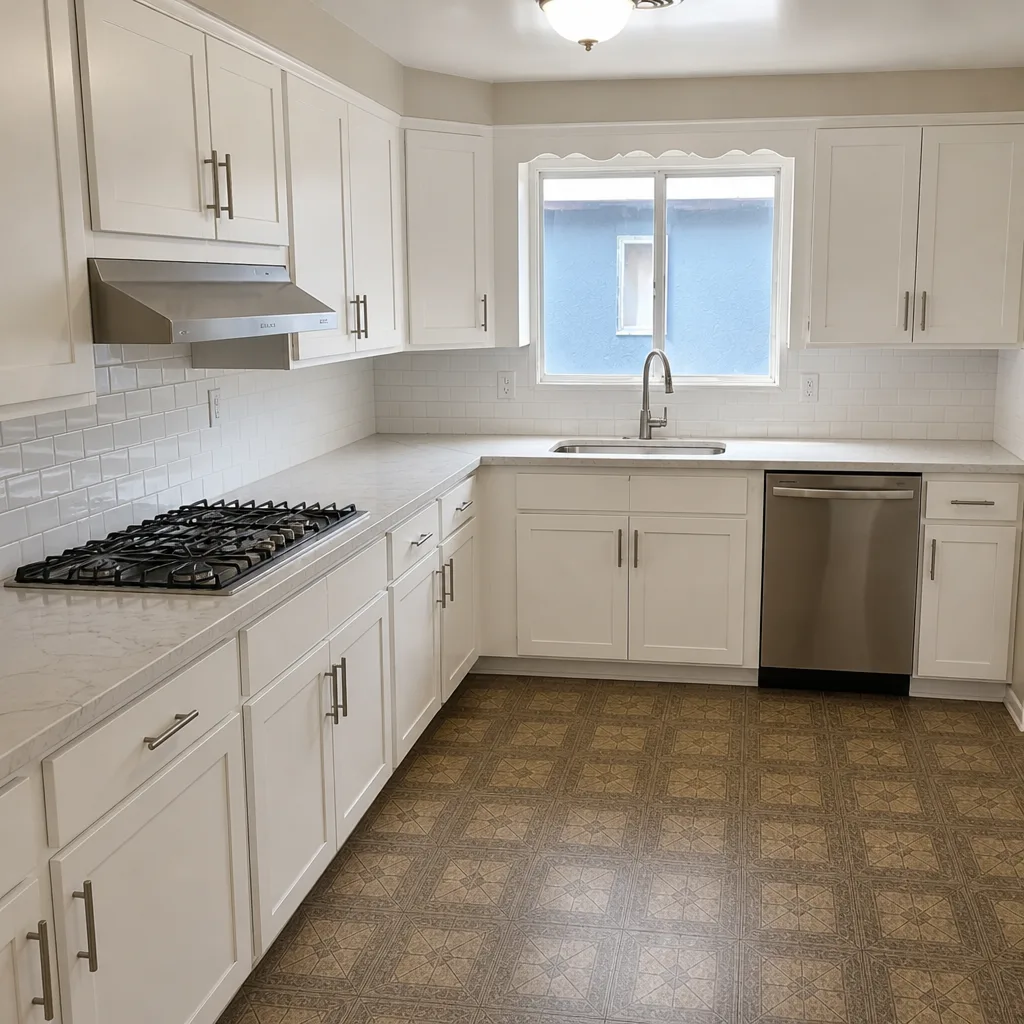 After
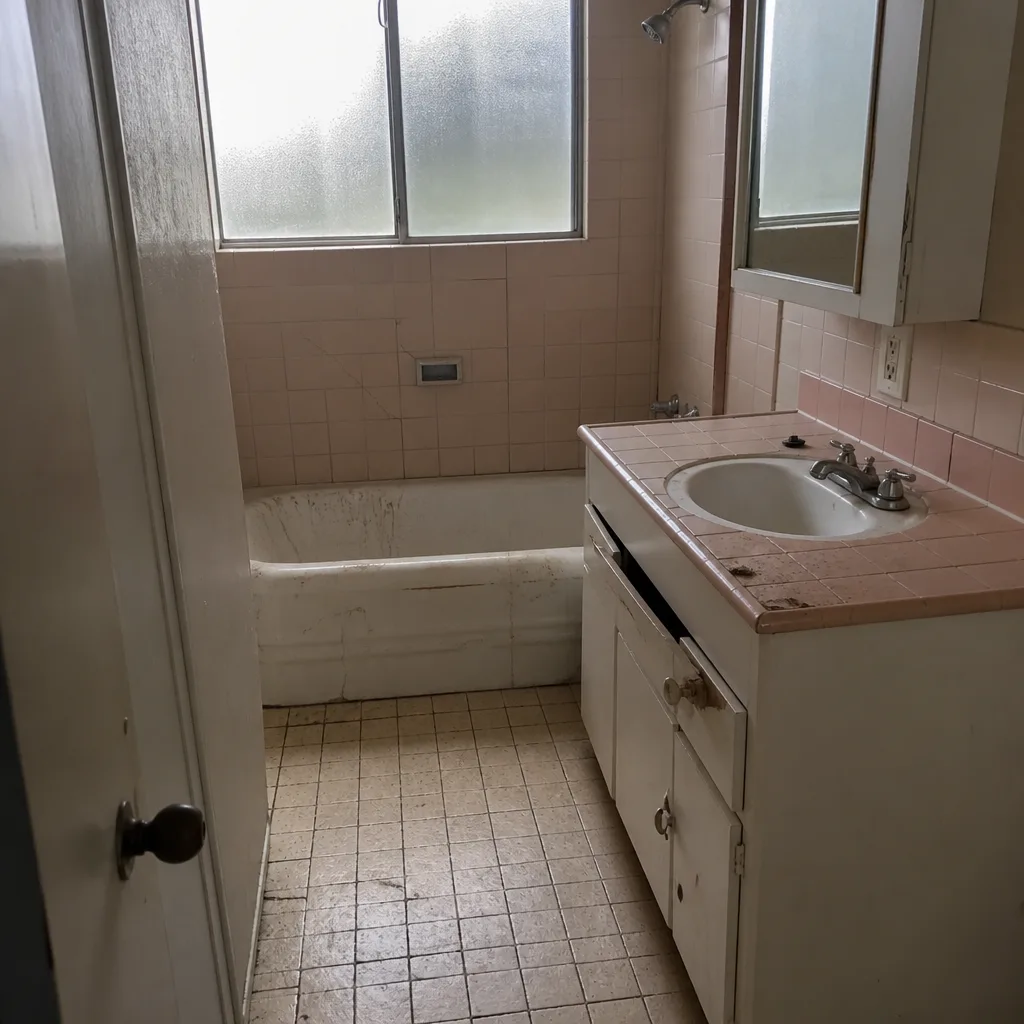 Before
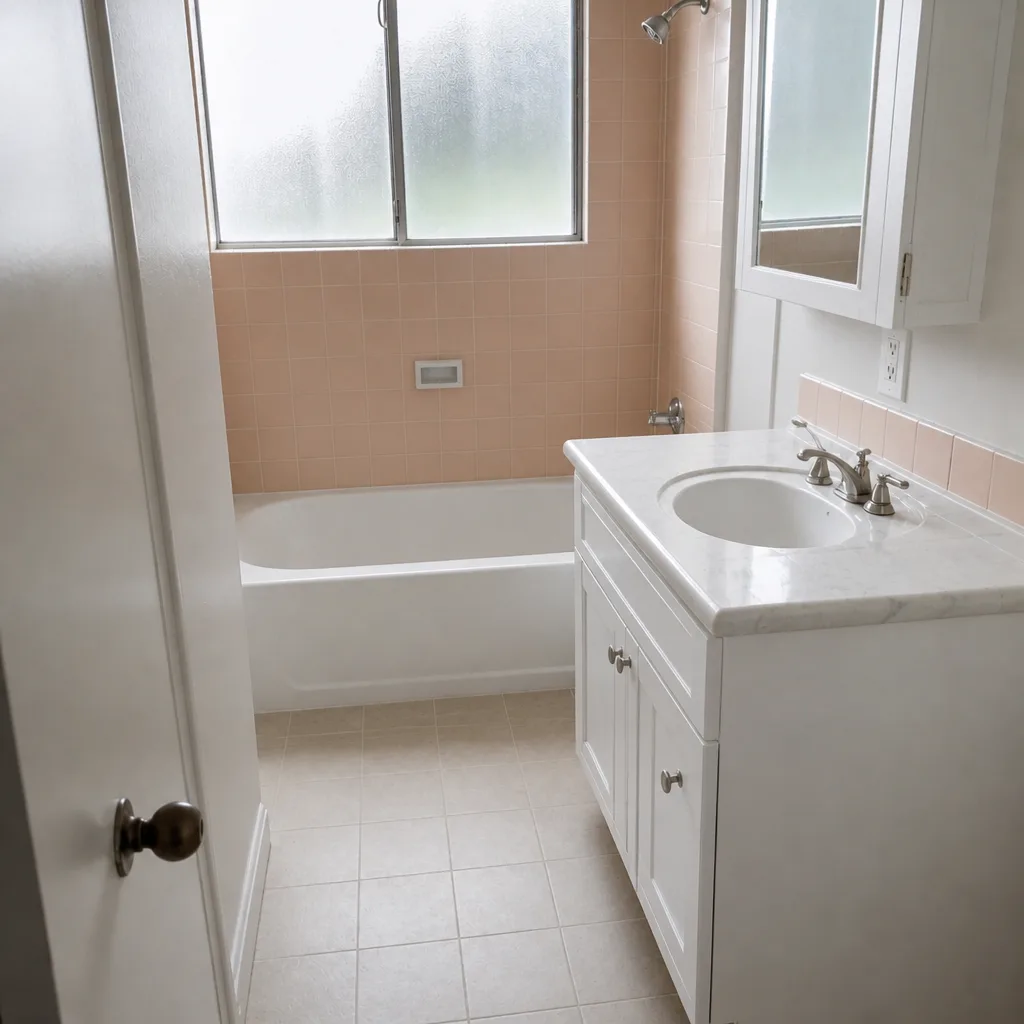 After
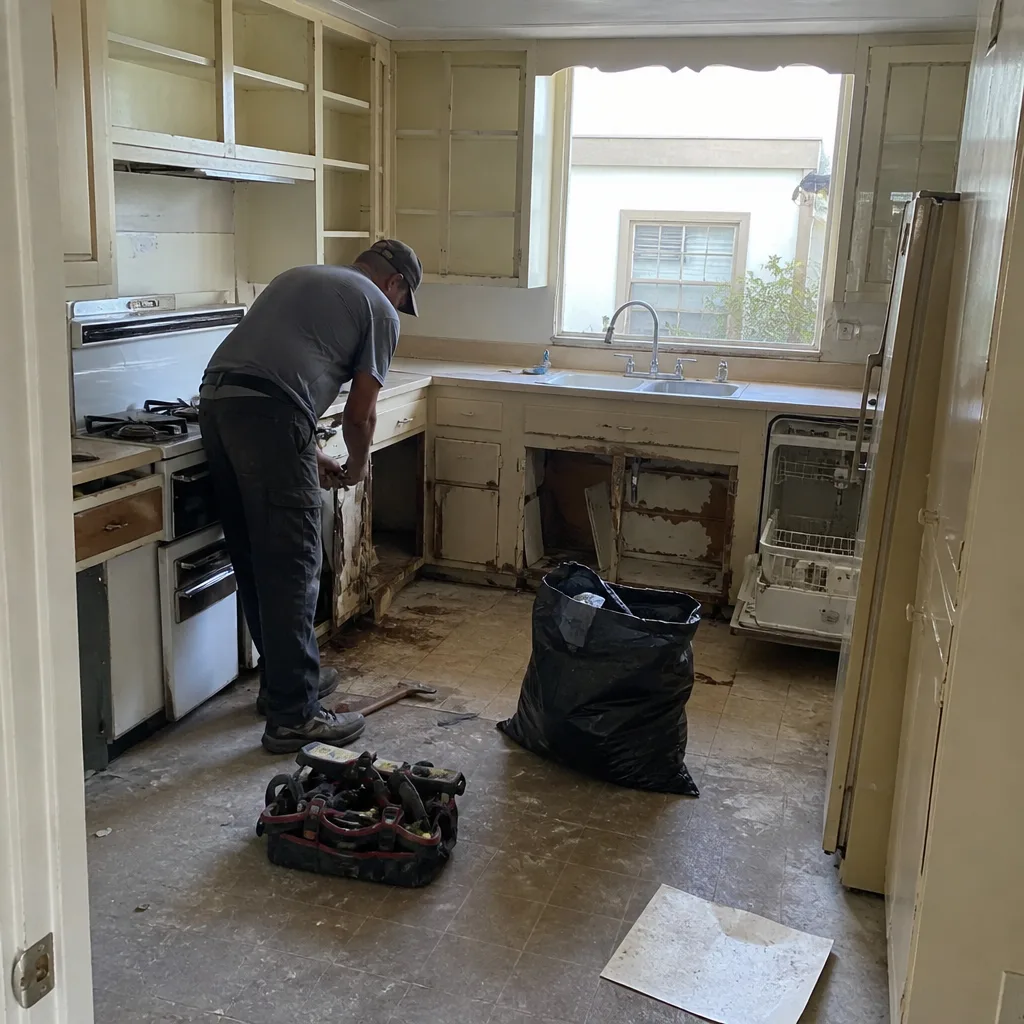 Before
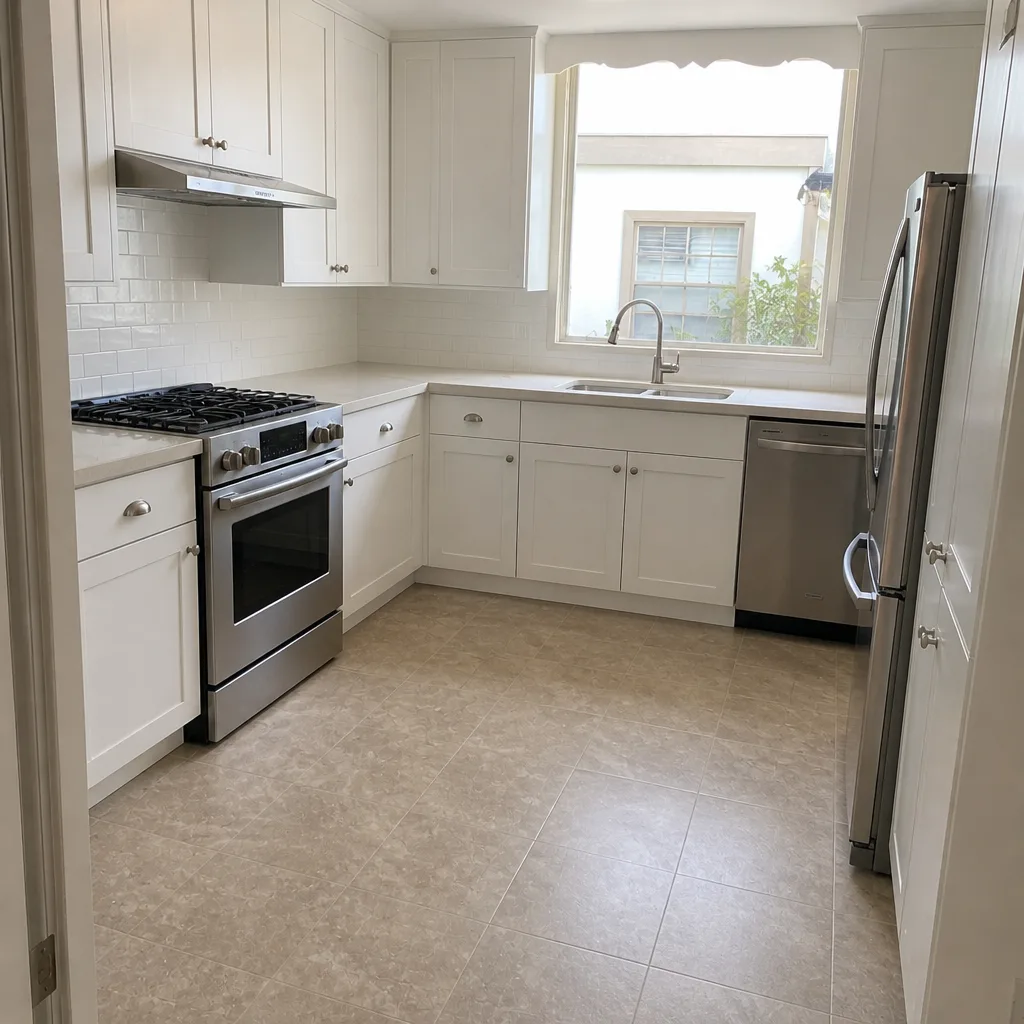 After
Junior ADU vs Standard ADU in Burbank: Which One Actually Fits Your Property?
Choose a standard ADU unless your Burbank lot simply can’t fit a detached or attached second unit, your budget is fixed under $90,000, and you plan to live in the main house for the next several years without a long relocation. A junior ADU (JADU) saves Burbank homeowners $30,000-$80,000 on construction, but it records an owner-occupancy restriction on your title that follows the property through any sale or refinance. In a city where producers, directors, and crew relocate for multi-year productions, that restriction is not theoretical. Call (844) 797-7958 to compare both options on your actual parcel.
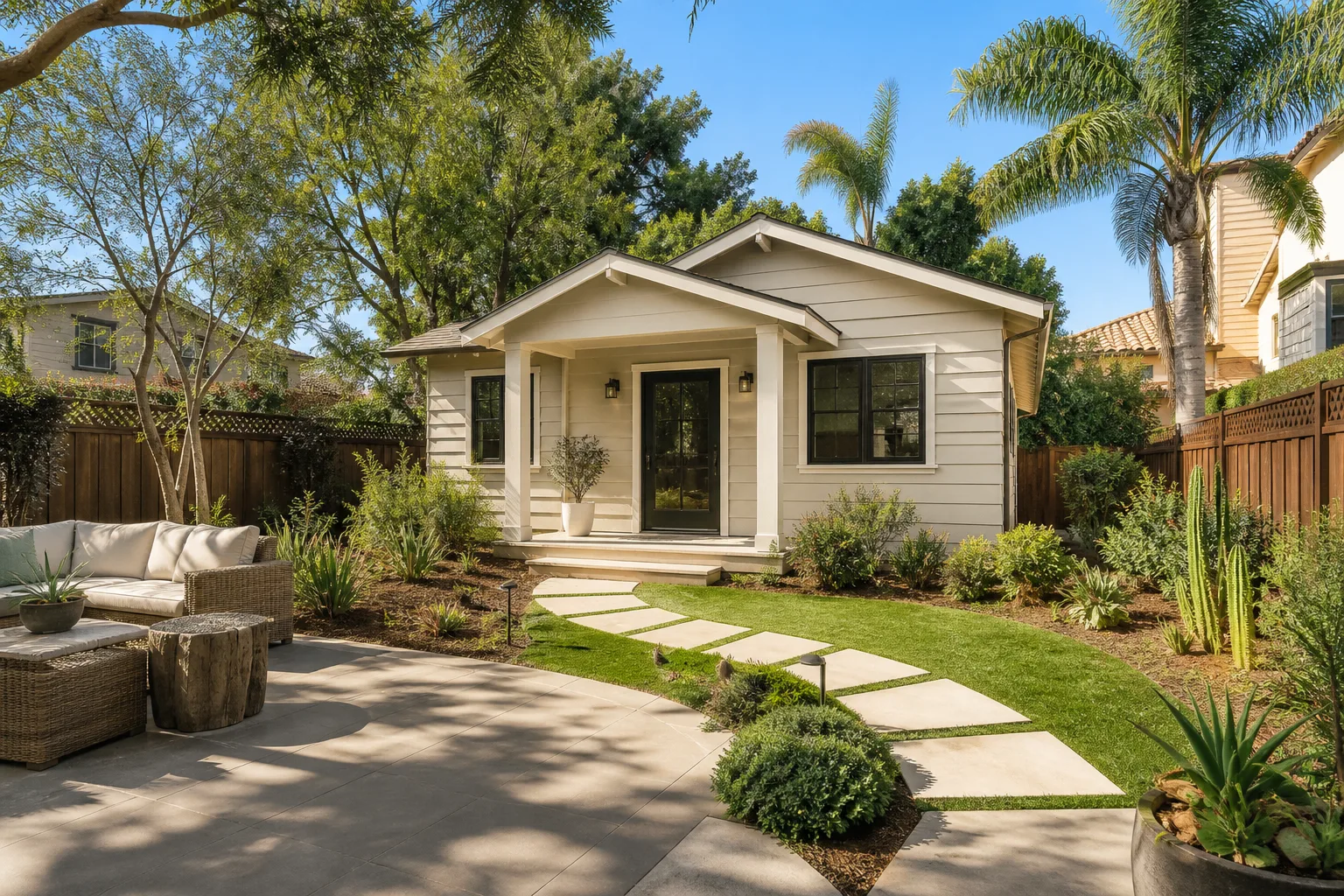
The Legal Difference That Drives Everything Else
Most comparison guides start with square footage. The real dividing line is the deed restriction, and it’s worth understanding before you look at a single floor plan.
A JADU must sit inside the existing footprint of your home (or a converted attached garage), maxes out at 500 square feet, and legally requires the homeowner to live on the property. The code allows the JADU to share a bathroom with the main house, which is what keeps costs down. Efficiency kitchen, one sleeping area, shared bath.
A standard ADU is a fully independent dwelling. It can be detached in the backyard, attached to a side wall, or built over a garage. It has its own entrance, its own kitchen, its own bathroom, and its own address. No owner-occupancy requirement. No shared anything. On paper it’s a second home on the same lot, and it’s treated that way for rental, sale, and lending purposes.
That single distinction is where most Burbank homeowners get stuck, especially the ones who work in entertainment.
What the Owner-Occupancy Restriction Really Means for Burbank Homeowners
Story is the industry here. A producer gets a two-year series order in Atlanta. A cinematographer takes a six-month feature overseas. A gaffer relocates to Vancouver for a pilot cycle. Homes sit empty for extended periods all the time in Magnolia Park and the Rancho Equestrian district.
With a standard ADU, that’s fine. You rent the main house, rent the ADU, and the property works for you while you’re away.
With a JADU, the deed restriction says you must live on-site. If you leave the property for more than a year for a production assignment, you may be in violation. Enforcement is uneven in practice, but the restriction is on your title, and it surfaces at every refinance, every appraisal, every escrow conversation. That risk doesn’t exist with a standard ADU.
Our technicians have up to 12 years of experience building both configurations across Burbank, and the conversation we have most often with entertainment-industry clients comes down to this: how mobile is your career? If the honest answer is “very,” the JADU savings usually aren’t worth the restriction.
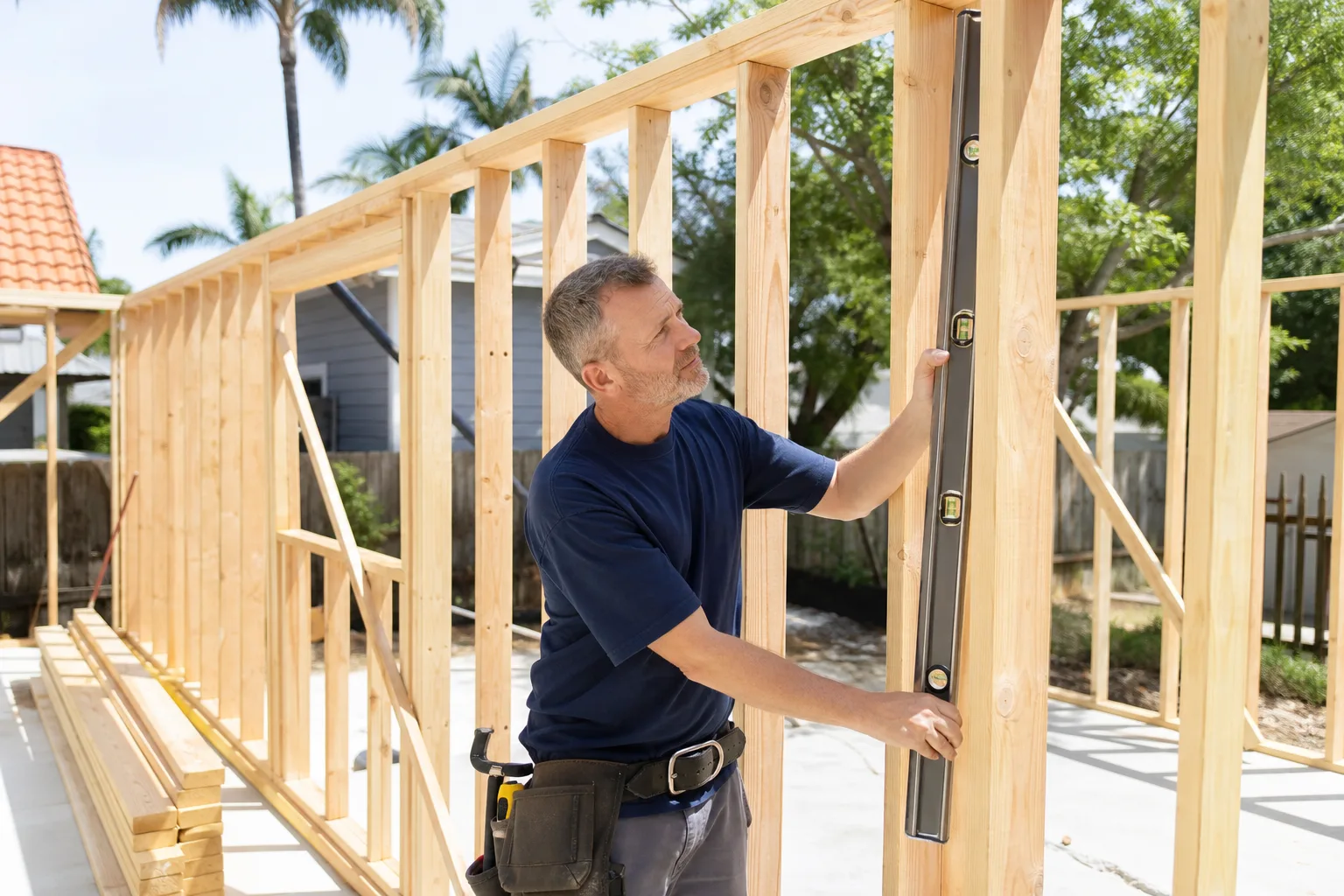
Rental Income: The Gap That Narrows the JADU Advantage
This is where the $30,000-$80,000 construction savings starts to look less decisive than it does on day one.
A standard ADU in Burbank’s studio-adjacent neighborhoods, with a private entrance and full bathroom, rents for $1,800-$2,800 per month. A JADU sharing facilities with the main unit typically rents for $1,200-$1,800 per month. The reason is simple: renters pay for privacy.
Run the math across a 5-7 year horizon. The monthly gap of $600-$1,000 per month adds up to $36,000-$84,000 in lost rental income, which largely cancels out the JADU’s upfront savings. The JADU still wins if you’re staying put, want to keep the project small, or need to preserve every available square foot of yard.
Burbank Cost Comparison: Side-by-Side
Here’s how the two options stack up against the Burbank ranges we quote day to day. These are market-calibrated for this city’s permits, labor, and material access.
| Line Item | JADU | Standard ADU |
|---|---|---|
| Typical construction range | $45,000-$90,000 | $90,000-$220,000 |
| Maximum size | 500 sq ft | 1,000-1,200 sq ft (local limits) |
| Bathroom | May share with main house | Full, private |
| Kitchen | Efficiency only | Full kitchen |
| Owner-occupancy deed restriction | Yes | No |
| Typical monthly rent in Burbank | $1,200-$1,800 | $1,800-$2,800 |
| Appraisal & lending treatment | Complicated by deed restriction | Counted as income-producing unit |
Notice what a range alone won’t tell you: a standard ADU adds a legally recognized second unit to your property record. Burbank lenders and appraisers count that toward income-producing value. A JADU’s deed restriction can complicate certain loan products and shrink the buyer pool when you go to sell, because the next owner inherits the same restriction. That’s a resale factor most comparison charts leave out entirely.
What Local Conditions Add to the Decision
Burbank’s housing stock shapes which option is even feasible. Magnolia Park bungalows from the 1920s-40s often hide unpermitted additions and converted garages, and those surface the moment you pull a permit. If you’re eyeing a JADU by converting a garage, budget time for the city to uncover what a prior owner did. Those are the same conditions that push costs up the day construction starts.
Hillside streets above the valley floor carry tighter fire-clearance and grading scrutiny than the flatlands, and that plays against detached units with tight lot setbacks. When the hillside parcel is small, the JADU inside the existing footprint is often the only path that satisfies clearance and grading requirements without eating your whole yard.
We source fence and hardscape materials from Belgard and active yards on the exterior scope when a project runs both ADU and yard work, so the finish lines up rather than looking like two separate jobs. If your ADU plan sits next to a fence replacement or a new patio, that coordination is worth building in from the start.
So Which One Should You Choose?
Here’s how we’d frame the decision if you were sitting across the table:
- Pick a JADU if: you plan to stay in the home long-term, your budget is tight, the lot doesn’t support a detached unit, or you want the project small and fast.
- Pick a standard ADU if: your career may pull you away for extended periods, you want real rental income, or you’re building this as an investment rather than a lifestyle upgrade.
- Talk to us first if: your property is in Magnolia Park with an older footprint, or you’re on a hillside lot with tight clearance.
Before any commitment, our upfront pricing model gives you a real side-by-side cost comparison for both options on your specific parcel, not a generic range. You see the financial case for each next to the lifestyle and legal trade-offs. The number you see is the number you pay. Our Home Additions & ADU team handles both configurations from first permit to final walkthrough.
The whole decision sits inside one category, and you can see the full scope on our home page if you want the wider picture of how ADU work fits into a larger remodel plan.
FAQs About Junior ADU vs Standard ADU in Burbank
Yes. California law requires the owner to live on the property when a JADU is permitted, and that restriction is recorded against the title. It carries through to any buyer, and it complicates certain financing products. If you need to leave the property for a multi-year production or relocation, talk to us before committing to a JADU. Call (844) 797-7958 for a free estimate and we’ll walk through what the restriction means for your specific situation.
In some cases, yes, and it typically means removing the deed restriction and upgrading to a full private bathroom and kitchen. The catch is structural: a detached standard ADU usually requires building new square footage. Converting a JADU to a standard ADU is often more expensive than starting over, so it’s worth deciding upfront. Our team can price both paths on your lot during a free estimate.
A JADU typically runs $45,000-$90,000, and a standard ADU runs $90,000-$220,000 depending on size, foundation, and site work. The gap of $30,000-$80,000 is real, but a JADU rents for $1,200-$1,800 per month while a standard ADU in the same area rents for $1,800-$2,800, and that gap narrows the total cost picture across five to seven years. Call (844) 797-7958 for an exact quote on your parcel – estimates are free.
A standard ADU is usually better for resale because it adds a legally recognized second unit to the property record, which Burbank appraisers and lenders count toward income-producing value. A JADU’s deed restriction can limit certain loans and shrink the buyer pool, since the next owner inherits the restriction. If you’re planning to sell within 10 years, a standard ADU is the safer choice. Call us to talk through the numbers on your specific property.
If you’d rather have it looked at, Groundwork Construction Co. of Burbank offers a no-pressure assessment in Burbank – call (844) 797-7958 for a free estimate and a side-by-side cost comparison of a JADU and a standard ADU on your actual lot. Live person, 24/7, and every project is covered by our 730-Day Done Right Promise.
Written by the team at Groundwork Construction Co. of Burbank, serving Burbank, CA.