Last updated November 18, 2026

Free written scope consultation - allowances, timeline, and change-order rules on paper before a single trade is scheduled
How Long Does Driveway & Pavers Take? Timelines and What to Expect
A driveway paver job quoted at three days can legitimately take ten. That’s the first thing we tell homeowners who call us after a neighbor’s “weekend paver project” turned into three weeks of open excavation. The gap between the quote and the calendar is almost never laziness. Base prep, compaction, cure time, and inspection sequencing have hard minimums that can’t be compressed without cutting structural corners. In this guide we’ll walk through every phase of a paver driveway in Burbank, flag which steps physically cannot be rushed, explain what local weather and permitting do to your schedule, and show you how to hold any contractor accountable to a realistic calendar instead of a fantasy one.
Quick Answer
A typical driveway and paver installation takes 5 to 10 working days once permits are in hand, with the bulk of that time going to excavation, base compaction, and cure intervals rather than the paver layout itself. Add 2 to 6 weeks before install for permitting, HOA review, and material lead times. A small walkway or patio may finish in 2 to 4 days; a full driveway with new drainage in Burbank usually runs 7 to 12.
Styles & brands we work with
- Kitchen remodeling
- Bathroom remodeling
- Home additions & ADU
- Roofing
- Windows & doors
- Driveway & pavers
- Fence
Table of Contents
- The Phase-by-Phase Timeline of a Paver Driveway
- Which Phases Have Hard Minimums You Can’t Compress
- How Burbank’s Climate, Permits, and HOAs Affect Your Schedule
- Legitimate Delays vs. Red Flags
- How to Build a Realistic Project Calendar
- Material Choices That Change the Clock
- What “On Time” Actually Looks Like
The Phase-by-Phase Timeline of a Paver Driveway
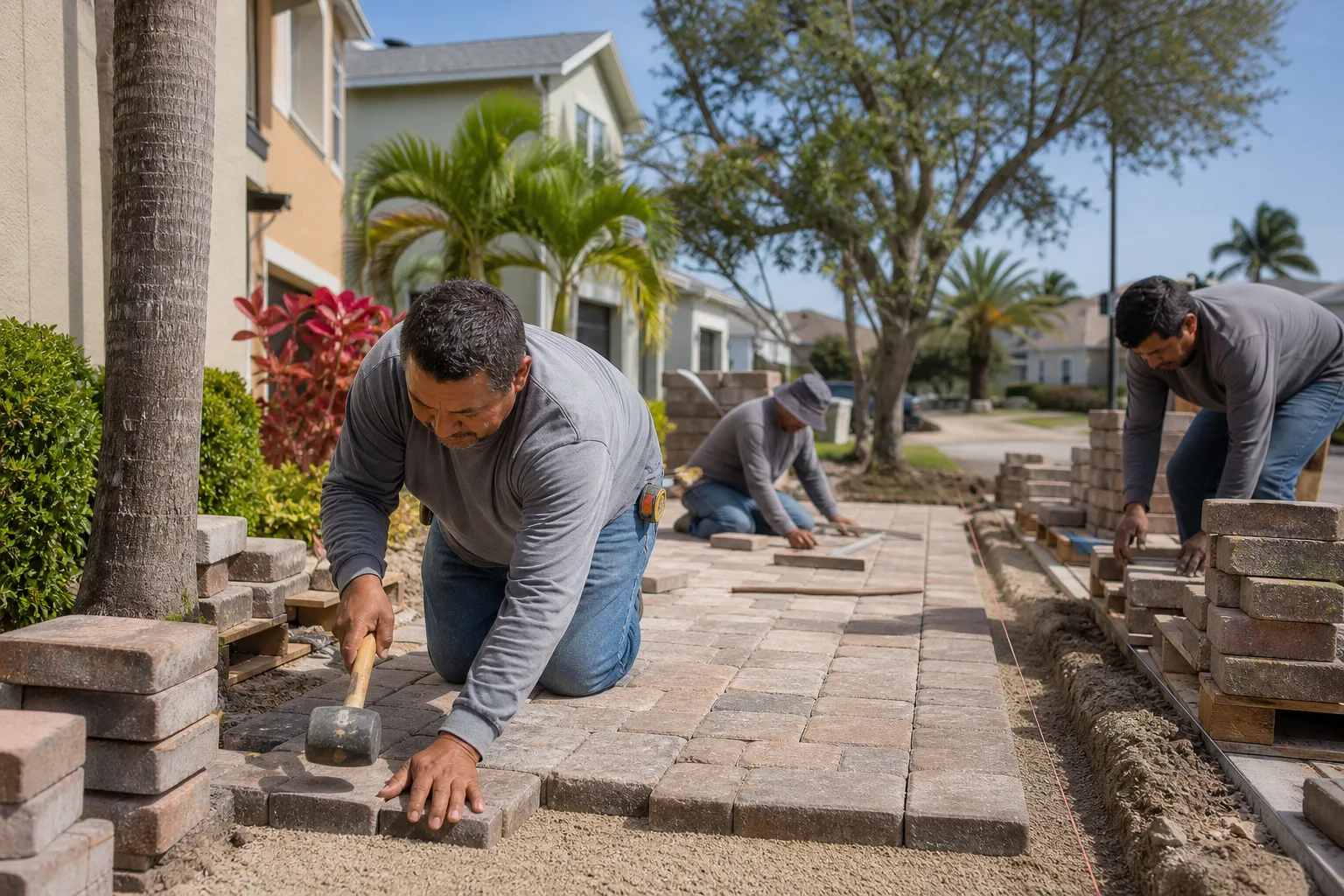
Most homeowners think the project starts when the pavers show up. It doesn’t. The pavers are the last 15% of the work, laid on top of a compacted base that determines whether your driveway is flat and stable in five years or wavy and rutted in eighteen months. Here’s what a full driveway looks like phase by phase, using a typical Burbank single-family property with a 20-by-40-foot driveway:
- Demo and haul-away (0.5 – 1 day). Breaking out old concrete, asphalt, or failing pavers and trucking debris off site. A 800-square-foot slab means several dumpster loads. On steep Burbank hillside lots where the driveway sits tight against the garage, this can drag to a day and a half because trucks have limited staging access.
- Excavation and grading (1 – 2 days). Digging to subgrade depth – usually 8 to 12 inches below finished paver grade for a residential driveway – and grading for drainage slope. Burbank properties often sit on decomposed granite or clay-heavy soils, and clay needs deeper excavation because it holds water and expands.
- Base install and compaction (1.5 – 2.5 days). Crushed aggregate base, typically Class II or 3/4-inch minus, installed in 2 to 4 inch lifts and compacted with a plate compactor after each lift. Skipping lifts is the number-one cause of paver settlement. Then the base cures/settles for a minimum period.
- Bedding sand and screeding (0.5 day). A 1-inch layer of coarse bedding sand leveled to grade. This is where precision shows up – a 1/4-inch deviation at the sand translates to a 1/4-inch trip hazard at the pavers.
- Paver layout and cuts (1.5 – 3 days). Installing pavers in the chosen pattern, cutting edge pieces with a wet saw, and setting borders. This is the phase homeowners expect to take a week, and it usually takes the least time of any major phase.
- Edge restraint and joint sand (0.5 day). Setting edge restraints to lock the perimeter and filling joints with polymeric sand.
- Polymeric sand cure (24 – 48 hours minimum). No traffic, no water, no washing. The polymer needs to set and the joint sand needs to harden, or your joint sand will wash out in the first rain.
Add up the minimums and you’re looking at 6 to 10 working days before weather or scheduling factors. A driveway quoted at three days means someone plans to skip lifts or skip cure. Both come back as callbacks in year two.
Which Phases Have Hard Minimums You Can’t Compress
Two variables drive the entire schedule, and neither one can be ignored without paying for it structurally later. Understanding them is how you tell a real timeline from a sales pitch.
Compaction and settlement
Aggregate base must be compacted in lifts and allowed to settle. A rushed base – one thick layer compacted once – looks fine on day one and shows its weakness after the first wet season. In Burbank, where our clay-heavy soil takes on winter moisture and swells, an under-compacted base turns into a driveway that rocks, dips, and cracks joint sand out within a year or two. Best practice is 2 to 4 inch lifts with a vibratory plate compactor or roller, and 24 to 48 hours of settling time before the bedding sand goes down. Improperly compacted base can settle 1/2 to 1 inch unevenly within a single rainy season – that’s a trip hazard at your garage apron and a puddle at your property line.
Polymeric sand cure
Polymeric joint sand needs to cure 24 to 48 hours after the final mist and compaction. Temperature matters – in Burbank’s July and August heat, the sand cures fast and often finishes within a day, but that same heat makes fresh joint sand harder to work with because it skins over before it fully fills the joint. In cooler months the cure stretches longer. What happens if it’s rushed? The polymer doesn’t bind properly, joint sand washes out in the first rain, and weeds take hold. Anyone who lets you drive on the new driveway the same afternoon is handing you a callback.
Other hard minimums
- Concrete border cure (if used): 24 to 72 hours before adjoining pavers go down.
- Drainage installation: trenching, pipe, and dry well each require their own inspection interval before backfill.
- Post-permit inspection sequencing: the base inspection must pass before sand is laid, so the schedule has to leave a buffer for the inspector’s calendar.
If a contractor tells you the schedule skips these, they aren’t beating the system – they’re privatizing the risk and handing you the bill. For a broader view of how driveways and pavers fit into a full property scope, see Driveway & Pavers in Burbank.
How Burbank’s Climate, Permits, and HOAs Affect Your Schedule
Burbank is a good market for hardscape in a way the Pacific Northwest isn’t. We don’t lose weeks to rain the way contractors north of us do. But we have our own scheduling variables, and they show up in the calendar.
Summer heat
July through September, Burbank routinely sends temperatures over 95 degrees. That does two things. First, polymeric sand and bedding sand cure faster, which shortens the post-install wait a bit. Second, it makes the labor day shorter in practice – crews have to pace work, stay hydrated, and often start earlier to beat the afternoon heat peak, which can push a 2-day phase into 2.5 days. A good contractor factors this in and doesn’t sell you a “3-day summer install” that in practice sits at 5.
Winter moisture and clay soils
December through March, Burbank is wetter, and clay-heavy soil in areas like the Rancho Equestrian district and the flats east of Buena Vista holds moisture. Excavation on wet clay is slower because the soil clumps and has to be hauled differently. Some jobs need a day or two of dry-out before base goes down. Never seen a schedule slip from this? Then the contractor hasn’t done many wet-season Burbank installations.
Permits and inspections
Burbank requires a permit for most driveway construction, and inspection turnaround depends on the city’s current caseload. Historically, plan check has run 2 to 4 weeks for a straightforward residential driveway, and inspection scheduling typically runs 1 to 3 business days out. What matters to you as the homeowner is whether the bid includes a realistic permit buffer or pretends permits are a one-week affair. Code compliance, drainage requirements, and lot coverage rules all vary by parcel – the contractor who runs projects in Burbank regularly knows which inspections get called and which don’t. If you’re planning a broader site project, our team also handles Home Additions & ADU in Burbank, where driveway access and site logistics overlap.
HOA approval delays
Parts of Burbank, including pockets of the Burbank Rancho area and newer developments near the airport, sit inside HOAs. HOA architectural review typically takes 2 to 6 weeks and can spike to 8 if a board meets monthly. That delay is front-loaded – it happens before anyone touches a shovel – but it still lands on your overall project calendar and has to be planned for.
Legitimate Delays vs. Red Flags
Every project hits a snag somewhere. The question is whether the snag is something a good contractor absorbs or something a marginal one uses to paper over disorganization. Here’s how to tell the difference.
Legitimate reasons a timeline extends
- Permit or inspection backlogs at the city. Out of the contractor’s hands, but a good one will tell you 48 hours early, not the morning of.
- Weather. A February wet spell in Burbank can add 2 to 4 working days to excavation and base phases.
- Discovery conditions. Finding a buried utility line, an abandoned septic tank, or shallow rock during excavation is a real reason to stop and re-plan.
- Material lead times on specialty pavers. If you chose a particular Belgard or imported clay paver that’s warehouse-restocked, that’s a 1 to 3 week delivery window that no crew can rush.
- HOA or plan-review second-round changes. If the board requests revisions, add another cycle.
Red flags worth a conversation (or a walk-away)
- “We’ll start Monday” but no written schedule and no permit number shown. Any real start date should come with a permit and a permit number you can verify.
- Crew disappears for 3 to 5 days mid-project with no explanation. That’s a scheduling priority issue – your project got bumped for someone else’s.
- No milestone invitations. You should be invited to walk the base after compaction, before pavers go down. If nobody asks you to check it, you’re being asked to trust what you can’t see.
- Timeline quoted dramatically shorter than everyone else’s. A 3-day paver driveway quote in July in Burbank means the contractor is planning to skip compaction lifts or cure time.
- Change orders arrive verbally. No written line-item, no signature, no payment.
How to Build a Realistic Project Calendar
The single best thing you can do to control your schedule is to get the contractor to commit to it in writing, phase by phase, before the first day of work. Here’s how to structure that conversation:
- Ask for a written schedule with phase dates. Not “3 to 4 weeks” – specific dates per phase, including the days nobody is on site (base cure, sand cure, inspection wait).
- Ask what could extend each phase. A good contractor has an answer for each – weather, inspection turnaround, material delivery. If they can’t name risks, they aren’t planning.
- Confirm who pulls the permit and when. Permits pulled by the contractor are the contractor’s responsibility. Confirm the permit application date, plan-check expectations, and inspection sequencing in writing.
- Decide milestone checkpoints now. Standard invitations we recommend: (1) after demo and excavation, (2) after base compaction and before bedding sand, (3) after paver layout and before joint sand. Each is a 10-minute walk with the crew lead.
- Build in a weather buffer. For Burbank, add 3 to 5 working days of buffer for any project running October through March.
- Confirm the payment schedule matches the physical progress. Deposits up front, big payments after base and after layout are standard and fair. Full payment before final walkthrough is not.
Get those six items in writing and you can hold a schedule to account without ever being the unreasonable client.
Material Choices That Change the Clock
What you choose for pavers affects the schedule more than most homeowners realize. The pattern and stone you want determines whether your project wraps in a week or stretches to five weeks.
- Standard concrete pavers (Belgard, typical stock patterns): In-stock at most regional suppliers, 1 to 5 day lead time. The layout phase runs fastest because pieces are uniform. Solid default for a timeline-conscious project.
- Clay brick pavers: Beautiful in Burbank’s 1920s and 1930s-era homes near downtown. Lead times run 2 to 4 weeks, and cutting takes longer, adding 0.5 to 1 day to layout.
- Large-format porcelain or stone: Higher breakage rate during cuts and a thinner bedding tolerance. Layout runs 30 to 50% longer than standard pavers. Lead times can run 3 to 6 weeks.
- Custom-cut natural stone: Highest skill ceiling, longest timeline. Expect 2 more days in layout and a lead time that depends on the quarry.
Prefabricated modular construction brands you may have read about – Cover, Dvele, Boxabl, Mighty Buildings – mostly affect ADU and accessory structure speed, not driveway timelines. The paver schedule is dominated by base and cure, not prefab.
If you’ve also been considering a perimeter fence to match the new driveway, our Fence Installation in Burbank team coordinates fence and hardscape projects so both are scheduled to finish on the same calendar.
What “On Time” Actually Looks Like
Most projects finish within 1 to 2 working days of the original estimate when the estimate was built honestly. That’s the bar. If your project runs 3 days over on a 10-day schedule and the contractor flagged the reason within 24 hours, that’s normal construction. If it runs 5 days over and you found out the morning of, that’s a management problem.
What we see across Burbank projects large and small is that the honest quotes are the boring ones: 6 to 10 days of install, a permit buffer, a weather buffer, a milestone schedule. The quote that promises three days is the one that turns into three weeks – not because the crew is slow, but because nobody planned for what they’d find under the slab, and nobody scheduled the inspection.
Budget also shapes the schedule. Expect pricing in the following ranges for a typical Burbank driveway project, and know that the number quoted should include all phases, permits, and disposal:
| Item | Typical Burbank cost range |
|---|---|
| Demo and haul-away of existing surface | $800 – $2,200 |
| Excavation, grading, and sub-base prep | $1,200 – $3,500 |
| Crushed aggregate base (materials and compaction) | $1,500 – $4,000 |
| Bedding sand and screeding | $400 – $900 |
| Paver material (per square foot, standard concrete) | $4 – $9/sq ft |
| Paver installation labor | $5 – $10/sq ft |
| Edge restraints and polymeric sand | $300 – $800 |
| Permit fees (Burbank) | $150 – $600 |
| Drainage improvements (where required) | $600 – $2,500 |
For a full-scope view that ties hardscape into the rest of your property, start with our Groundwork Construction Co. of Burbank home. Upfront pricing we quote is what you pay – no change orders on the back end.
Common Mistakes to Avoid
- Choosing your contractor on the shortest timeline quoted. The fastest quote is usually the least honest one. A 3-day drive-way quote in Burbank in July means compaction lifts and polymeric cure are being skipped, and you’ll pay for that in year two.
- Skipping the base milestone walk. Always inspect the compacted base yourself before the bedding sand goes on. Once pavers are laid, you can’t see the layer that determines the driveway’s stability for the next two decades.
- Assuming permits are optional for a “cosmetic” upgrade. Burbank requires permits for most driveway construction and inspectors will flag unpermitted work at resale. Confirm the contractor pulls the permit before work starts.
- Beginning a wet-season project without a weather buffer. Building a driveway in January without adding 3 to 5 buffer days in the schedule is a mistake. Burbank rain and clay soils don’t negotiate.
- Letting HOA review happen after materials are ordered. Confirm board approval before pavers are ordered. Otherwise your material sits in a warehouse for 6 weeks while the board meets.
- Driving on the new driveway before the polymeric sand cures. 24 to 48 hours, no exceptions. Joint sand that hasn’t cured fails in the first rain, and you’ll be paying for a reseal.
- Ignoring drainage slope on the grade plan. A flat driveway that drains toward your garage isn’t a mistake you notice until the first downpour. Slope should be planned during grading, not patched after.
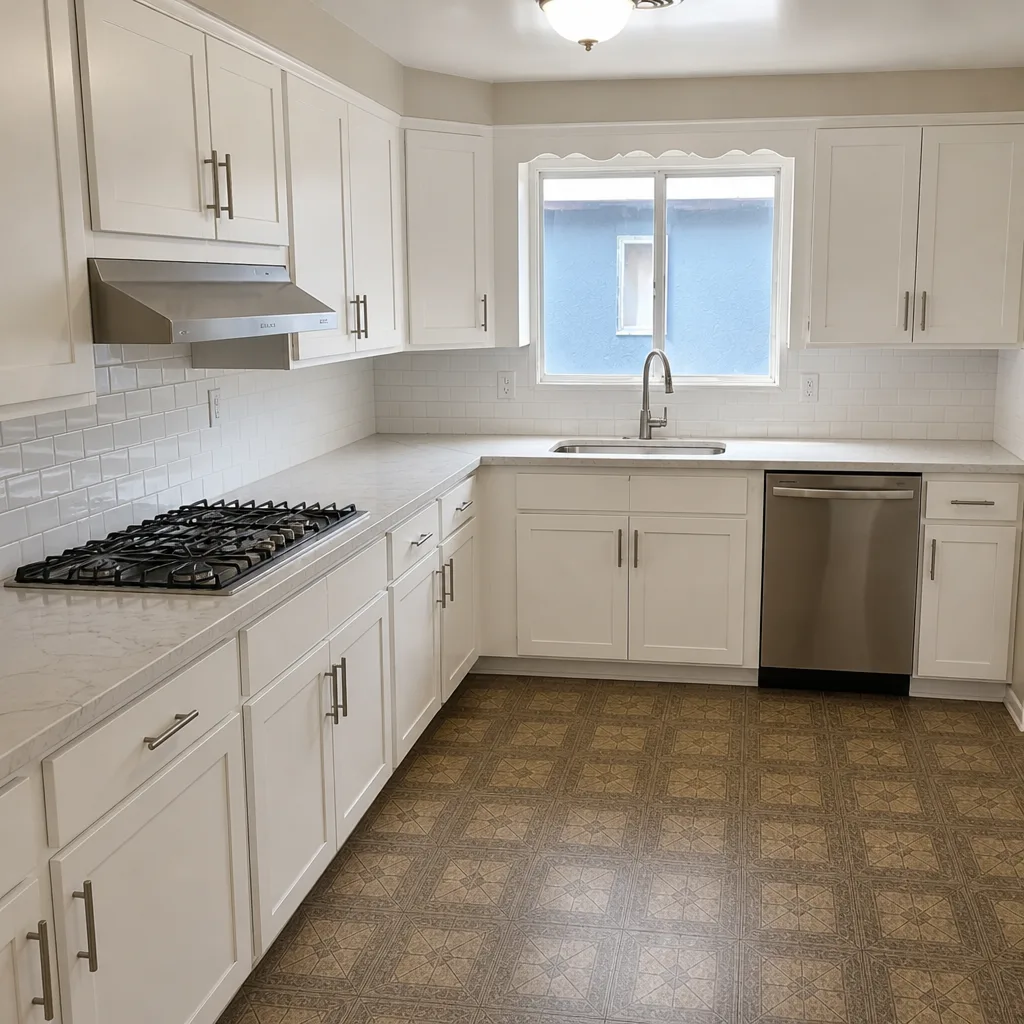
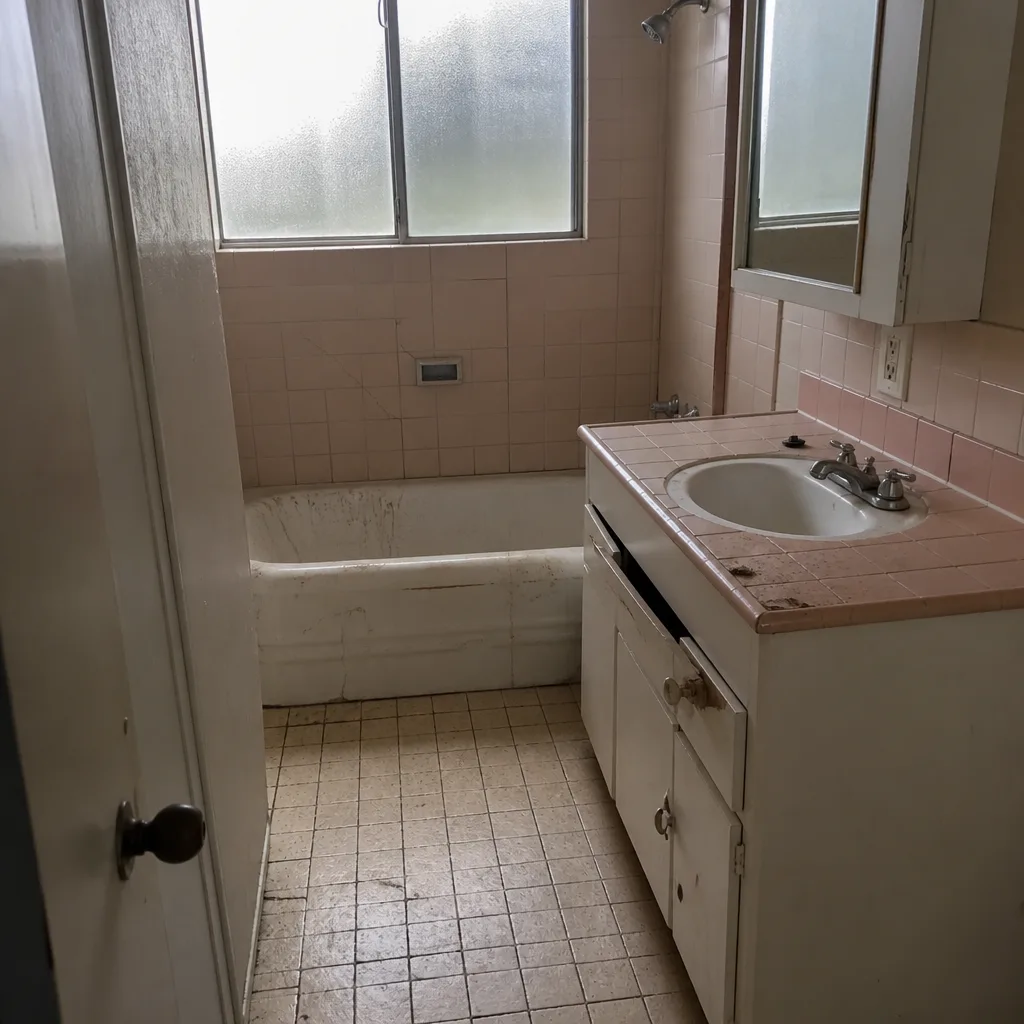
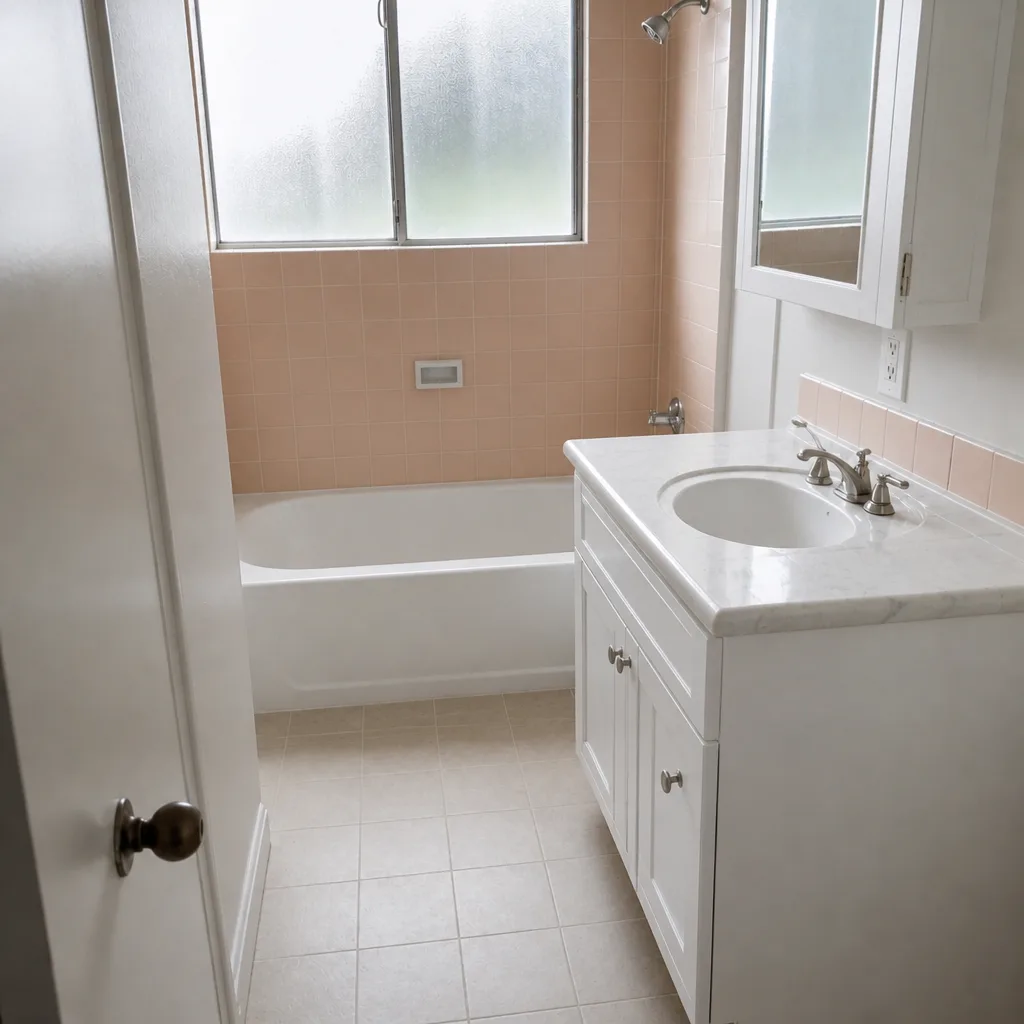
See the difference
 Before
 After
 Before
 After
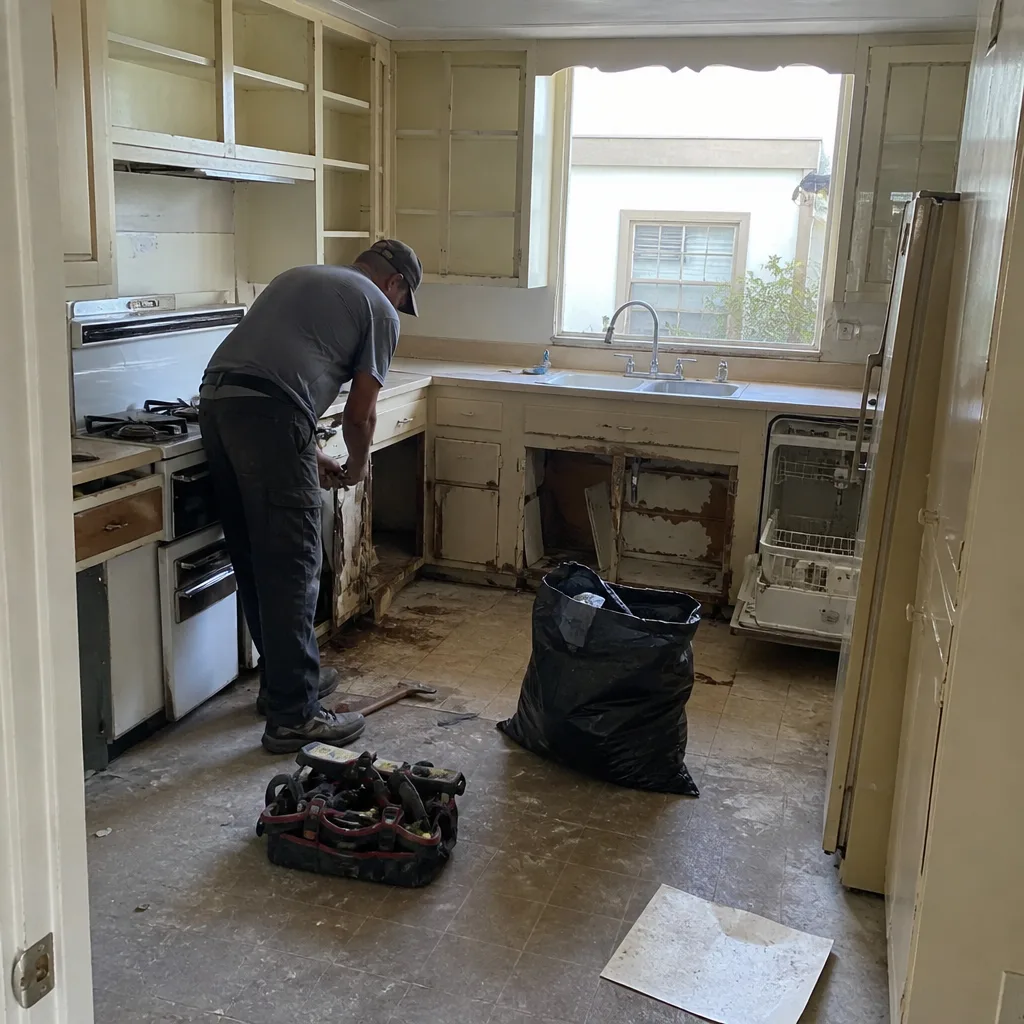 Before
 After
When to Call a Professional
Call a professional when your driveway involves more than a small cosmetic refresh. That means any project over 300 square feet, any excavation near utilities, any drainage installation, any change in the driveway’s grade, and any work requiring a Burbank permit. Call if your existing driveway has settled unevenly and needs to be rebuilt from the base up, if you’re plan-ning a combined hardscape and structure project (driveway, fence, ADU), or if you simply want the schedule in writing before you commit. Groundwork Construction Co. of Burbank offers free estimates in Burbank – call (844) 797-7958. Every estimate is written, line-item, and upfront, and our team is available by a live person, 24 hours a day.
Frequently Asked Questions
Most Burbank paver driveways take 5 to 10 working days of on-site work, plus 2 to 6 weeks before installation for permits, HOA review, and material lead times. A small patio or walkway may finish in 2 to 4 days. Call (844) 797-7958 for an exact timeline built around your specific property – estimates are free.
Because base prep, compaction cure, and polymeric sand cure each have minimum time requirements that can’t be compressed without structural risk. A 3-day quote either skips compaction lifts or skips cure, and both cause settlement or joint sand washout within one or two wet seasons. The honest schedule reflects the physics, not the sales pitch.
We work through summer in Burbank, and heat actually accelerates polymeric sand cure. The tradeoff is that crews pace the workday around the afternoon heat peak, which can push a 2-day phase to 2.5. Winter is the harder season here because clay soils take longer to excavate when wet. Call (844) 797-7958 to schedule an estimate and we’ll map the season into your calendar.
Yes, most driveway construction in Burbank requires a permit, and plan check typically runs 2 to 4 weeks with inspections scheduled 1 to 3 business days out. Any honest schedule has permit time baked in. We pull permits on every job we coordinate and pass inspections before moving on to the next phase.
Homeowners choosing the contractor quoting the fastest timeline, which forces skipped phases and re-do work. The second biggest is ordering materials before HOA or plan-check approval, which parks the delivery and stalls the job. Get the schedule in writing with milestone dates and neither delay will surprise you.
Plan on 24 to 48 hours after polymeric joint sand is installed, and up to 72 hours in cool weather. No traffic, no watering, and no pressure washing in that window. Rushing the cure is how joint sand washes out in the first rain. If you want the exact timeline for your project, call (844) 797-7958 – estimates are free and the schedule is in writing.
The Bottom Line
A driveway and paver project is a schedule problem before it’s a construction project. The timelines that hold up are the ones that account for base compaction, polymeric cure, Burbank’s permit and inspection pace, and HOA review – not the ones selling a 3-day install. Get a written schedule with phase dates and milestone checkpoints. Choose pavers based on realistic lead times, not just aesthetics. And treat the fastest quote with the most suspicion. Groundwork Construction Co. of Burbank builds every schedule to last and backs the work with our 730-Day Done Right Promise – if it’s not done right, we make it right. Call (844) 797-7958 to schedule your free estimate and start from a schedule built to hold.
Written by the team at Groundwork Construction Co. of Burbank.