Last updated November 18, 2026
Free written scope consultation - allowances, timeline, and change-order rules on paper before a single trade is scheduled
DIY vs Professional Home Additions & ADU: What’s Safe to Do Yourself
Homeowners who finish their own ADU interiors after a contractor handles the rough-in can save $8,000-$15,000 in labor. But the ones who take on their own electrical or structural work often pay twice that in corrections when the final inspection fails and a licensed pro has to tear out and redo what was already signed off. The gap between those two outcomes isn’t skill. It’s knowing exactly where the legal and physical line sits. This guide draws that line for Burbank homeowners: what California code lets an owner-builder touch, what triggers a permit problem, how DIY work affects your insurance, and how to structure a hybrid contract so the DIY savings are real instead of a future bill.
Quick Answer
In Burbank, you can safely and legally self-perform cosmetic and non-structural finish work – painting, finish carpentry, flooring, tile, landscaping, and fixture swaps after rough-in is inspected. You should not self-perform structural framing, foundation work, electrical rough-in, gas lines, plumbing rough-in, or anything that requires a signed engineer’s plans, because a failed inspection on permitted work means paying a licensed contractor to redo it plus delay costs that erase the labor savings. The parts of a home addition or ADU that are genuinely DIY-safe are almost always the parts *after* the permit scope closes.
Styles & brands we work with
- Kitchen remodeling
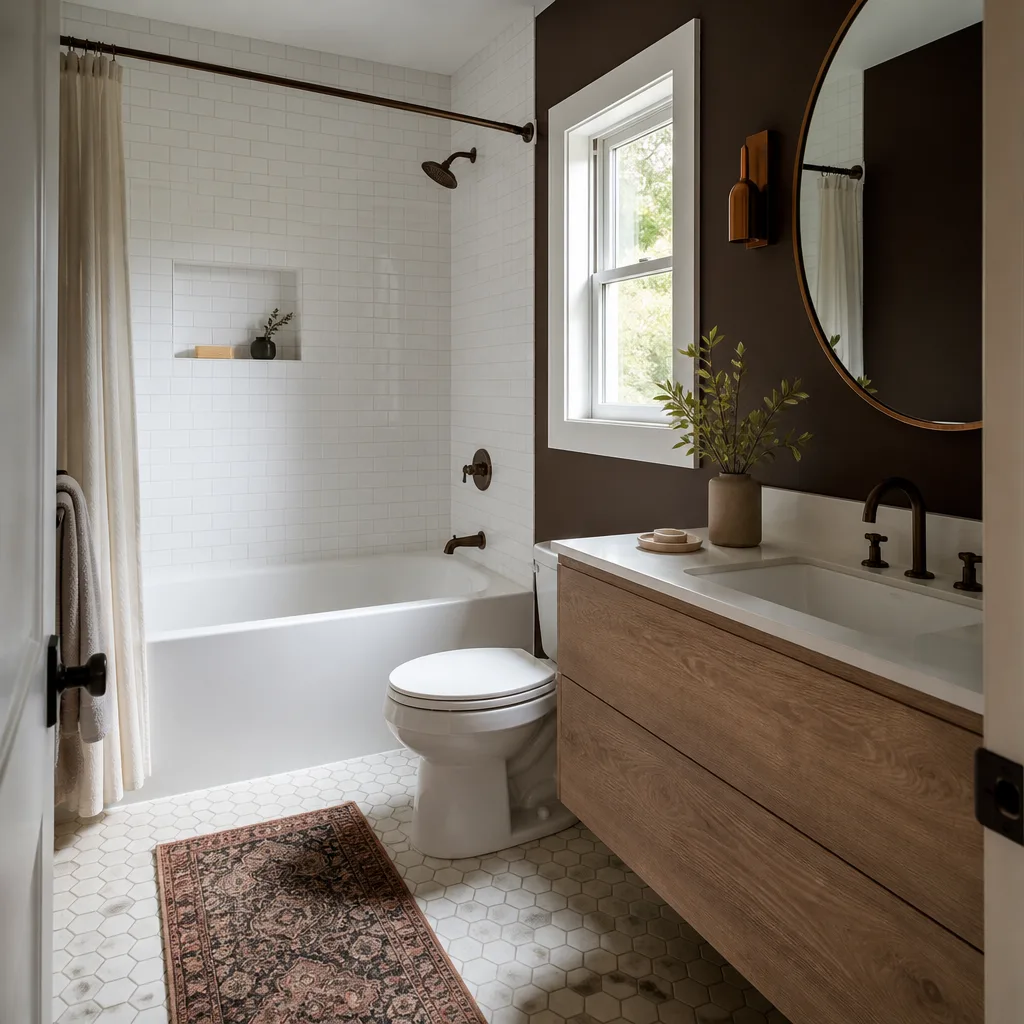
- Bathroom remodeling
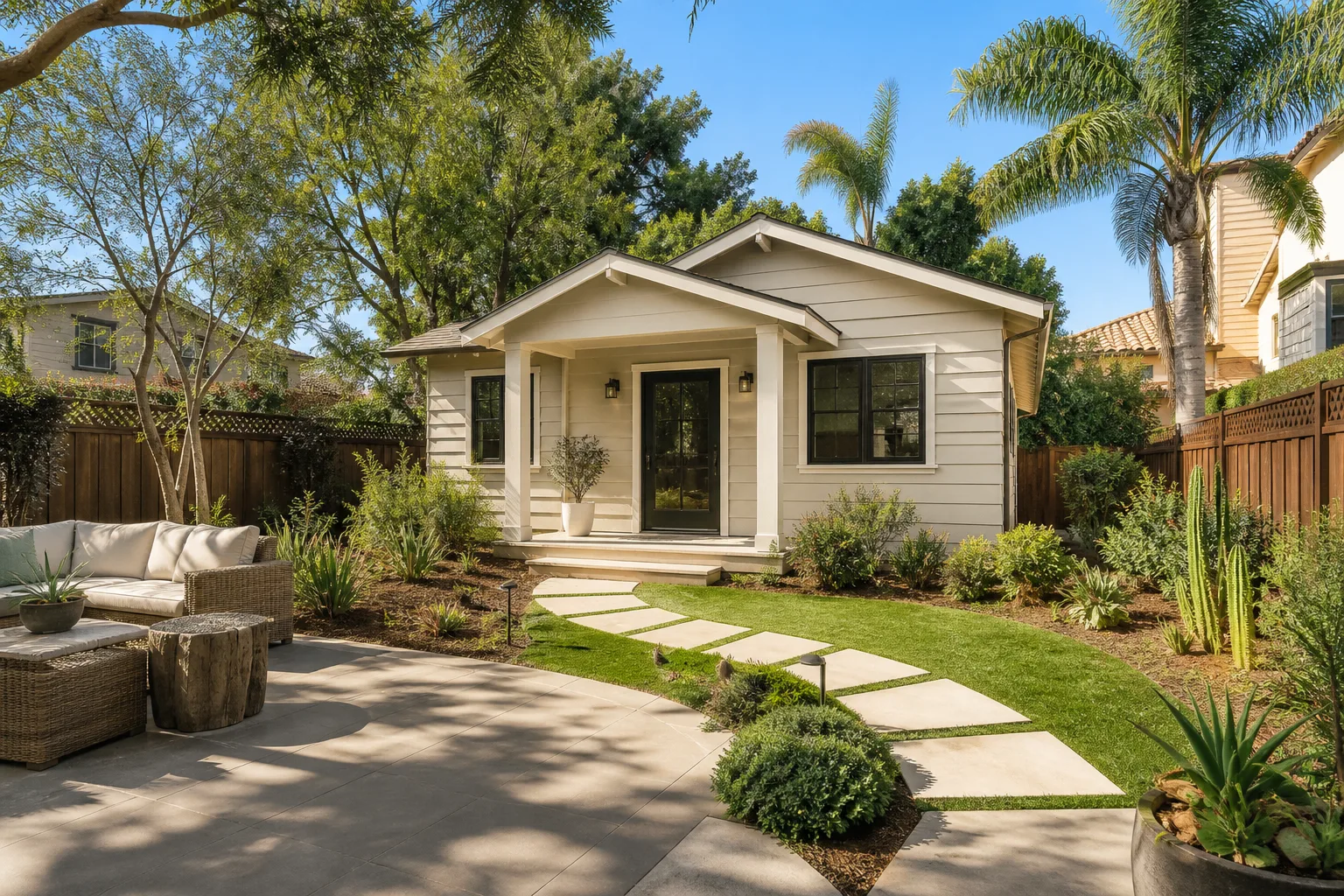
- Home additions & ADU
- Roofing
- Windows & doors
- Driveway & pavers
- Fence
Table of Contents
- What California actually allows Burbank owner-builders to do
- The hidden cost of DIY on permitted work
- Where experienced DIYers genuinely add value
- How DIY work affects your homeowner’s insurance
- How to structure a hybrid contract in writing
- Burbank-specific realities: climate, code, and neighborhood quirks
- The inspection sequence every ADU passes through
What California actually allows Burbank owner-builders to do
California gives owner-builders more leeway than most states – but “allowed” and “smart” aren’t the same thing. As an owner-builder, you can pull a permit in your own name for work on a property you own and occupy, and you can legally perform much of the labor yourself. The city of Burbank, through its Building Division, follows the California Building Standards Code (Title 24) with local amendments that matter for ADUs specifically. The code doesn’t say “only licensed contractors can swing a hammer,” but it does say certain trades are legally reserved: electrical, plumbing, and mechanical work must be performed by a state-licensed C-10, C-36, or C-20 contractor *unless* you’re doing it in your own single-family residence as the owner-builder and you occupy it.
Here’s the practical split for a Burbank ADU or addition:
- Legal for owner-builder (owner-occupied single-family): interior framing on non-structural partition walls, drywall, insulation, finish carpentry, cabinetry install, flooring, painting, tiling, and landscaping.
- Legal on paper but risky in practice: electrical branch circuits, plumbing supply and drain, HVAC ductwork. Yes, an owner-builder can often sign off on these – but if they fail inspection, the cost to correct usually dwarfs the savings.
- Not DIY-legal without a licensee: gas line connections, electrical service panel work, any work on a multi-family property or a property you don’t occupy, and any structural alteration requiring an engineer’s stamp.
One more Burbank-specific wrinkle: if your property is in a Hillside Overlay or within a Historic District, even interior work that touches a load-bearing element under an existing permit can trigger a design review. Ask the Building Division before you demo anything. Call us if you want to talk through the scope before you commit – a free project estimate is worth more than a re-inspection.
The hidden cost of DIY on permitted work
Walk through the real math. Suppose you decide to pull your own electrical rough-in permit for an 800-square-foot ADU. You’ve watched enough videos to feel confident, and the permit saves you roughly $4,000 in licensed labor. But electrical inspections in Burbank are scheduled windows – typically a two-to-five business day lead time – and each failed inspection is another reschedule. When your panel work fails for a neutral-to-ground bond that isn’t where the inspector expects, you don’t just fix it. You call a C-10 electrician who has to open walls, correct the work, and schedule a re-inspection. The reschedule adds days. The correction runs $2,500-$5,000. The delay pushes your drywall sub and your finish trades back a week, which each carry their own rescheduling fees.
The dollar math, in a plain table:
- DIY electrical rough-in labor savings: $3,500-$5,000
- Licensed electrician to correct a failed rough-in: $2,500-$5,000
- Re-inspection resequencing and trade delays: $1,500-$4,000
- Potential re-drywall if corrections are inside walls: $1,200-$3,000
- Net result: most owners lose between $1,000 and $6,000 on DIY rough-in, plus weeks of schedule
Structural is worse. A failed framing inspection can require an engineer to re-document the correction, which is a $600-$1,500 charge on its own before a single nail moves. We’ve watched homeowners in Burbank spend more on corrections than they would have spent on the entire framing crew. The math rarely works. That’s not a scare tactic – it’s the arithmetic of permitted construction.
Where experienced DIYers genuinely add value
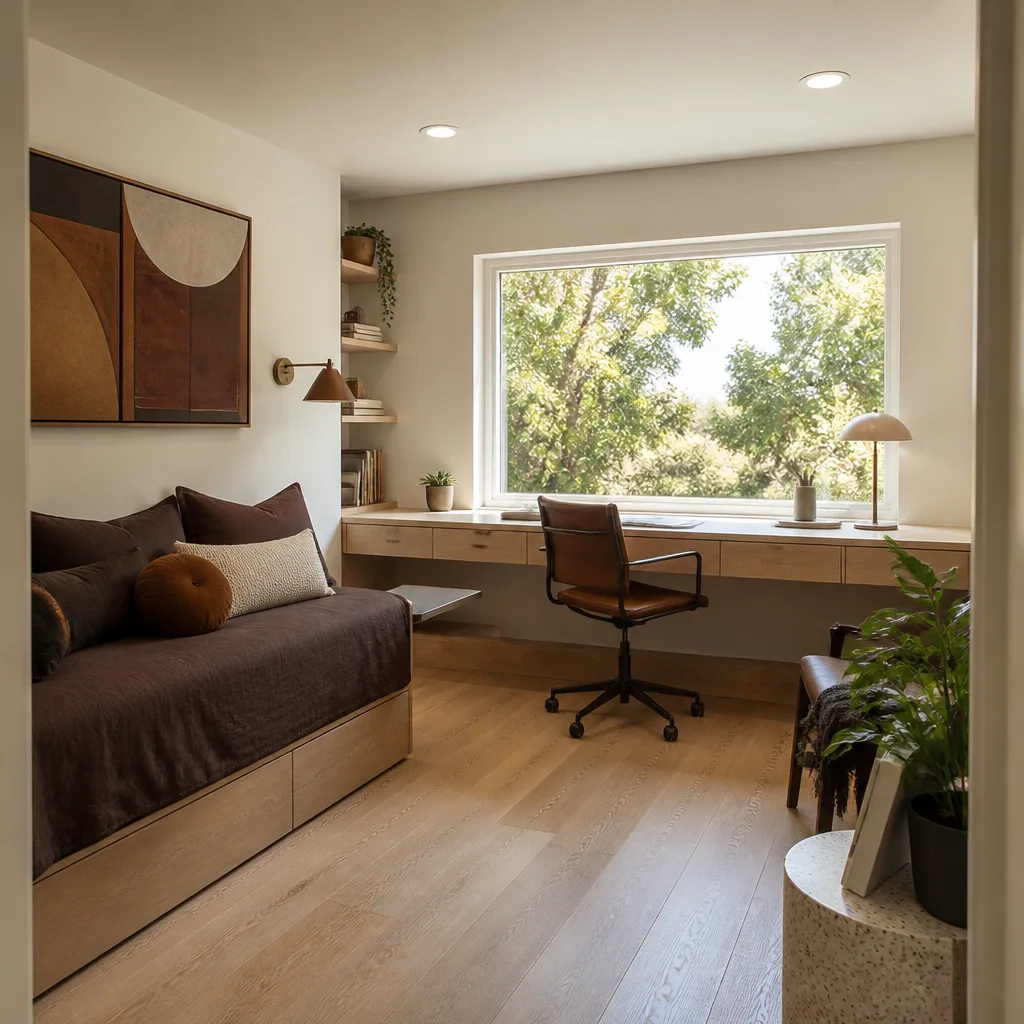
Here’s the flip side. Once the rough-in inspections have all passed and final sign-offs are in hand for the “closed-in” portion of the permit scope, most of the work that comes next is cosmetic and reversible. This is where DIY money does its best work. An owner who paints, installs baseboards and shoe molding, hangs door slabs, installs tile, and does the landscaping around a new ADU often saves $8,000-$15,000 – and no inspector ever looks at any of it.
The safe-to-DIY list for a Burbank ADU once rough-in is signed off:
- Painting and stain work. Interior and exterior latex or acrylic, no permit, no inspection, real savings in the $2,000-$5,000 range for a typical ADU.
- Finish carpentry. Baseboard, crown, window casings, and shoe mold. Bring in the trim only after flooring is down.
- Tile work (shower surround, backsplash, floor). Not rocket science, but worth practicing on a sample board first – Burbank’s generally dry, hot summers are actually forgiving for thinset cure times.
- Cabinet installation after plumbing and electrical are live. Hang boxes, set doors, install pulls. Leave any work near water lines to a pro.
- Fixture swaps after rough-in sign-off. Toilets, faucets, showerheads, light fixtures on existing junction boxes. Grohe and Sterling fixtures are forgiving on a straightforward install. Anything that requires moving a supply line is not in this category.
- Landscaping and hardscape outside the footprint. Drought-tolerant planting, DG paths, irrigation retrofit – all green-lit and Burbank water-wise rebate-eligible.
That’s the real list. The savings are real; the boundary is real too – everything before final rough-in sign-off stays in the professional column.
How DIY work affects your homeowner’s insurance
This is where the conversation gets uncomfortable. Most homeowners don’t realize that unpermitted or unlicensed-trade work can become a coverage exclusion. If a fire starts in a circuit you wired and the cause is traced to your uncorrected electrical work, the carrier’s adjuster will look for the permit. No permit, or a permit pulled by you without a licensed sign-off, and the adjuster has grounds to deny the structural portion of the claim. That’s not every carrier’s response, and policies differ, but it’s the risk our Burbank clients take on silently.
Beyond the claim-denial risk, consider:
- Resale disclosure. California requires disclosure of unpermitted work. A buyer’s inspector will find your electrical if it wasn’t signed off, which can kill a sale or force a credit that exceeds your entire labor savings.
- Refinancing friction. Lenders order appraisals that include permit histories. An ADU without a legal second unit permit won’t count as income property, and the appraiser will flag it.
- Future claims on the structure. Even if the DIY work itself isn’t the cause of a future claim, insurers increasingly inspect permit history before honoring large losses on a new structure.
The bottom line: DIY cosmetic work is invisible to insurers. DIY structural or electrical work is permanently on the record, and not in a good way.
How to structure a hybrid contract in writing
You don’t have to choose between all-DIY and all-professional. The hybrid contract is a legitimate structure – it’s what most experienced owner-builders do on their own Burbank ADU. But it only works if it’s in writing and clearly delineates who pulls the permit for which scope.
- Have the GC pull the building permit and all trade permits. This is the single most important clause. If you pull the umbrella permit, you’re the general contractor of record, and everything that goes wrong lands on you.
- Define the “owner-performed” scope in an exhibit. List the exact tasks you’ll perform by name: “Paint interior, install baseboard and casing, install tile in bathroom 2, install landscape.” Nothing vague like “finish work.”
- State the trigger for owner scope. “Owner-performed work begins only after the general contractor delivers written rough-in sign-off and final framing inspection.”
- Set the inspection-sequencing calendar in writing. Let the GC own the inspection schedule; you don’t want to be the reason a sub’s slot is lost.
- Include a warranty carve-out that doesn’t void the GC’s warranty for work they did. The 730-Day Done Right Promise – if it’s not done right, we make it right – should apply to their scope cleanly. Make sure the language doesn’t let a DIY mistake become an excuse to deny legitimate warranty claims on the professional scope.
- Hold back a final payment until after the certificate of occupancy. Never let a hybrid close before you hold the CO.
If you’re building in Burbank and want a GC that will work within a hybrid structure honestly, that conversation starts with our Home Additions & ADU in Burbank page and a free estimate. We’re transparent about what we’ll and won’t sign off on – and it’s all in the contract.
Burbank-specific realities: climate, code, and neighborhood quirks
Burbank sits in the San Fernando Valley floor, which means summer heat loads, Santa Ana wind events, and a surprising amount of seasonal dust. That matters for ADU finish work. A garage conversion along the Burbank hills, for example, has to address attic ventilation and insulation more aggressively than a coastal build. If you’re doing your own drywall and insulation as an owner-builder, don’t downsize the R-value – Burbank’s Title 24 climate zone 9 requirements aren’t negotiable, and inspectors there know the local code cold.
Neighborhood-specific notes, from what we’ve seen on jobs across the city:
- In the Rancho Equestrian area, ADU plumbing sometimes triggers grading review because of the varied lot drainage. That’s a trade permit you shouldn’t pull yourself.
- In the Magnolia Park area, many properties have older 100-amp panels that will fail a new ADU circuit load calculation. Panel upgrades are a licensed C-10 job, full stop.
- In the Hillside areas near Stough Canyon, wind-driven rain during the rainy season stresses any ADU addition’s flashing details. Even if your flashing is cosmetic scope, have a pro confirm it before finish work closes it in.
- Citywide, the ADU ordinance requires a fire-rated assembly on certain property-line-adjacent walls. This is a structural paper-trail item and not a DIY call.
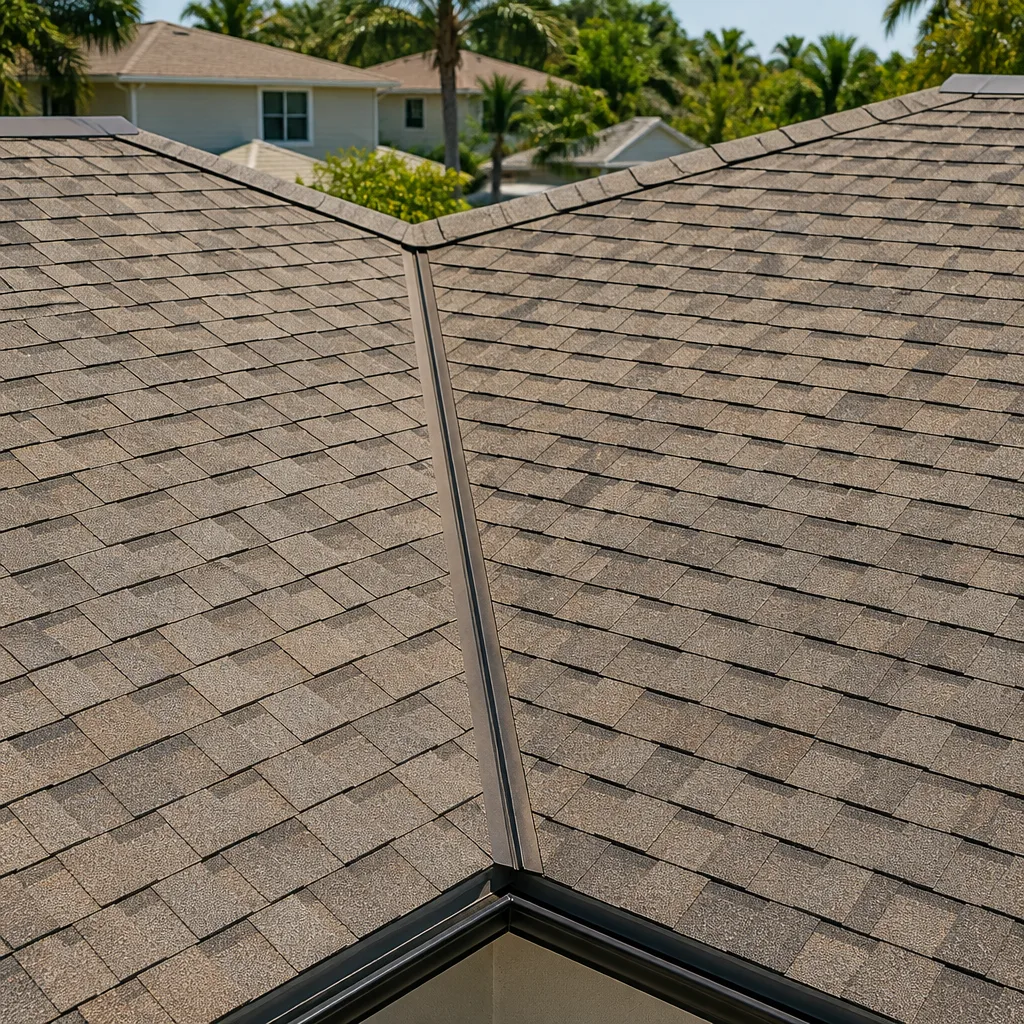
Roofing choices follow the same logic. If you’re adding a roof section to your ADU, GAF and CertainTeed underlayments degrade visibly faster on west-facing Burbank exposure, so we use specific product lines in that orientation. But installing or repairing that roof yourself on any occupied addition triggers both the structural permit and steep-roof safety issues. If the roof around your new addition needs work, that’s a call to our Groundwork Construction Co. of Burbank home team or a referral to a licensed roofer.
Neighborhoods where ADU construction is ramping up
We’re seeing the most new ADU starts in Burbank right now around Magnolia Park, the Rancho Equestrian district, and sections of the Rancho Adjacent area. If your neighbors are building, your parking and shared-trench coordination matter more than a codebook will tell you. Outside of Burbank, our clients regularly build ADUs and additions through the same regulated process.
The inspection sequence every ADU passes through
Knowing the sequence is what turns “I’ll just do that myself” into a defensible plan. Here’s the order inspections run, and where DIY stops being safe:
- Pre-construction / site inspection. Grading, setbacks, utility locates. Not DIY-eligible – the building inspector wants a licensed GC on record for anything touching site conditions.
- Foundation inspection. Steel placement, forms, and anchor bolt layout inspected before the pour. Conspicuously not DIY.
- Rough framing. Framing, shear, hold-downs, and window/door rough openings. DIY framing is legal on your own owner-occupied single-family but rarely wise – a failed shear inspection is the single most expensive correction an owner-builder can face.
- Rough electrical, plumbing, and mechanical (together). The big one. This is the inspection you do not self-perform.
- Insulation and Title 24 energy compliance. HERS rater verification if you’re on a performance path. Not DIY.
- Drywall. Often combined with item 5 inspections; the drywall hanger does the work and inspector signs off before tape.
- Final building, electrical, plumbing, mechanical. Fixtures, panels, and finish are checked. This is where DIY finish work either passes or doesn’t – but the finish scope through this point should still be listed in the hybrid contract.
- Certificate of Occupancy. The only document that makes your ADU legal to rent or use as a separate dwelling.
Everything on that list from items 1-6 is professional. Item 7 is where finish work lives. Item 8 is earned.
Common Mistakes to Avoid
- Pulling your own umbrella permit to save a few hundred dollars. The permit fee is small; the liability of being GC of record on an ADU in Burbank is enormous. Let a licensed GC pull the umbrella and all trade permits.
- Doing the insulation to hit an R-value from memory. Burbank’s Title 24 requirements for climate zone 9 are specific and inspection-verified. Under-insulating the roof assembly to save $400 is a guaranteed fail.
- Swapping the panel yourself to add ADU circuits. A 100-amp to 200-amp upgrade touches service entrance conductors, and the utility’s disconnect and reconnection schedule – all licensed C-10 work. It’s the single most common self-perform mistake we get called to correct in Burbank.
- Hanging drywall before the insulation and framing rough inspections pass. Once it’s closed in, the inspector can’t verify what’s behind the wall. In Burbank, that means tearing drywall back open – often at your cost, not the drywaller’s.
- Assuming the fire-rated wall detail is cosmetic. The separation required between an ADU and the primary dwelling on the same lot is a structural and life-safety item. Leave it to a pro, and verify it’s called out in the plans.
- Buying fixtures before the rough-in plumbing layout is final. A Grohe shower valve that doesn’t line up with the rough-in wall means re-cutting tile. Set the fixture schedule only after the plumbing rough-in is inspected.
- Treating landscaping as inside the permit scope. Hardscape, patio covers, and DG paths are almost always outside the ADU permit. But a retaining wall over a few feet tall may need its own permit – and drainage changes that redirect water toward the addition are a structural concern, not a cosmetic one.
See the difference
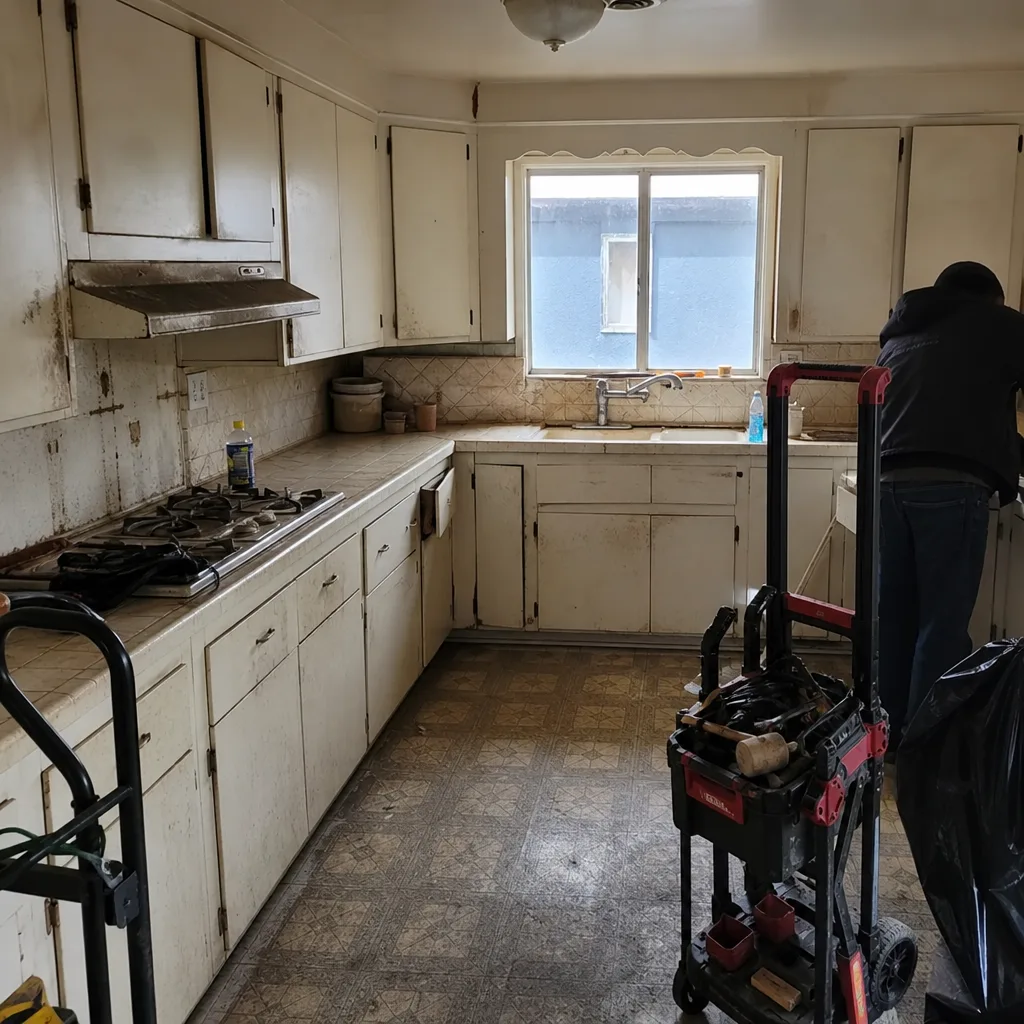 Before
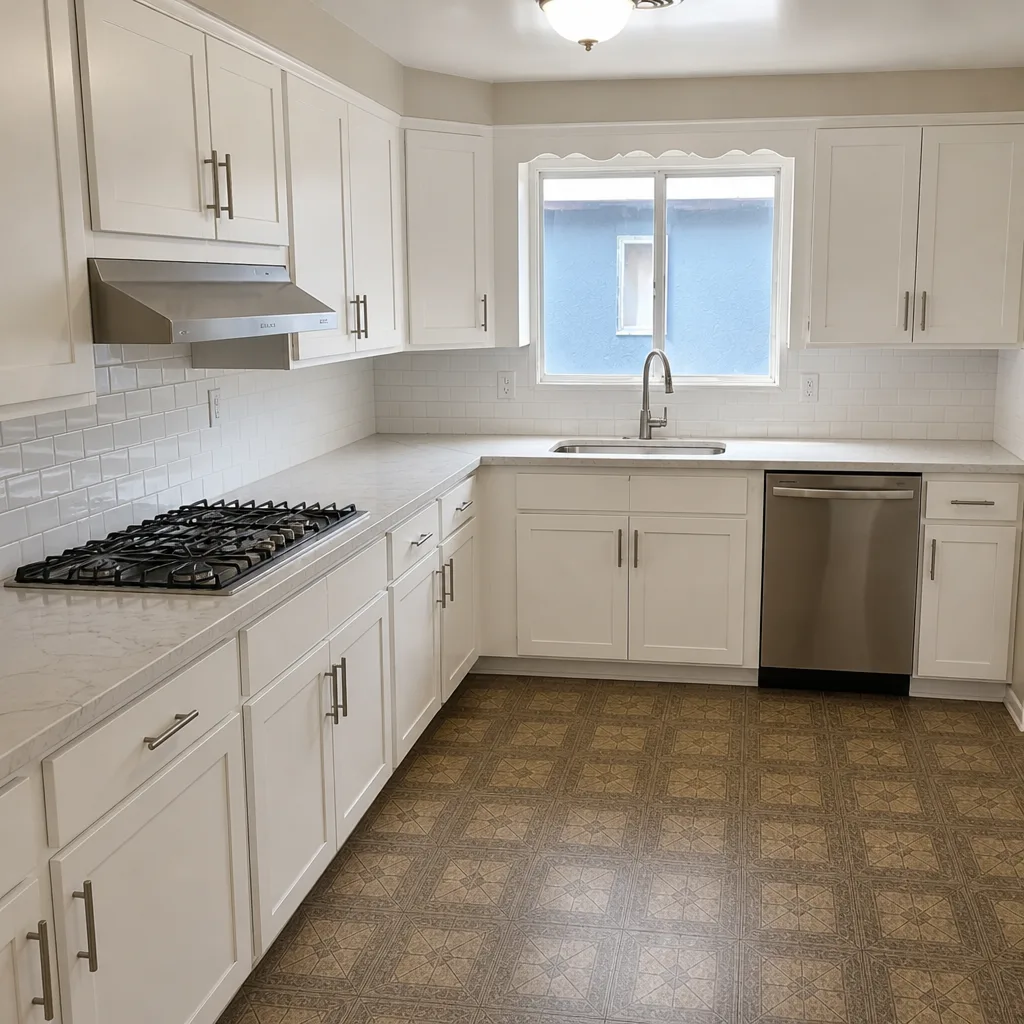 After
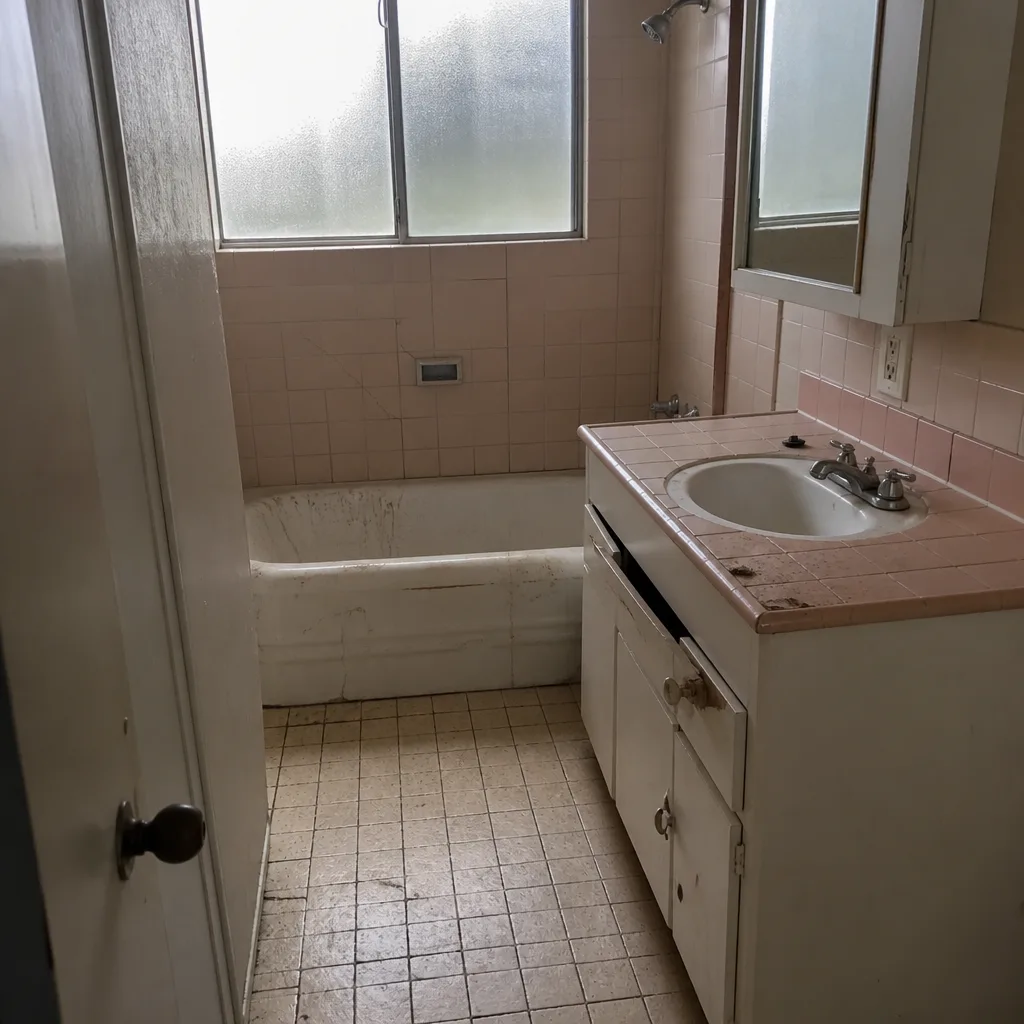 Before
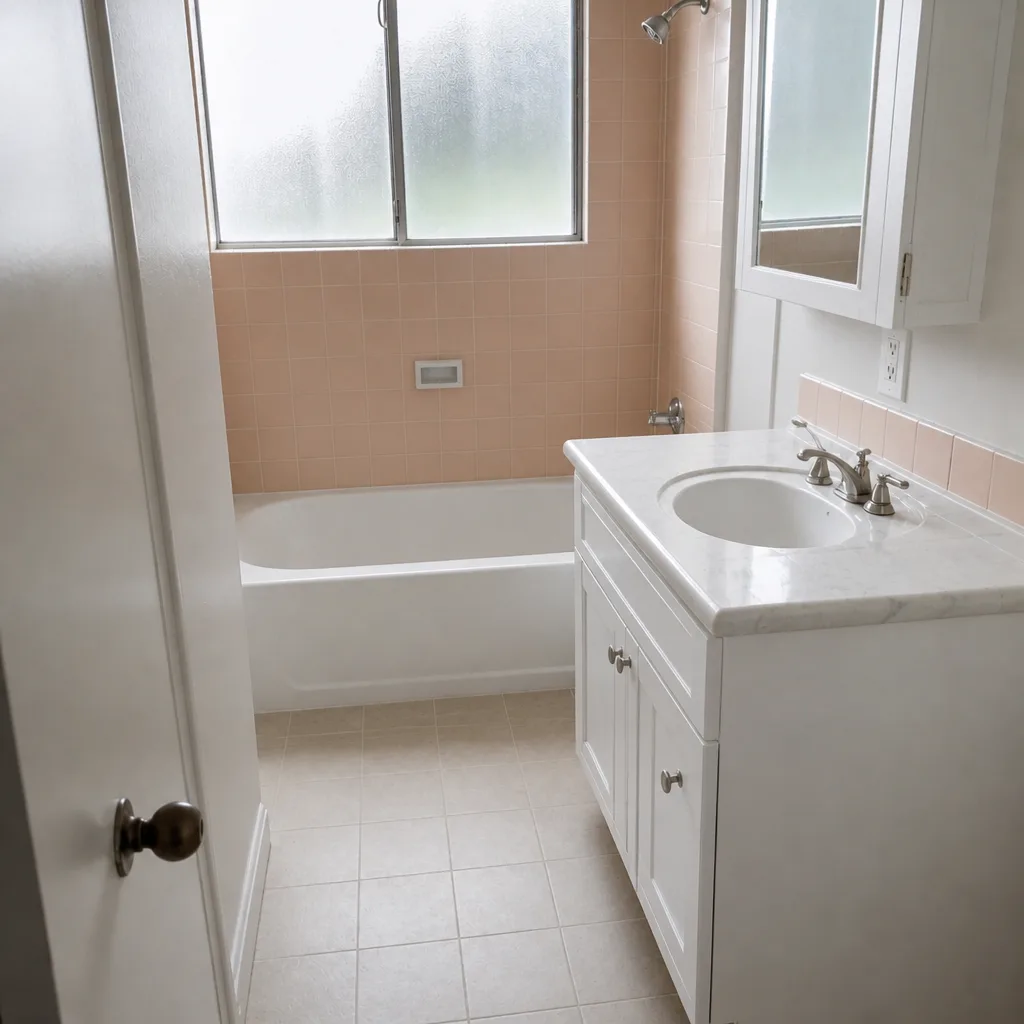 After
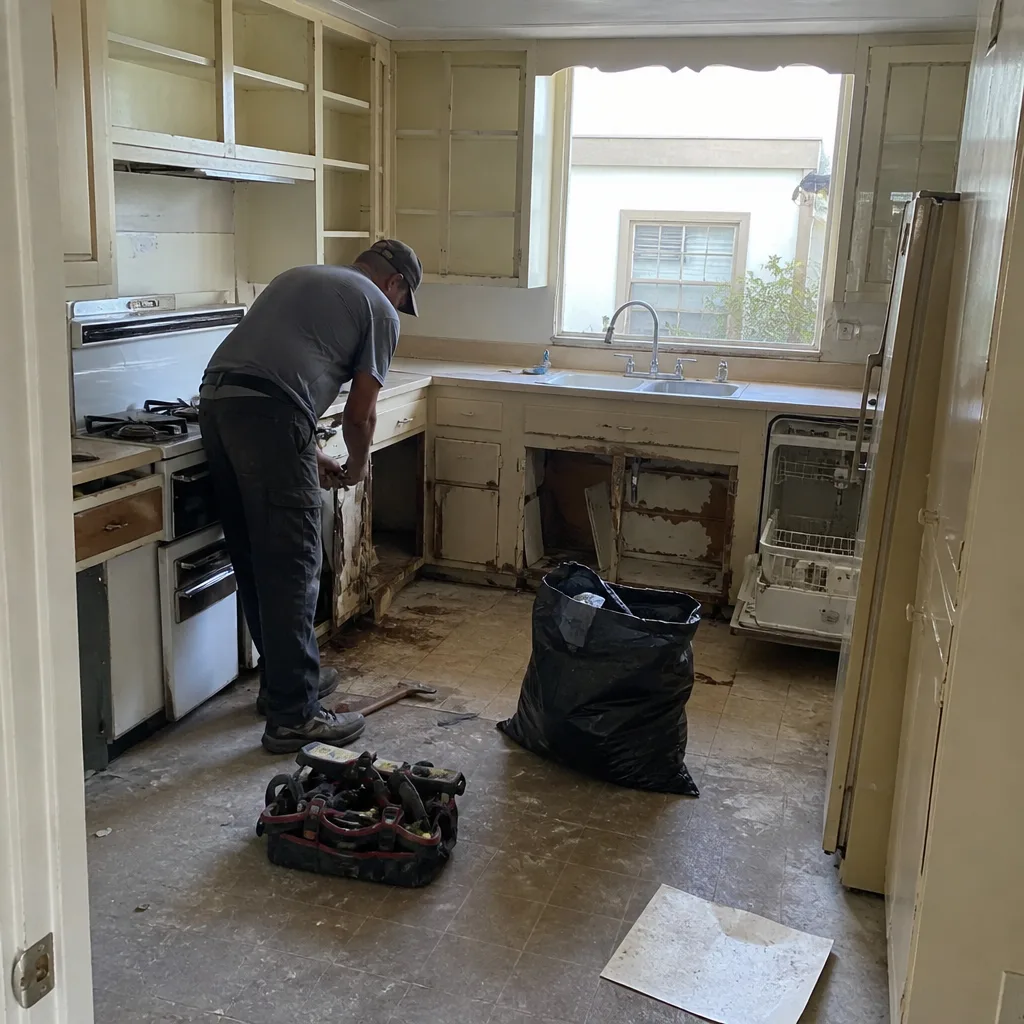 Before
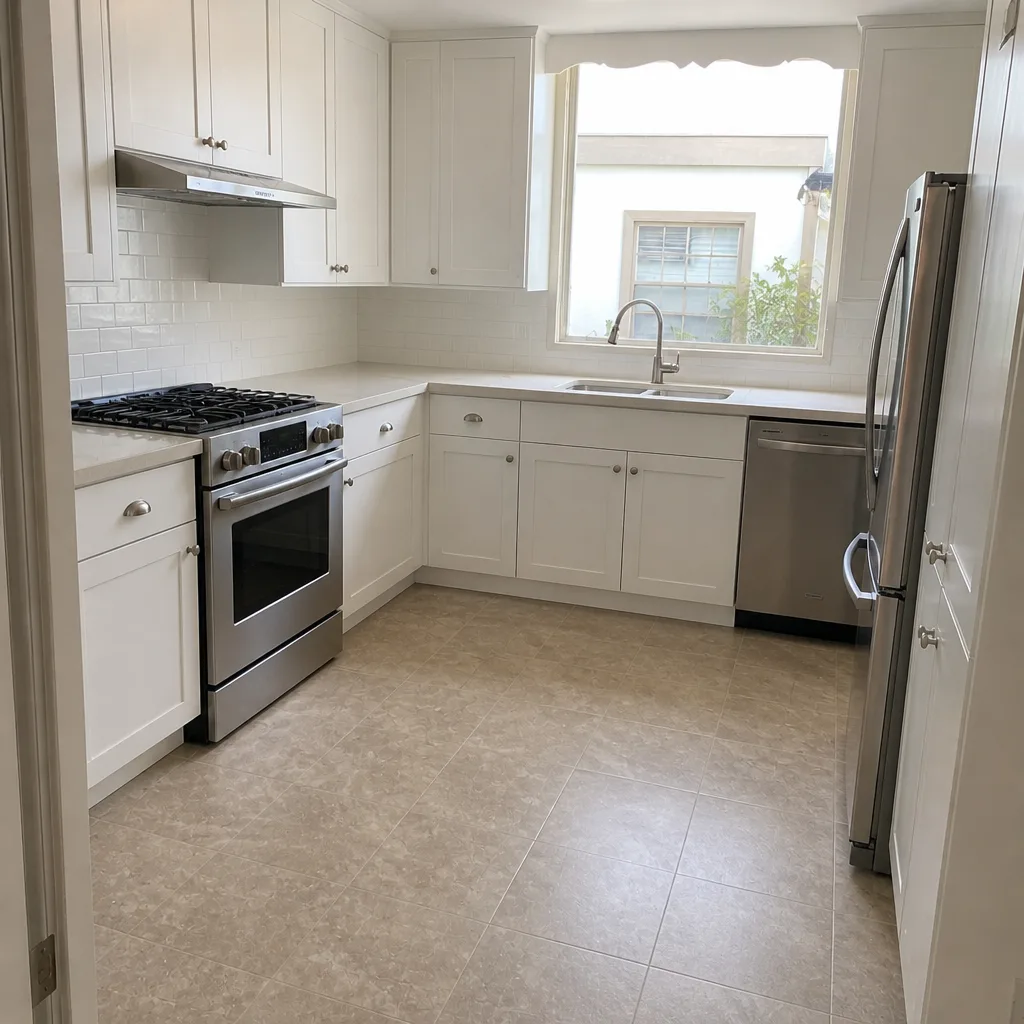 After
When to Call a Professional
Call a professional whenever the work touches structure, electricity, plumbing supply or drain lines, gas, HVAC, fire-rated assemblies, or the panel – no exceptions. Call when a permit is involved and you don’t want to be the GC of record. Call when your homeowner’s carrier asks a question you can’t answer with a signed inspection card. And call when the DIY savings you’re projecting are under $5,000 on a scope that touches any of the earlier items – the downside risk more than eats the upside. Groundwork Construction Co. of Burbank offers free estimates in Burbank – call (844) 797-7958. Our technicians have up to 12 years of experience per trade, and our 730-Day Done Right Promise applies to everything we build, whether it’s a full-scope ADU or the interior finish work you’ve chosen us for. When you’re ready to talk about a hybrid contract or a full build, we’ll walk you through a written line-item quote with the number you see being the number you pay.
Frequently Asked Questions
An owner-builder occupying their own single-family residence can legally perform electrical work in California under a self-pulled permit. The practical answer is different: if it fails inspection – and a first-time owner electrical rough-in usually has at least one correction – you’ll pay a C-10 licensed electrician to fix it plus rescheduling costs that easily exceed your labor savings. Call us at (844) 797-7958 for a free estimate on the electrical scope if you’re unsure, and we’ll tell you straight.
Once the permit scope’s rough-in inspections are passed and signed off, the interior finish – painting, baseboard, casing, tile, flooring, cabinet install, and fixture swaps – is genuinely DIY-safe. Landscaping and hardscape outside the addition footprint are also safe. Anything before rough-in sign-off (framing, electrical, plumbing, insulation) is not. Call (844) 797-7958 for a free written scope if you want a clean line between “you can do this” and “we do this.”
It can, if the work was unpermitted or performed by an unlicensed person on a covered structural system. Most policies include the new structure as long as it was built to code and permitted. The problem arises at claim time, when the adjuster looks for the permit history and finds the electrical or framing wasn’t inspection-verified. Call us at (844) 797-7958 to talk through the permit history you’ll want to have on file before you close the build.
Owners who handle painting, trim carpentry, tile, and landscaping after rough-in sign-off typically save $8,000-$15,000 on an 800-1,000 square foot ADU. That’s real money and doesn’t touch the permit scope. Anything you self-perform inside the permit scope carries correction costs that usually erase the savings. Call (844) 797-7958 and we’ll send you a written line-item quote showing exactly where those finish dollars sit in the estimate.
A hybrid contract typically costs less than a full-scope build – by exactly the amount of labor you’re handling – but only if the scope split is written into the contract before work starts. Verbal “I’ll do the finish” agreements are where hybrid builds go sideways. Our written line-item pricing shows the finish scope as a discrete line you can opt in or out of, and the number you see is the number you pay. Call (844) 797-7958 to schedule a free estimate and get that split in writing.
Yes – every ADU and every habitable-space addition in Burbank requires a building permit plus trade permits for electrical, plumbing, and mechanical. There is no square-footage threshold that bypasses this. Homeowners who build without a permit end up disclosing it at resale, and lenders won’t count an unpermitted ADU as a legal second unit. If you’re considering a build, call (844) 797-7958 for a free design consult, and we’ll walk you through the permit sequence step by step.
The Bottom Line
Do the finish work. Don’t do the permit scope. That’s the entire thesis in six words, and it’s the line that keeps a hybrid ADU build profitable instead of a cautionary tale. Burbank’s permitting is thorough enough that a first-time owner-builder electrical or structural attempt usually ends with corrections that cost more than the savings – and the record of that failure follows the property through resale and any future insurance claim. The finish work is where the real $8,000-$15,000 lives, and it’s genuinely DIY. Everything before rough-in sign-off is professional. When the scope touches structure, electrical, plumbing, gas, or the panel, call us at (844) 797-7958 for a free estimate – a written line-item quote, upfront pricing with no surprises, and a 730-Day Done Right Promise that holds up regardless of what you chose to build yourself. If you want to look at other exterior work on the property first, take a look at our Fence Installation in Burbank and Driveway & Pavers in Burbank pages – same upfront pricing, same written guarantee.
Written by the team at Groundwork Construction Co. of Burbank.