Free written scope consultation - allowances, timeline, and change-order rules on paper before a single trade is scheduled
Styles & brands we work with
- Kitchen remodeling
- Bathroom remodeling
- Home additions & ADU
- Roofing
- Windows & doors
- Driveway & pavers
- Fence
See the difference
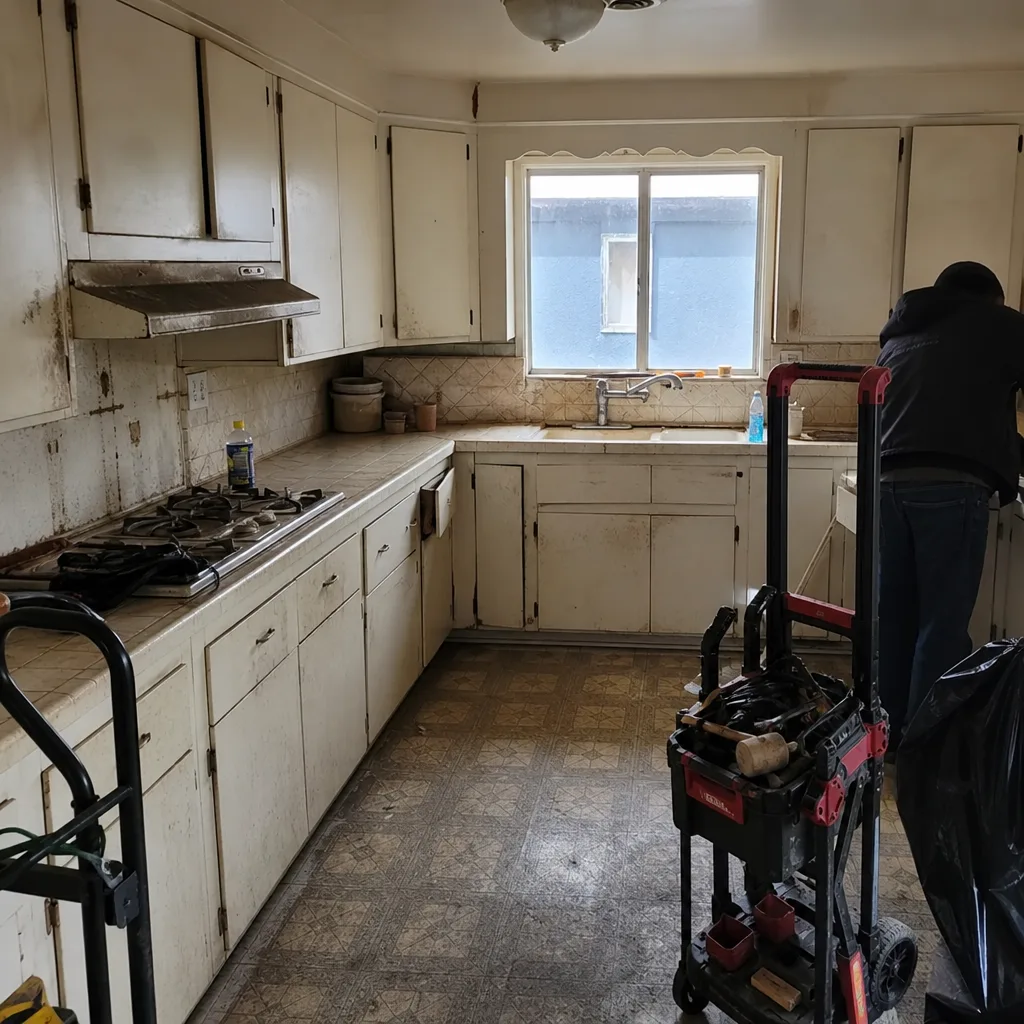 Before
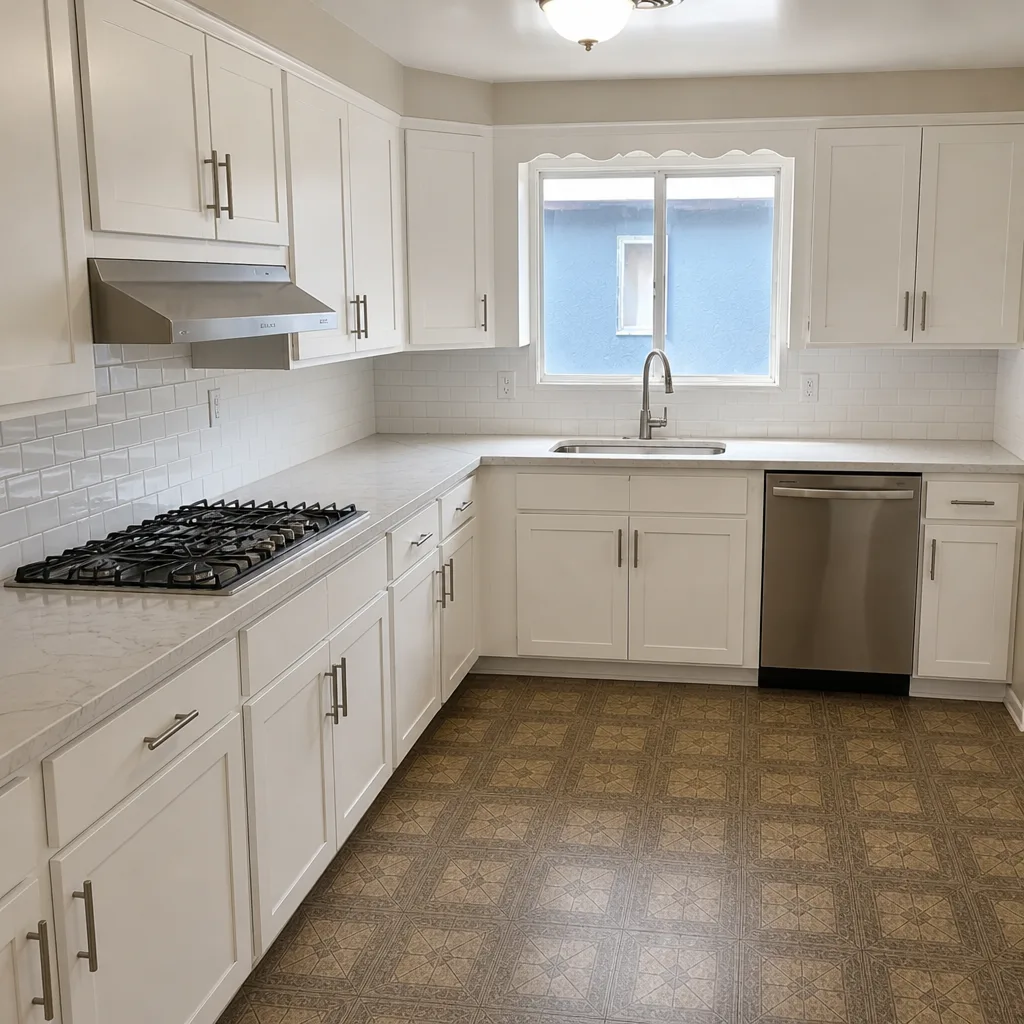 After
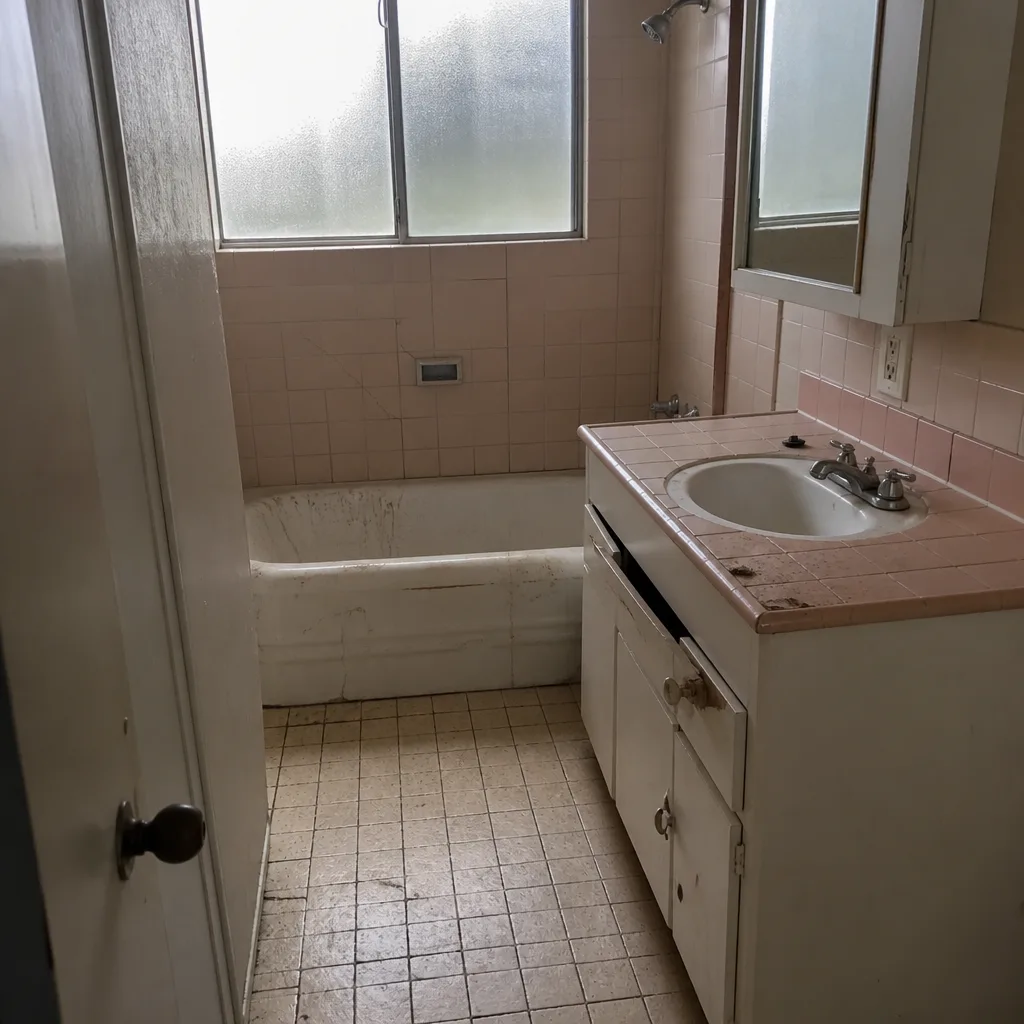 Before
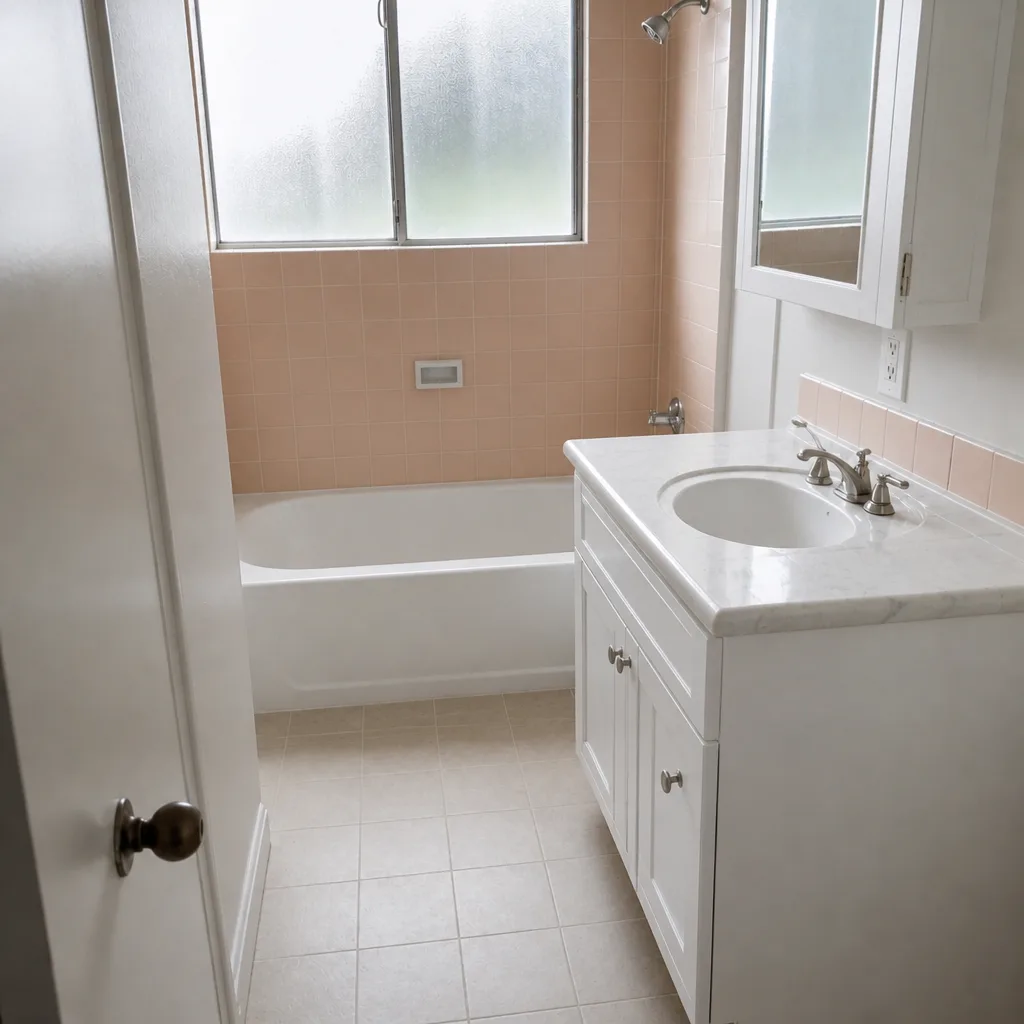 After
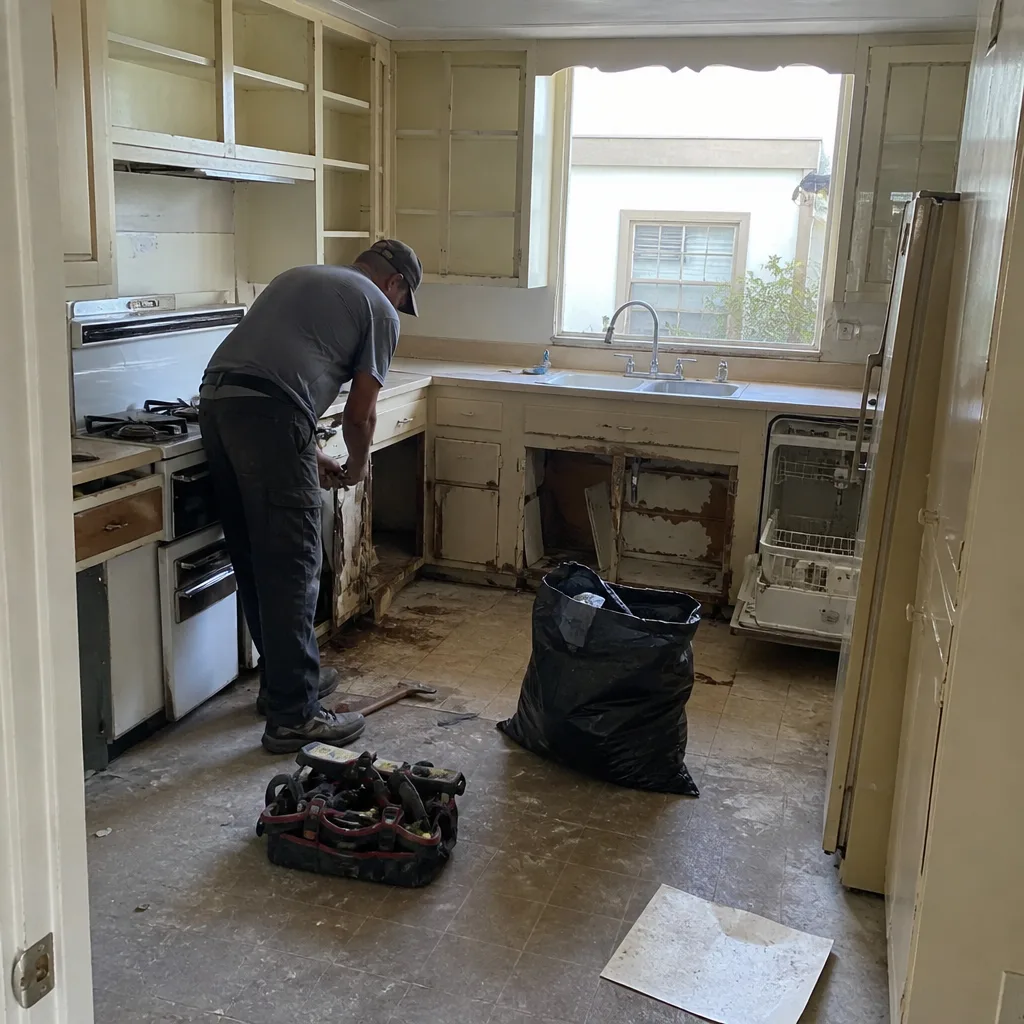 Before
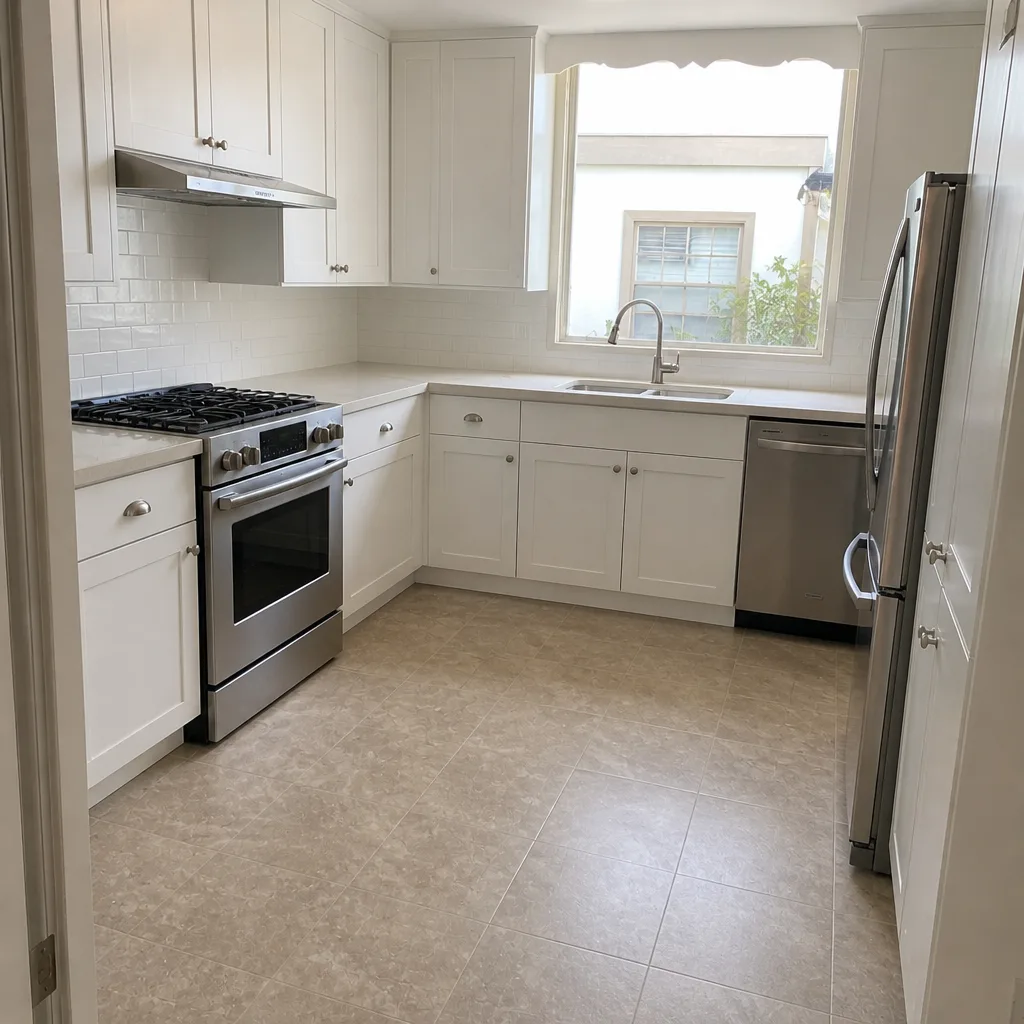 After
How to Stain a Wood Fence in Burbank, CA: Beat the Valley Heat Before It Beats Your Finish
Stain your Burbank wood fence in the early morning of a spring or fall day when the board surface is under 85°F and humidity is above 30% – not on a hot summer afternoon. Clean the wood thoroughly, let it dry completely, sand raised grain, wipe it down with a tack cloth, and apply an oil-based penetrating stain in a redwood-toned pigment. That combination is what holds up under Burbank’s UV load. The single most common cause of premature stain failure in this valley is solvent flashing off a hot board before it soaks in. If your fence is already peeling or you’d rather hand off the whole job, call (844) 797-7958 for a free estimate.
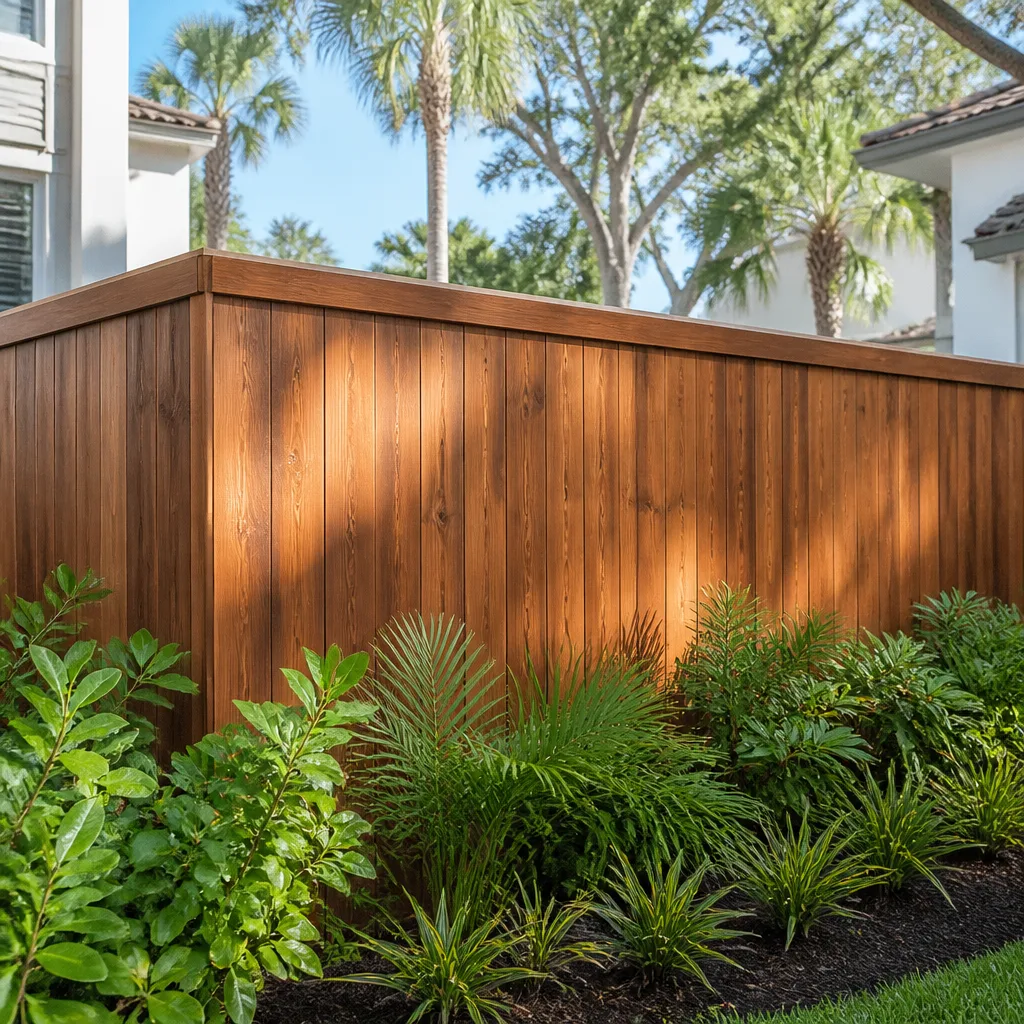
Why National Stain Instructions Fail in Burbank
The directions on the can assume a moderate climate. Burbank doesn’t have one. This is a hot, dry San Fernando Valley basin where summer surface temps on a sun-facing board can run well past ambient air temperature, and Santa Ana wind events push heat and grit through the Verdugo edges and hillside streets. Stain a fence at 95°F on an August afternoon and the solvent flashes before it penetrates – you get a thin film sitting on top of the wood instead of a finish soaked into it. That fence needs re-staining in about 18 months. Done right in the correct window, you get closer to five years.
We see the fallout constantly on Burbank properties. South- and west-facing runs go chalky and grey two summers after a rushed job, while the same stain on a shaded north side looks fine. That’s not a product problem. It’s an application-timing and product-selection problem, and it’s the whole reason the process here looks different from what a national guide tells you.
What to Look For in a Stain for Burbank’s Sun
For high-UV exposure, an oil-based penetrating stain beats a film-forming product every time. Penetrating stains soak into the wood grain and block UV from the inside, so when the wood expands and contracts in the heat, the finish moves with it. Film-forming stains – the thick, surface-coating type – crack and peel under that same thermal cycling. On Burbank’s exposed south and west fence sections, a film product will start flaking within a couple of seasons.
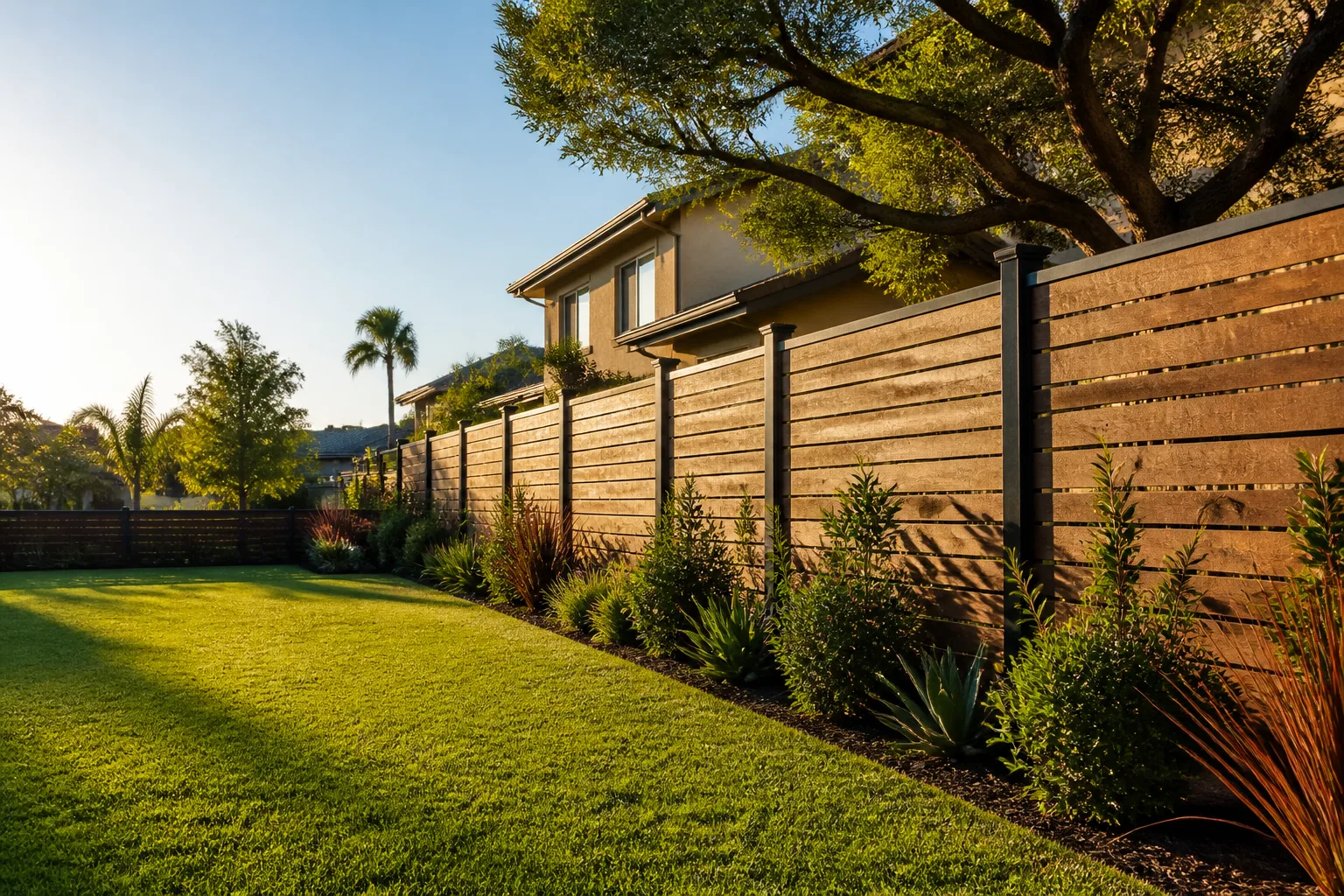
A semi-transparent penetrating stain in a redwood-toned pigment is the sweet spot. You keep the UV blocking, you keep the natural grain look, and you don’t take on the flaking risk. Here’s what to weigh when you’re standing in the aisle:
- Penetrating vs. film-forming: penetrating wins on sun-baked boards; film products are a shorter-lived bet in this heat.
- Pigment level: semi-transparent redwood tones block UV while showing grain; clear coats block almost nothing.
- Oil-based vs. water-based: oil-based penetrates deeper on dry, thirsty Burbank wood; water-based needs more careful moisture management.
- Coverage reality: plan on the can’s stated coverage running short on rough-sawn or weathered boards, which absorb more.
The best finish in the world still sits on top of the wood you prepped. If your fence itself is sagging, has rot at the posts, or was never installed to handle this climate, staining is putting lipstick on a structural problem – that’s a job for Fence Installation rather than a fresh coat.
Prep Steps Burbank’s Dust Makes Non-Negotiable
Dust and Santa Ana grit are the enemy of a clean finish, so prep here is stricter than most guides suggest. Skip a step and you trap debris under the stain, which shows up as blotchy patches and early wear. The sequence that works:
- Pressure wash the whole fence to strip dirt, old flaking stain, and valley dust out of the grain.
- Let it dry fully. This takes longer than standard guides allow for – give it a couple of dry days, not a couple of hours. Staining damp wood locks moisture in and the finish fails from underneath.
- Sand raised grain lightly by hand. Pressure washing fuzzes the surface; sanding knocks it back smooth so stain lays even.
- Tack cloth the boards right before you apply. This is the step people skip and the one that matters most in a dusty valley.
- Apply in the cool window – early morning, surface under 85°F, humidity above 30%. Work in the direction of the grain and keep a wet edge.
One local wrinkle worth checking before you commit to a color: if your fence sits on a hillside lot up in the Verdugo area, confirm whether your HOA or the fire-clearance zone restricts stain color or finish. Some hillside properties carry aesthetic covenants that limit dark finishes near the fire-interface zone. Better to know that before you buy five gallons of espresso-brown.
How Often Do You Re-Stain a Fence in Burbank?
Re-stain the sun-exposed boards every 2 to 3 years and the shaded or north-facing sections every 3 to 5 years. That’s a tighter cycle than most national guides publish, and it’s driven by the valley’s UV load. A south-facing run takes a beating here that a fence in a milder climate never sees. Test before you commit: splash a little water on the boards. If it beads up, the finish is still working. If it soaks straight in, it’s time.
What Does Professional Fence Staining Cost in Burbank?
Professional fence staining in Burbank typically runs $3,500-$9,000, depending on linear footage, fence height, condition, and how much prep the wood needs. A weathered fence that needs heavier cleaning and a full sand adds to the total; a newer fence that just needs a refresh sits at the low end. Here’s how the line items break down:
| Scope | Typical Burbank Range |
|---|---|
| Pressure wash + prep only | Lower end of the range |
| Full prep + oil-based penetrating stain | $3,500-$9,000 |
| Heavier prep on weathered/older wood | Adds to the total |
| New fence + stain (if replacement is needed) | Priced as Fence Installation in Burbank |
Exact pricing depends on the run, so the honest answer is that a number on a webpage only gets you close. Upfront pricing, no surprises, is how we work – the number you see is the number you pay, and every project carries the 730-Day Done Right Promise. If it’s not done right, we make it right. Calls are answered by a live person, 24/7, and there’s a free project estimate and design consult standing by, plus 0% financing for 18 months and $1,000 off projects over $10,000.
DIY or Call a Pro? An Honest Comparison
Staining a fence isn’t dangerous the way spring or electrical work is – but it is unforgiving of bad timing and sloppy prep. What separates a finish that lasts five years from one that fails in 18 months is usually the discipline of the dry time and the cool application window, not the brand on the can. If you can commit to an early-morning spring or fall start, full dry time, and careful prep, you can absolutely do this yourself. If you’re squeezing it into a hot Saturday afternoon, you’re setting up the exact premature failure this climate is famous for.
When it’s worth handing off: large runs, fences with rot or loose posts, or any hillside property where HOA and fire-clearance rules come into play. That’s where a crew that does this in Burbank conditions every week earns its keep. Our technicians have up to 12 years of experience, are background-checked and arrive in uniform, and we work with proven material brands like Andersen and Pella on the exterior side – the same standard we bring to a fence. For the full exterior scope, from structural repair to finish, think of us as your home construction partner working from foundation to finish line.
FAQs
Spring and fall are the best windows in Burbank, applied in the early morning when board surface temps are under 85°F and humidity is above 30%. Summer afternoons in the valley are the worst possible time – the heat flashes the solvent before it penetrates, and that’s the leading cause of premature failure here. If you’re mid-summer and the board is hot to the touch, wait for a cooler morning rather than force it.
Professional fence staining in Burbank generally runs $3,500-$9,000, driven by linear footage, fence height, condition, and prep. Weathered wood that needs heavier cleaning and sanding pushes toward the top; a sound fence that just needs a refresh sits lower. Call (844) 797-7958 for an exact quote – estimates are free, and pricing is upfront with no surprises.
For sun-exposed Burbank boards, an oil-based penetrating stain is the safer bet – it soaks into the grain and moves with the wood through thermal expansion, which is what film-forming and some water-based products struggle with in this heat. A semi-transparent redwood-toned oil-based stain blocks UV without the flaking risk. If your fence is heavily shaded, water-based can work, but match the product to the exposure.
No – you need full dry time between washing and staining, and in Burbank that means a couple of dry days, not a couple of hours. Staining damp wood traps moisture under the finish and the stain fails from underneath. Pressure wash, wait for the boards to dry completely, sand raised grain, tack cloth, then stain in a cool morning window.
Get a Straight Answer on Your Fence
If you’d rather have it looked at than guess at timing and product, Groundwork Construction Co. of Burbank offers a no-pressure assessment in Burbank. Call (844) 797-7958. You’ll get upfront pricing, a live person on the line any hour, and work backed by the 730-Day Done Right Promise – built to last, backed in writing.
Written by the team at Groundwork Construction Co. of Burbank, serving Burbank, CA.