Last updated November 18, 2026



Free written scope consultation - allowances, timeline, and change-order rules on paper before a single trade is scheduled
Fence Installation Maintenance Schedule: What to Do and When
The most expensive part of a fence to replace is the part most homeowners never look at. Posts sit below grade, buried in soil that quietly swings between bone-dry and soaked all year. By the time a leaning post or a spongy base gets obvious, the wood has usually been losing strength for two or three seasons. In Burbank, where summers bake the ground and winter rains arrive in concentrated bursts, that underground stress cycle runs hard. This guide breaks fence upkeep into three separate systems – the surface, the hardware, and the posts – and gives each one its own inspection interval. You’ll learn exactly what to check, when to check it, and how to spot failure before it gets expensive.
Quick Answer
A wood fence should be inspected for hardware and panel issues twice a year, have its post bases checked for moisture once each fall before the rainy season, and get a fresh coat of stain or sealant about once a year. Vinyl and aluminum fences need far less – a biannual wash and hardware check usually covers them. Stain and seal in Burbank during the dry fall window, generally late September through October, so the coating cures before winter rain and penetrates deeply into wood that hasn’t been soaked.
Styles & brands we work with
- Kitchen remodeling
- Bathroom remodeling
- Home additions & ADU
- Roofing
- Windows & doors
- Driveway & pavers
- Fence
Table of Contents
- Why Fence Maintenance Isn’t One Task
- The Three Failure Points Every Fence Has
- The Annual Maintenance Schedule, Month by Month
- Burbank’s Climate and the Wood Stress Cycle
- The Hardware Failure Sequence That Kills Gates
- Reading Post Bases Without Excavating
- Wood, Vinyl, and Aluminum: Different Maintenance Profiles
- When to Stain or Seal in Burbank
Why Fence Maintenance Isn’t One Task
Most fence advice treats upkeep as a single chore: stain it once a year and forget it. That framing causes real damage. A fence is a system, and its parts fail on completely different timelines. The surface coating wears from sun and rain. The hardware corrodes from humidity and irrigation overspray. The posts decay from soil moisture at and below grade. Lumping them together means one part gets attention while the others quietly degrade.
We’ve seen this pattern repeatedly in Burbank. A homeowner coats the boards faithfully every spring, the fence looks great from the street, and then a gate starts dragging because a hinge corroded two years earlier and nobody checked. Or a post rots through at the soil line while the panels above it are pristine. The failure wasn’t neglect of the fence as a whole. It was neglect of a specific failure point that staining never touches.
The fix is to stop thinking in terms of “the fence” and start thinking in terms of three systems:
- Surface: boards, rails, pickets, and the coating that protects them. Annual attention.
- Hardware: hinges, latches, brackets, screws, and gate frames. Biannual attention.
- Structure: posts, footings, and the soil around them. Annual fall assessment, plus a check after any major wind.
Each system has its own inspection rhythm because each one fails on its own clock. When you separate them, nothing gets skipped. When you combine them into one “stain and forget” routine, the invisible parts suffer most. Good fence installation in Burbank starts with good materials and proper footings, but even the best build needs this system-level upkeep to reach its full lifespan.
The Three Failure Points Every Fence Has
Understanding what actually fails – and in what order – is what separates a maintenance schedule that saves money from one that just eats weekends. Here’s the order of failure we see most often, from cheapest to most expensive to fix.
Failures that cost a few dollars to fix
- Loose or missing screws at rail brackets
- Corroded hinge pins that make a gate stiff
- Worn gate latch that no longer catches
- Small splits or checks in board faces
Failures that cost a mid-range repair
- Sagging gate that stresses its hinge post
- Cupped or warped boards from moisture cycling
- Loose pickets that let panels rack out of square
- Peeling stain that exposes bare wood to UV
Failures that cost a full rebuild
- Post rot at or below the soil line
- Heaved or shifted footings
- Post base decay that lets the whole line lean
The sequence matters. A stiff hinge that goes unchecked makes you push harder on the gate, which stresses the hinge post, which loosens the footing. A corrosion problem that started as a five-dollar hinge becomes a post replacement because nobody caught it at stage one. The same escalation logic runs through everything below grade. That’s why the schedule targets the cheap fixes on a fast interval and the expensive ones on a slower, more deliberate one.
The Annual Maintenance Schedule, Month by Month
Here’s the cadence we recommend to homeowners in Burbank. It’s built around the local weather pattern – dry, hot summers and a concentrated winter rainy season – rather than a generic national template.
- Late winter (February – March): Do a full hardware and panel inspection after the rainy season. Check hinges, latches, and brackets for corrosion, and check panels for wind or water damage. Tighten anything loose.
- Spring (April – May): Wash the fence surface. Rinse off winter grime, check for peeling or bare spots, and note any boards that need attention. Do not stain yet unless you have a covered, fully dry window.
- Summer (June – August): Leave the wood alone. This is when Burbank heat bakes moisture out of the boards. Doing heavy surface work now means applying product to wood that will dry and shrink afterward, which shortens coating life.
- Early fall (Late September – October): Apply stain or sealant. This is the prime window in Burbank. The wood is dry, the temperatures are moderate, and the coating has time to cure before winter rain. This is also when you do the post-base moisture assessment.
- Late fall (November): Clear soil and debris away from post bases. Check that irrigation isn’t pooling at the footings. Adjust drip lines or downspouts if water is collecting.
- After any major wind event: Walk the line and check panels, rails, and gate hardware immediately, regardless of the calendar.
This schedule covers the surface annually, the hardware twice a year, and the posts once a year at the most important moment – before the wet season. If you can only do one thing, do the fall window. It’s the highest-leverage week on the calendar.
Burbank’s Climate and the Wood Stress Cycle
Burbank’s climate does specific things to a wood fence, and understanding the cycle is the difference between a coating that lasts three years and one that fails in twelve months. Our summers are hot and dry, with weeks in the nineties and low humidity that pull moisture out of wood fast. Then winter arrives, rain falls in concentrated bursts, and the wood swells back up. Spring dries it again. The fence is expanding and contracting through a full cycle every year.
Each cycle opens micro-checks in the board faces. UV from the long summer sun breaks down the lignin in exposed wood, turning it gray and porous. Once the surface is porous, winter rain soaks deeper. The following summer pulls that moisture out and widens the checks. This is why a fence that gets coated properly in the fall holds up far better than one coated in spring – the fall application puts a protective layer on dry, stable wood before the wet season begins.
Down here in the flats, around the Magnolia Park area and the neighborhoods near downtown Burbank, the soil stays relatively drained through the dry months. Up toward the Verdugo foothills, the grade changes how water moves and where it pools after storms. We regularly see the difference in post failure rates – posts on the uphill side of a slope tend to hold more moisture longer because water migrates down through the soil and stays near the base. That’s a subtlety a generic national fence guide will never mention.
The climate also means a coating product that works in humid regions may not be right here. We’ve seen film-forming heavy stains crack and peel under Burbank’s UV load. A penetrating oil-based or oil-modified stain tends to perform better because it soaks in rather than sitting on the surface where UV can attack it. Selection matters as much as timing.
The Hardware Failure Sequence That Kills Gates
Gates are the highest-stress point on any fence, and they fail in a predictable chain. Catching it early is a five-dollar fix. Missing it is a post replacement. Here’s the sequence we see most often, and where to intervene.
- Hinge pin corrosion. Moisture collects in the hinge mechanism, especially on metal hinges. The pin stiffens, then seizes. Every swing of the gate now torques the screw mounts.
- Screw loosening. The torque from a stiff hinge works screws out of the hinge post. The gate starts to hang slightly off alignment.
- Gate sag. With the hinge loose, the gate weight shifts and sags. It drags, and it no longer latches cleanly. This is the point where most homeowners notice something is wrong.
- Post stress. The sagging gate puts constant rotational force on the hinge post. The post begins to wobble at grade, even if the wood above the soil is fine.
- Footing failure. The wobbling post loosens the concrete footing or opens a gap around the base, letting water in. The rot starts.
The cheap intervention point is step one or two. Lubricate hinge pins twice a year, check screw tightness every six months, and if a gate feels stiff, address it that week. Once you reach step four, the fix requires more than hardware. That’s exactly why the hardware check is biannual rather than annual – the chain moves fast during wet and dry cycles. A stiff gate is a signal, not an inconvenience to work around.
Reading Post Bases Without Excavating
You don’t need to dig out a post to know whether it’s failing. The soil line tells the story if you know what to look for. These are the indicators we check on every fence inspection.
- Paint or coating bubbling at the base. Bubbling at grade level usually means moisture is trapped inside the wood and pushing outward. It’s an early warning of rot, even when the surface above looks fine.
- Soft probing. Push a screwdriver or knife into the wood six inches below the top of the soil line. A post that’s sound resists. A post that gives easily is already compromised. This test does minimal harm and tells you a lot.
- Soil moisture pooling. If the soil stays wet around the base days after rain, or if the base sits in a low spot, decay is progressing faster than you’d expect. Check whether irrigation lines, downspouts, or lawn watering are aimed at the fence line.
- Lean at the base. Stand back and sight down the fence line from one end. If a post leans but the panel above it is straight, the footing has moved. If the whole panel leans, the post is moving.
- Discoloration and white rot. Whitish growth on bare wood at grade is a sign of active fungal decay. It’s the same class of organism that turns firewood to mush.
This is the check we recommend every fall, before the rain comes, while the soil is still relatively dry. If you find pooling or a soft base, that’s the moment to act – not after a wet winter has finished the job. Burbank’s soil conditions vary from neighborhood to neighborhood, but the reading method is the same. For older fences built years ago, this check is especially important because the original footing detail may not have handled drainage well.
Wood, Vinyl, and Aluminum: Different Maintenance Profiles
The material you choose at purchase sets your maintenance profile for the life of the fence. Understanding what you signed up for makes the schedule practical, and it matters if you’re choosing a new fence rather than maintaining an existing one.
Wood fences
Highest maintenance demand, but also the most repairable. Wood needs annual surface attention in Burbank, biannual hardware checks, and an annual post-base assessment. It accepts a range of finishes and can be repaired board by board. The trade-off is the time you spend on it. A properly built wood fence with the right species and detailing gives you decades of service, but only if you keep up the annual cycle.
Vinyl fences
Vinyl needs the least routine surface care – no staining, no sealing, no annual coating. Wash it once or twice a year with a garden hose and mild soap. Check the hardware twice a year, and look at how the posts are set. Vinyl posts can be heavier and put different stresses on the footing than wood, so a post check after any major wind is worth doing. In our experience, vinyl’s real enemy in Burbank is discoloration from dust and sun, not rot. It won’t rot, but it will fade if it’s a lower-grade product.
Aluminum fences
Aluminum, often used for pool and view fencing, needs almost nothing beyond a biannual wash and a check of the fasteners and anchor points. Watch for scratches that break the powder coat, since those become corrosion points. Aluminum doesn’t’ rot, but its fasteners can, so the hardware check still matters. A wobbly aluminum fence is usually an anchor problem, not a metal problem.
Whichever material you’re working with, the underlying rule holds: surface, hardware, and structure each age on their own timeline. If you’re replacing an aging fence and want help choosing the right material for your property, fence installation in Burbank starts with a conversation about the material profile that fits your maintenance appetite.
When to Stain or Seal in Burbank
Timing is the single biggest factor in how well a stain performs. Apply in the wrong window and you get a coating that fails within a year. Apply in the right window and you get several years of protection from one coat.
The prime window in Burbank is late September through October. The reasoning:
- The summer heat has already driven most of the seasonal moisture out of the wood, so it’s at its driest and most stable.
- Temperatures are moderate – warm enough for the product to penetrate and cure, cool enough that it doesn’t flash off too fast.
- The winter rain hasn’t arrived yet, so the coating has weeks to cure before it needs to perform.
The moisture content check matters. Applying stain to wood that’s still holding summer-swollen moisture traps the moisture under the coating, and it will push through, usually with bubbling or peeling. Before applying anything, do the water test – sprinkle a few drops on bare wood and see whether they bead up or soak in. If they bead, the wood is already sealed and needs cleaning or a stripper first. If they soak in, it’s ready for a new coat.
Don’t’ apply in peak summer. The wood is too hot, the coating flashes off before it can penetrate, and the sun can cause uneven curing. Don’t’ apply in the middle of the rainy season either. Wait for the dry fall window and prioritize it on the calendar. If you’re doing a more involved fence improvement this fall alongside other work, projects like a driveway and pavers install in Burbank can be sequenced to share the same weather window.
Staining is one job most homeowners can handle themselves with the right prep. The work below grade – dealing with a post that’s already compromised – is a different story. That’s when it’s worth calling in help.
Common Mistakes to Avoid
- Staining every spring instead of fall. Spring coating goes onto wood that’s about to be stressed by summer heat and won’t have time to cure deeply. Fall is the window that gives you real protection through the wet season in Burbank.
- Ignoring the gate until it drags. By the time a gate sags noticeably, the hinge post is already under stress. Fix stiff hinges within a week, not a season.
- Never checking post bases because they’re underground. The posts are the most expensive part to replace and the least inspected. The fall moisture check is the difference between a hundred-dollar repair and a full-line rebuild.
- Power-washing to clean a wood fence. High pressure furrs the surface, opens checks, and forces water into joints. Use low pressure and a cleaning solution, not the 3,000 PSI setting.
- Applying stain to wet or hot wood. Both are common in Burbank – a summer afternoon on a sun-baked board will fail faster than almost any other mistake here. Always check moisture first.
- Planting irrigation spray heads at the fence line. Regular sprinkler overspray keeps post bases in permanent moisture. Move spray heads or switch to drip so the fence dries between waterings.
- Assuming vinyl and aluminum are maintenance-free. They need far less than wood, but fasteners still loosen and dirt still builds up. An hour once a year of cleanup keeps them looking new.
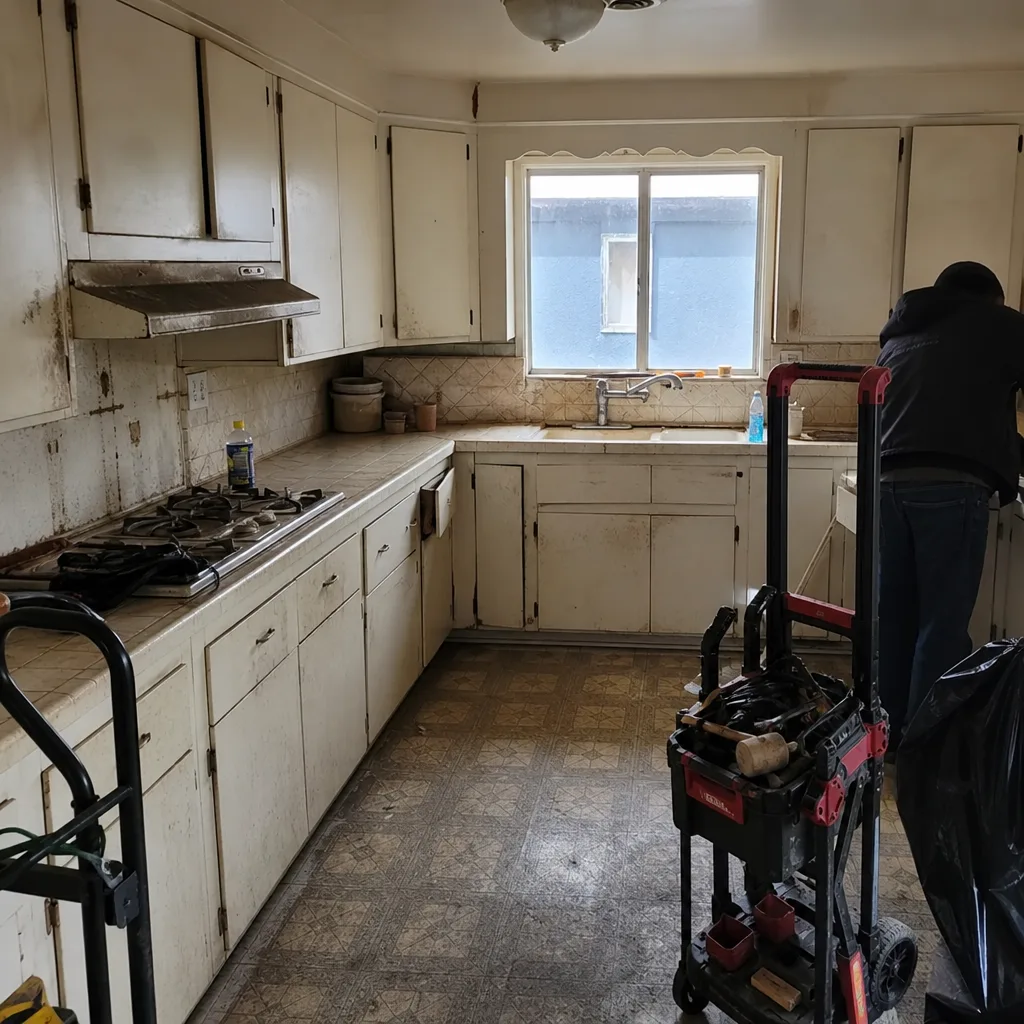
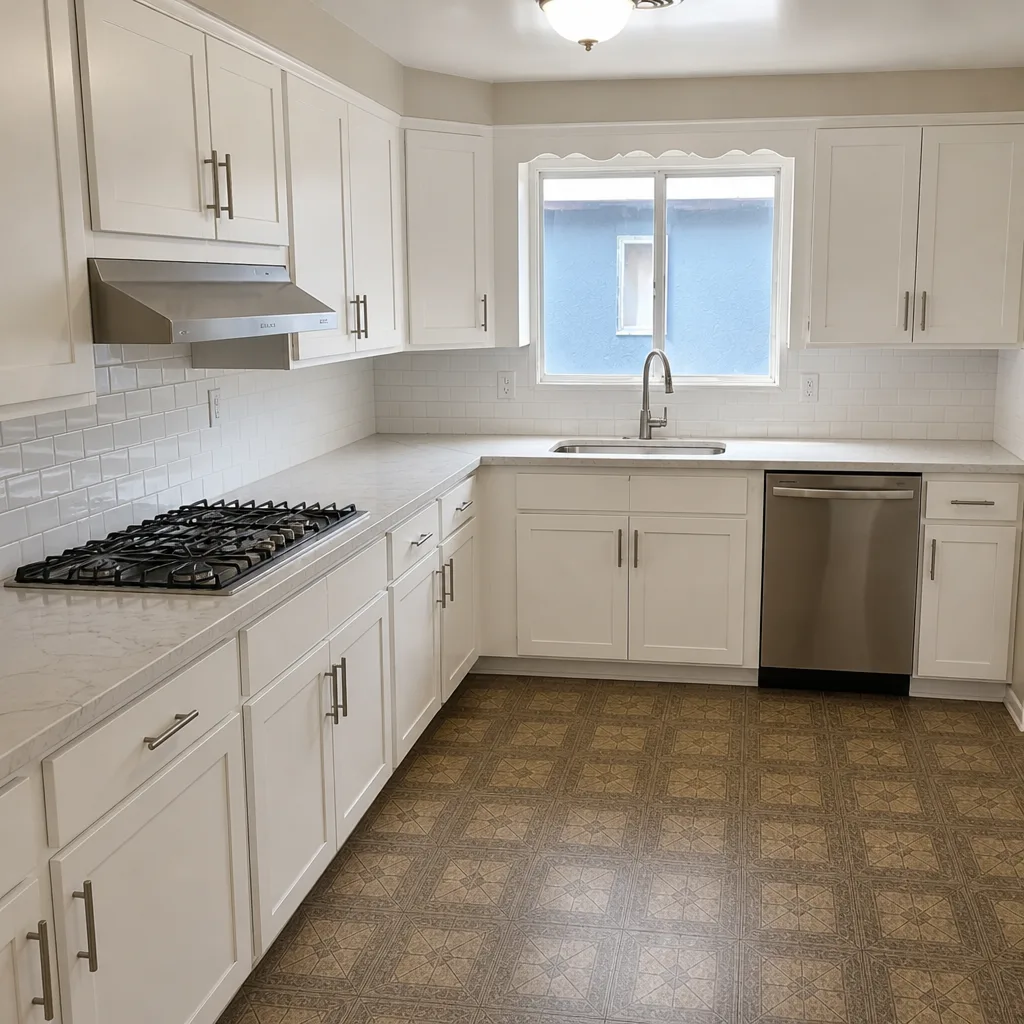
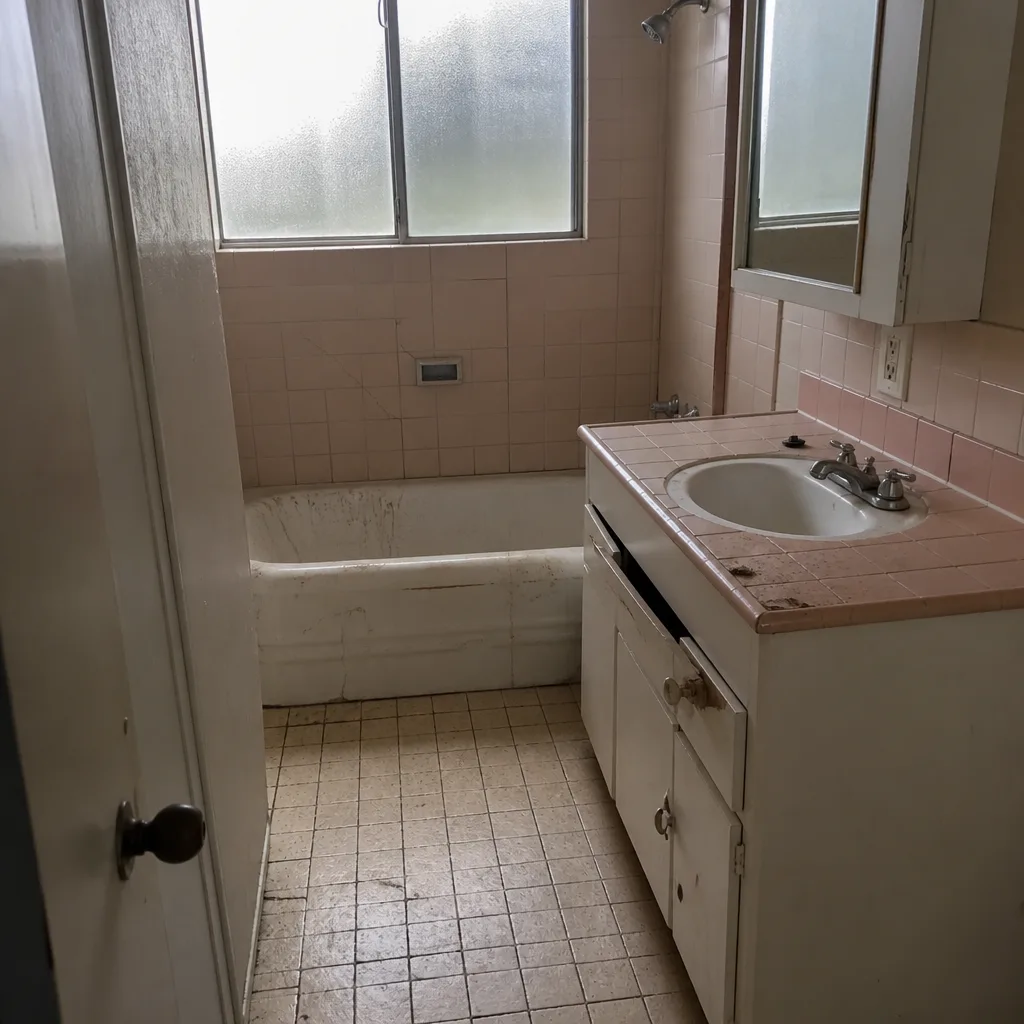
See the difference
 Before
 After
 Before
 After
 Before
 After
When to Call a Professional
Most surface maintenance is a homeowner job. Some of it isn’t, and knowing the line saves money. Call a professional when:
- A post shows softness at the base or obvious lean – this needs a post replacement, not a patch
- Multiple posts are compromised along one line, signaling a footing or drainage problem
- A gate post is wobbling – the escalation from here is a footing repair, not a hardware swap
- You want a full fence assessment before buying a property or renewing a homeowner’s policy
- You’re planning a new fence and want the footing, material, and layout designed correctly from the start
Groundwork Construction Co. of Burbank offers free estimates in Burbank – call (844) 797-7958. Every job is covered by our 730-Day Done Right Promise, and our technicians have up to 12 years of experience with the local soil and climate patterns that drive fence failure. Upfront pricing, no surprises.
Frequently Asked Questions
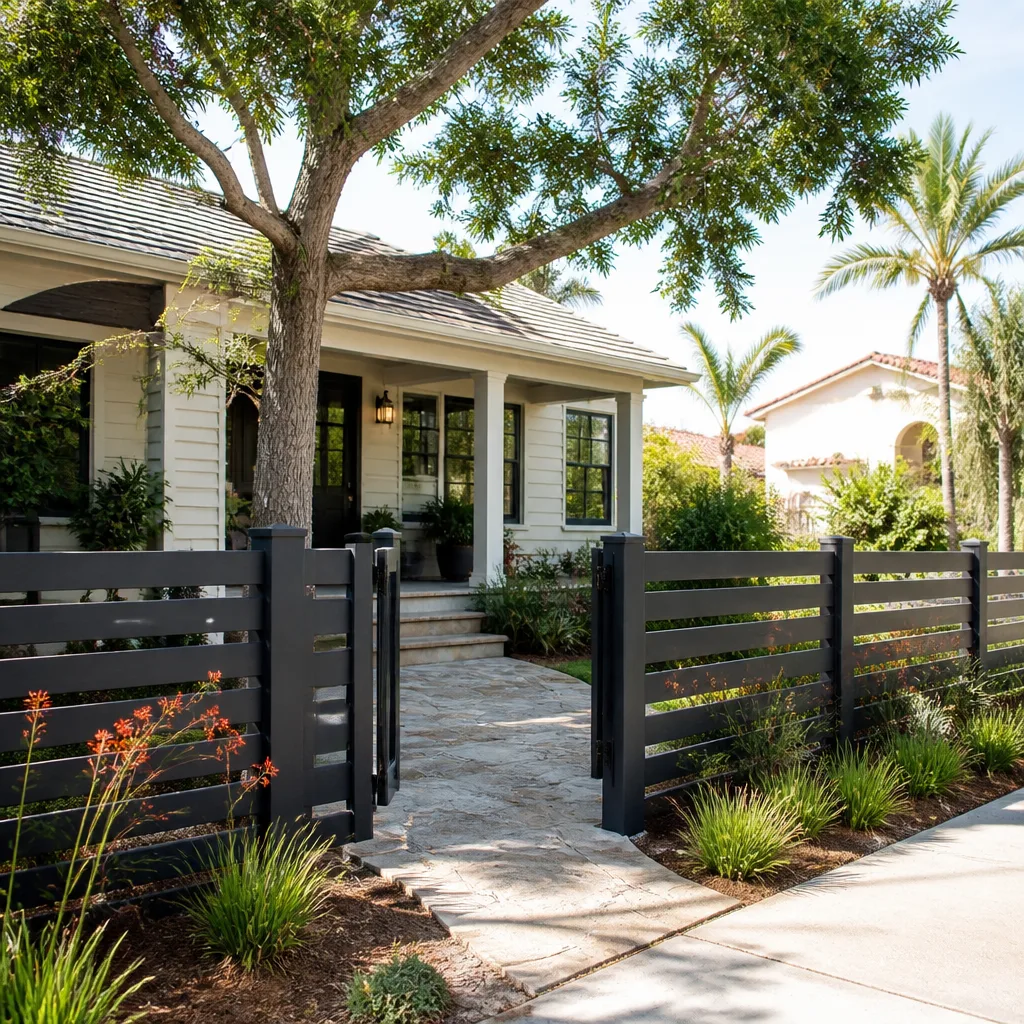
About once a year, and the timing matters more than the frequency. Apply in late September through October, after summer has dried the wood and before the winter rains arrive. Skip the stain if the fence is holding summer moisture – the water test will tell you whether the wood is ready.
Yes, for hardware. The hinge, latch, and bracket check should happen twice a year – once after the rainy season and once before it – because corrosion driven by moisture cycles through Burbank’s wet-then-dry pattern and a stiff hinge can escalate to a footing problem in a single season. The surface stain is annual; the hardware check is seasonal.
Probe the wood at or just below the soil line with a screwdriver. If it gives easily, it’s compromised. Also look for bubbling paint at the base, white fungal growth, and soil that stays wet around the footing days after rain. Any of these signals means the post needs professional attention.
It’s close, but not zero. Vinyl doesn’t’ need staining or sealing, so it saves the biggest annual chore. It still needs a wash once or twice a year and a hardware check twice a year. In our experience, its main local issue is sun and dust discoloration rather than rot. That’s a fair trade for skipping the stain routine.
Walk the full line and check three things: panels that have racked out of square, rails and brackets that have loosened, and any gate that now sticks or drags. Wind forces expose weak connections fast. Deal with the loose ones within days rather than waiting for the next scheduled inspection.
Post replacement is doable but demands the right footing depth, concrete work, and material choice – and it’s the part of a fence that fails fastest if done wrong. If a post is soft at the base or the whole line is leaning, a professional repair built to code is the smarter move. For anything else, surface maintenance is well within a homeowner’s reach.
The Bottom Line
Fence maintenance works when you stop treating it as one chore. The surface needs attention once a year, in the fall window that gives the coating time to cure before Burbank’s wet season. The hardware needs a check every six months, because a five-dollar hinge caught early prevents a footing repair. The posts need an annual assessment from the top of the soil line, where the earliest warning signs show. Understand which material you own – wood, vinyl, or aluminum – and let that profile shape your calendar. Fences that last don’t’ get lucky. They get looked at in the right order, at the right times. If you’re planning a replacement or a bigger project alongside the fence – say a new outdoor setup that pairs with your yard, a home addition or ADU in Burbank, or anything that reshapes the property line – Groundwork Construction Co. of Burbank can build it right the first time, backed by the 730-Day Done Right Promise.
Ready to Get Started?
A fence that gets looked at in the right order lasts years longer than one that doesn’t’. If you’re past the repair stage and ready to talk about a new fence, or if you want a professional assessment before buying a property or renewing a policy, we can help. Call Groundwork Construction Co. of Burbank at (844) 797-7958 for a free estimate. Every call is answered by a live person, 24 hours a day, and you’ll get an upfront price before any work begins – the number you see is the number you pay. Learn more about how we work from our home page.
Written by the team at Groundwork Construction Co. of Burbank.